Until 1906, the only library at Jesus College was a dedicated room inside the 16th century “New college”. Its collection of medieval manuscripts was of high interest to researchers but of little use to students, who were all expected to own their own copies of study texts. As new subjects started being offered, the need for a library for students became evident in the early 20th century. At first, the student library occupied a set of rooms in one of the Courts, until in 1952 the War Memorial Library was constructed to replace a portion of the building that was lost to fire.
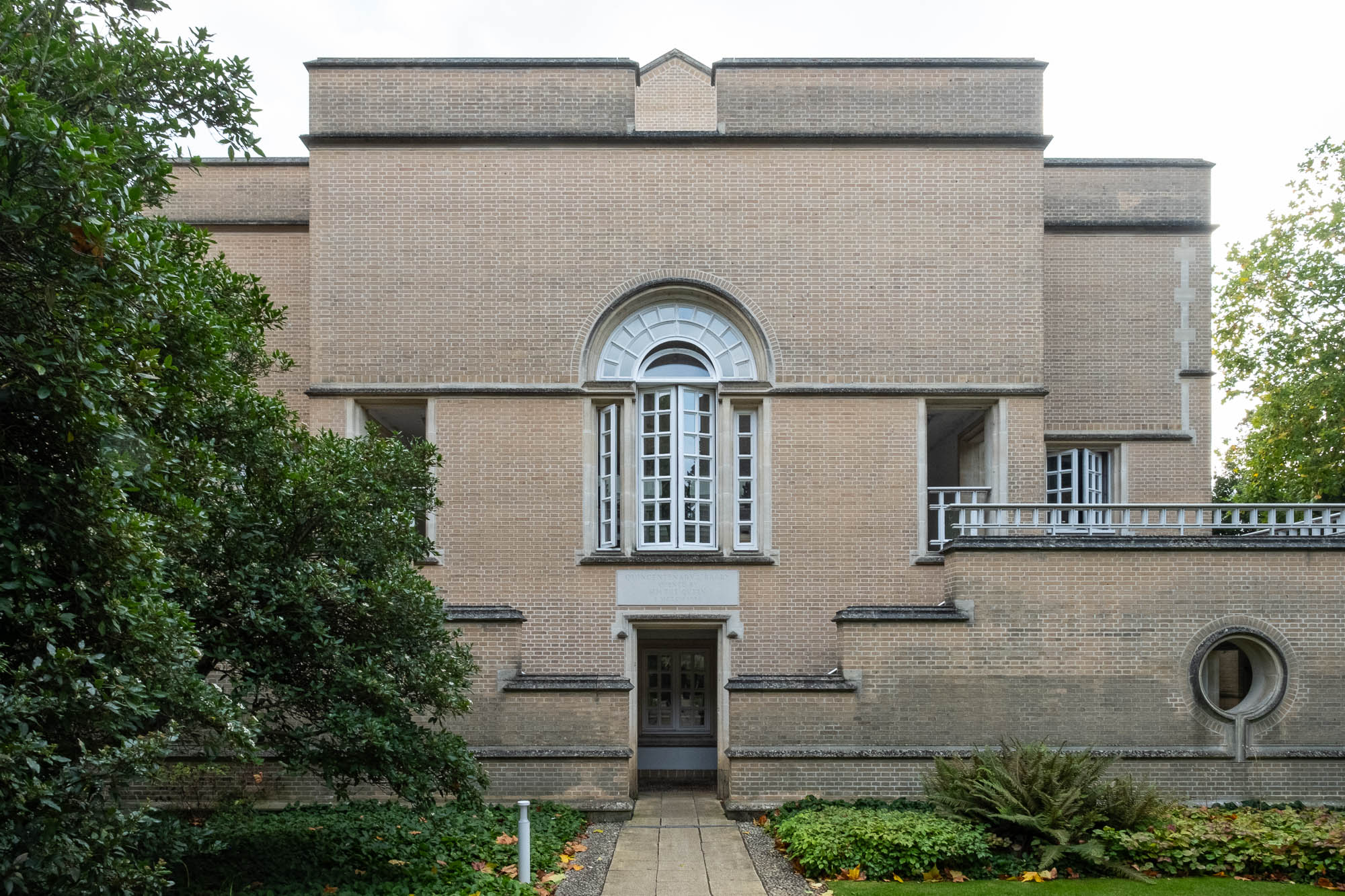
To celebrate the 500th anniversary of the college’s foundation, a new student library opened in 1995, funded in part by subscription from alumni. The location chosen for the new library was the site of the former porter’s lodge garden, which by then had gone mostly fallow and used for car parking. Completed in 1995, the library was officially dedicated by Queen Elizabeth II on March 8, 1996. It had room for 40,000 books, 100 reading spaces and 40 computer workstations.
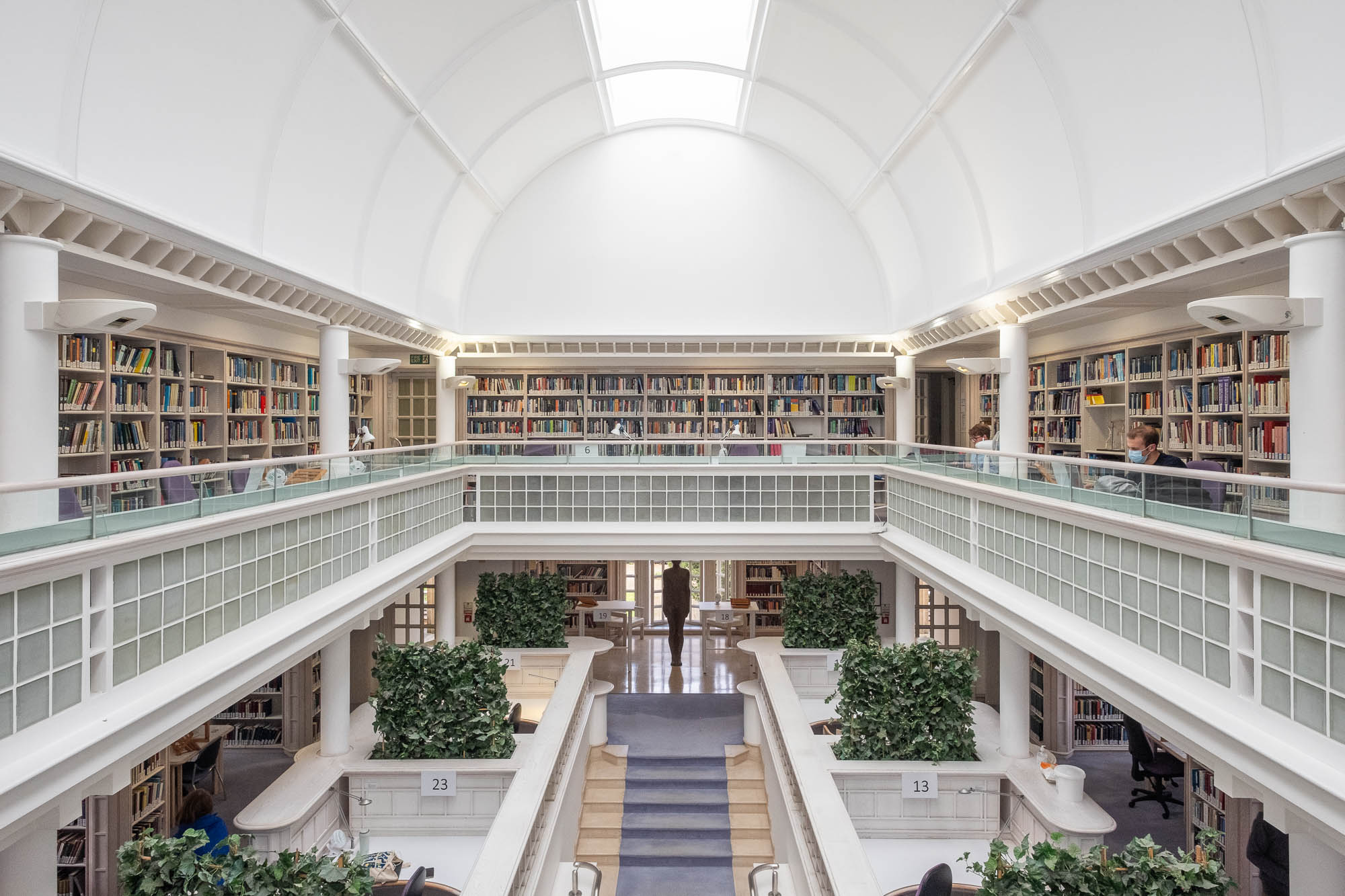
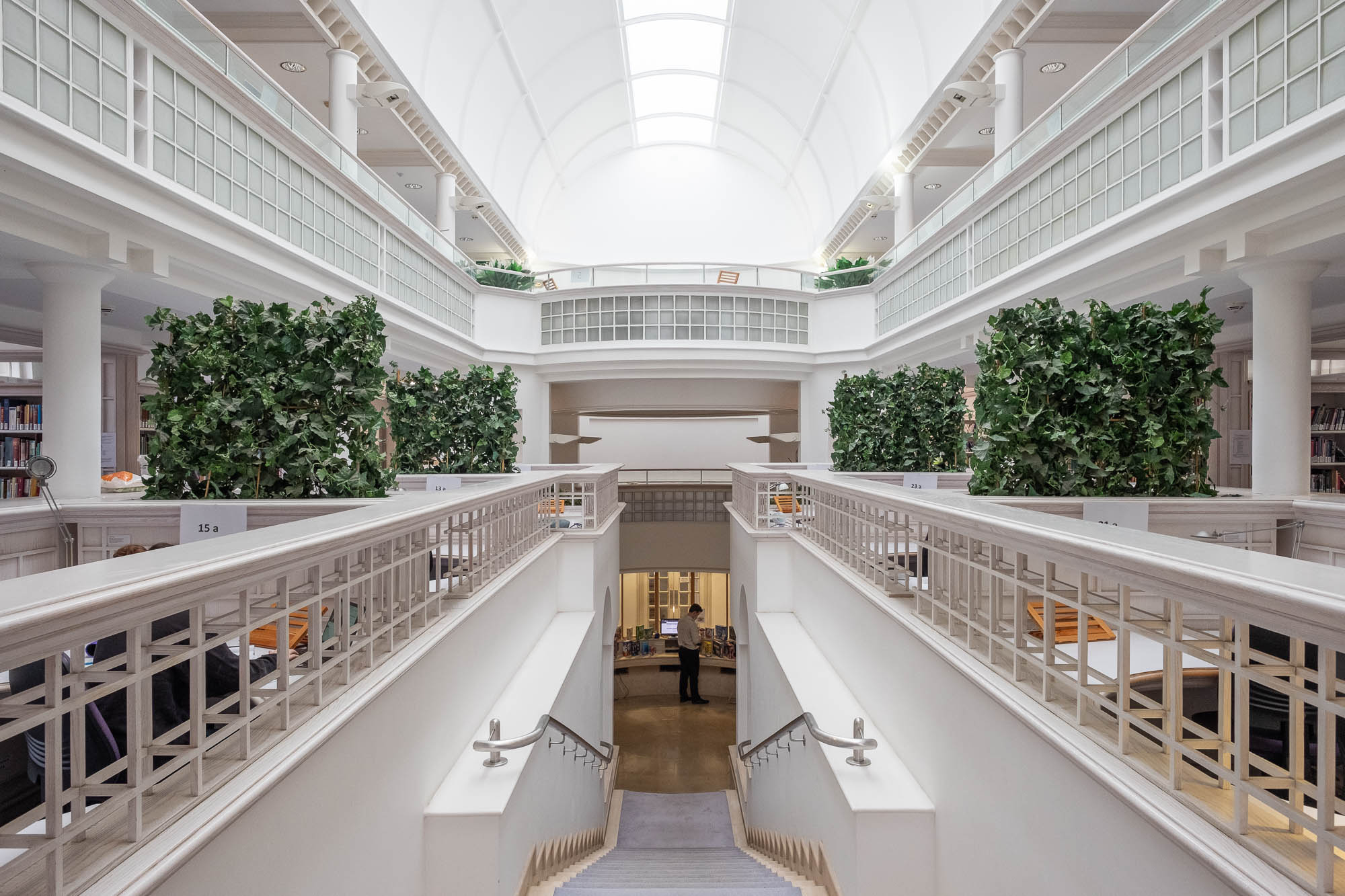
The architects Eldred Evans & David Shalev were keen to provide quality study spaces for students, a feature that until then was missing from the college. A key element of this approach was the careful provision of natural light from a long zenithal opening on top of a barrel-vaulted ceiling. This design element is both dictated by sunlight and also recalls the traditional architecture of several Cambridge college libraries.
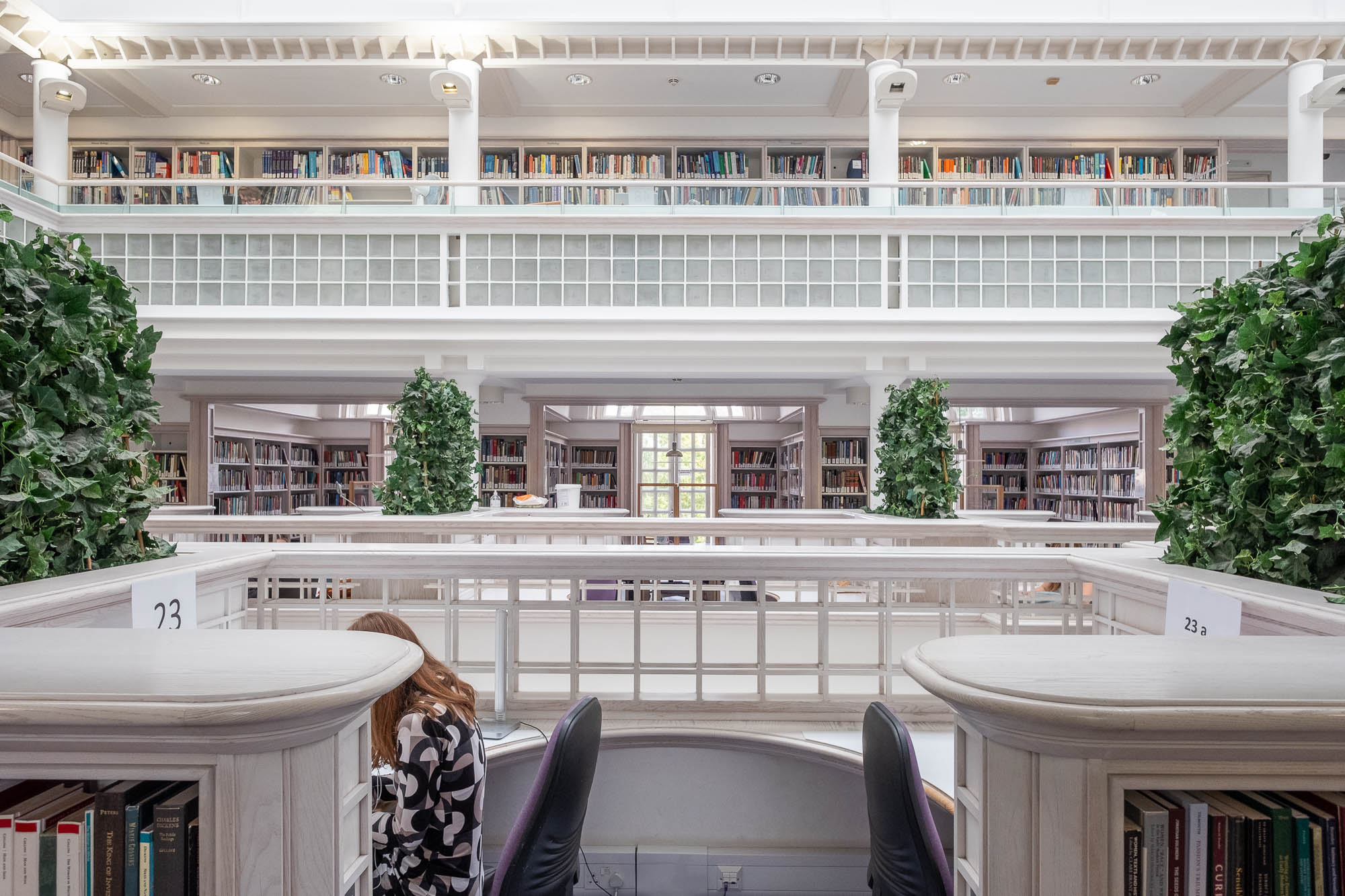
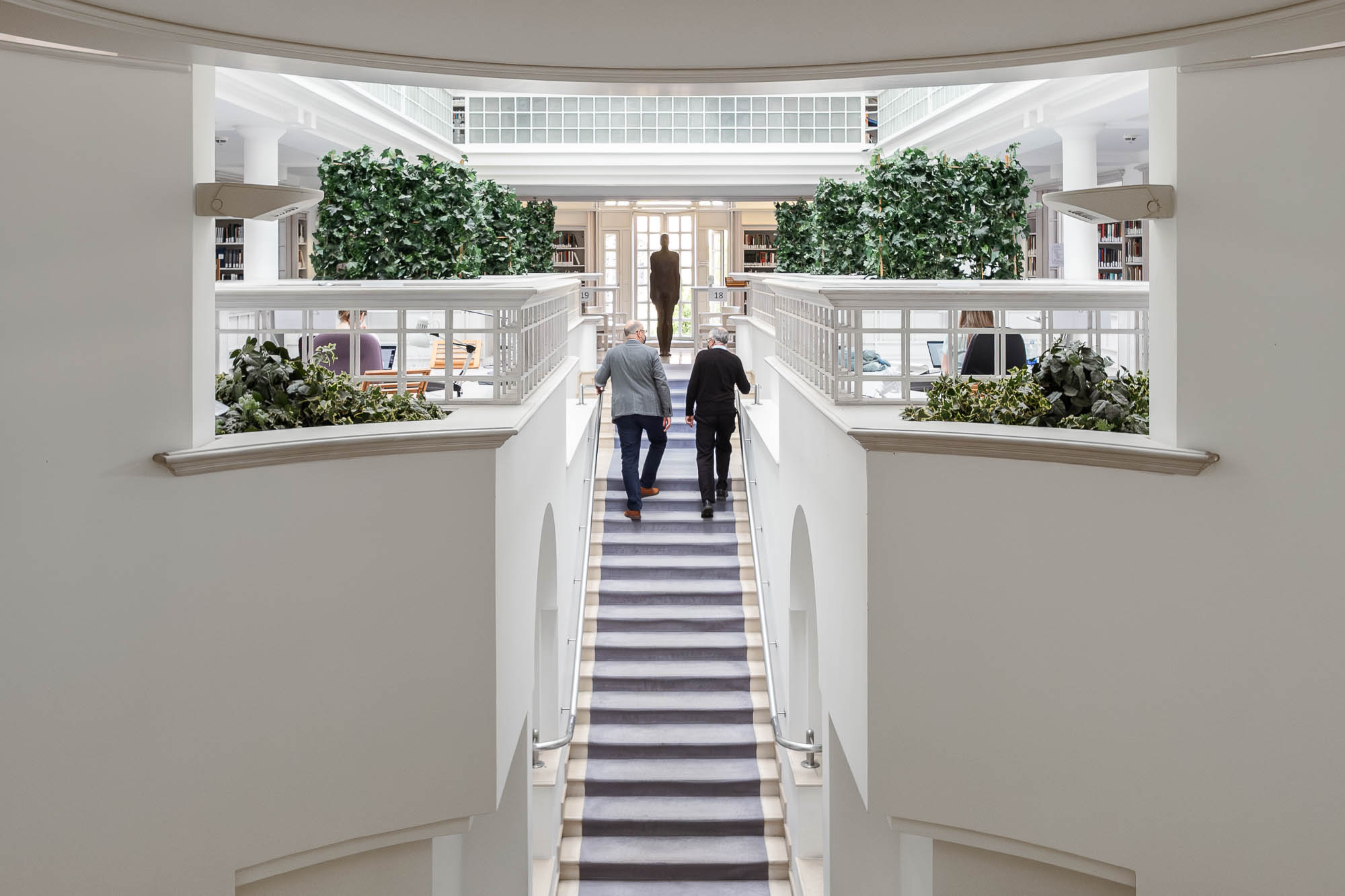
Work stations are arranged in six open carrels on either side of a large stairway leading up from the double-height entrance rotunda. On the same level, near the windows, are seven vaulted window alcoves, each a miniature replica of the main reading room ceiling. A mezzanine level adds more shelf space and further open work tables. Custom furniture was originally provided by Martin Grierson, although modern ergonomic chairs have since replaced the original ones.
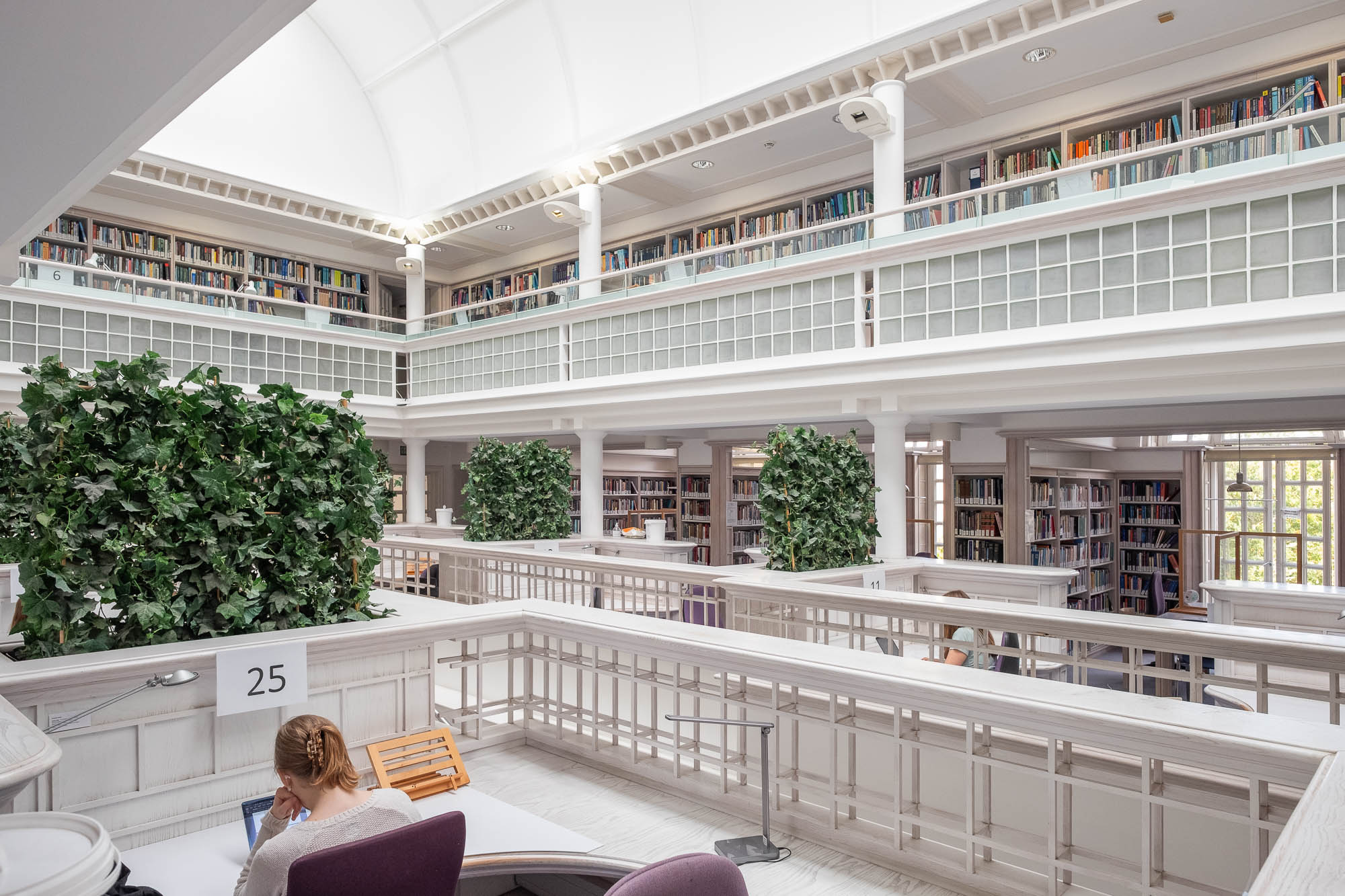
Designed to function around the clock with minimal staffing, the library features automated lamps and window blinds to provide optimal lighting at all hours of the day and night. Passive ventilation is achieved through windows and lanterns that open automatically, as well as a clever row of ducts between the upper bookshelves and the base of the ceiling vault that draw air away from the side windows towards the centre of the room, cooling the space in summer and circulating warm air in cooler temperatures, all without the use of noisy fans.
The late Eldred Evans, who designed the library with her partner in work and life David Shalev, was a brilliant architect. She was part of the “British invasion”, the class of British architects who attended Paul Rudolph’s classes at Yale in 1961-62. Her classmates Norman Foster and Richard Rogers, described her as the brightest in the class. In parallel to her architecture practice, Evans was also a teacher. One of her students was Nick Mason, who one day told her that he was abandoning his studies to pursue a musical career with his band Pink Floyd.
References
Content note
You might also like