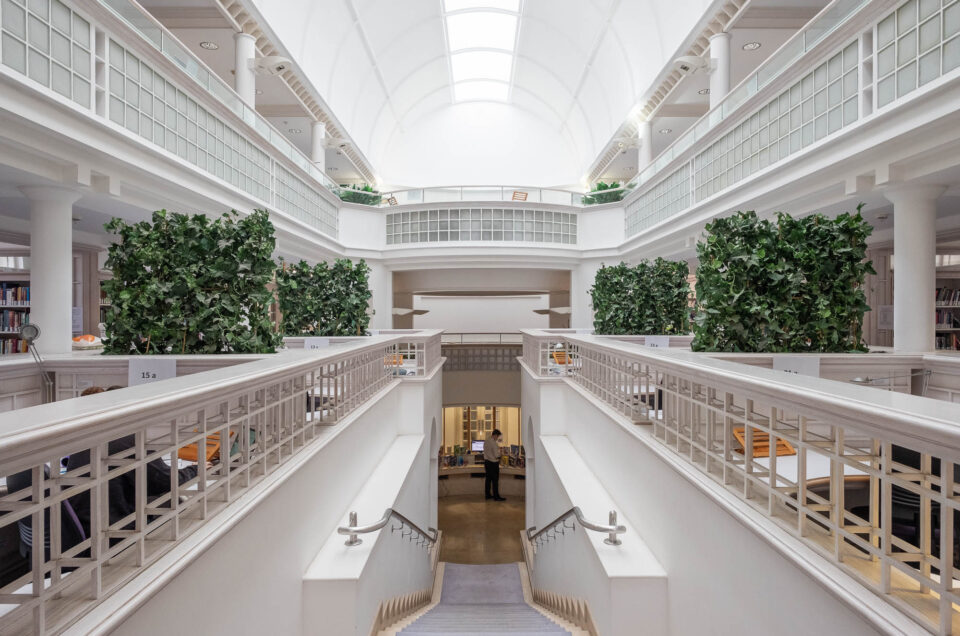
The history of Birmingham’s main public library goes back to the opening of the Birmingham and Midland Institute in 1865. After a fire destroyed all but a fraction of the collection, another structure was built by John Henry Chamberlain. Opened in 1882, this first Central Library was a Neo-Renaissance palace with a magnificent clerestoried reading room. It also included an intricately decorated room for the library’s unique Shakespeare collection, which had been established in 1864 for the 300th anniversary of the Bard’s birth. The Chamberlain building was however eventually unable to contain the library’s expansion and the construction of a new Central Library was decided by city council following the two World Wars. Designed by Birmingham architect John Madin, the new library formed part of the ambitious urban Paradise Circus renewal project, which projected an extensive network of elevated pedestrian walkways connecting major civic and cultural institutions above the roaring traffic of the newly constructed Inner Ring Road.

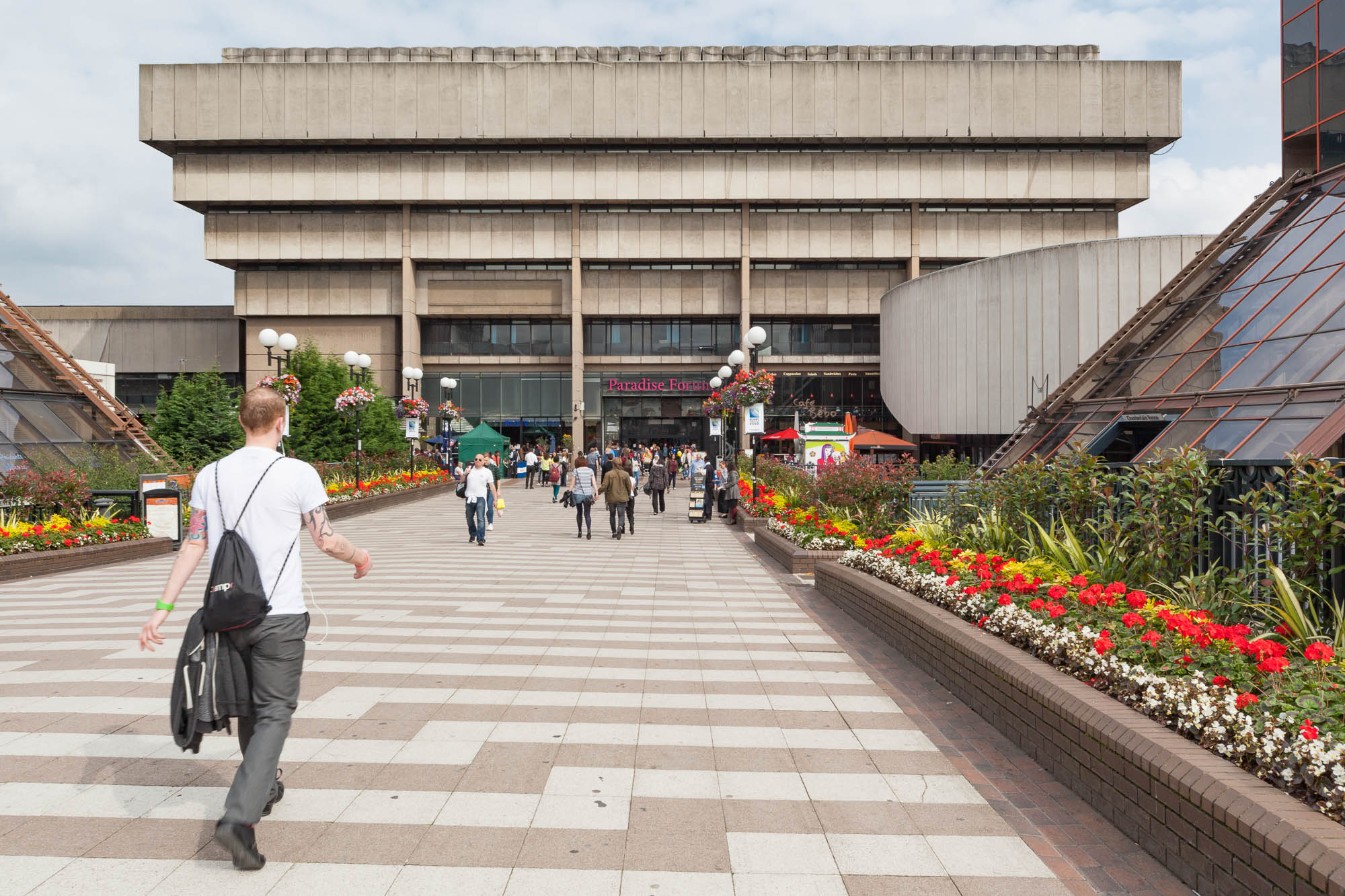
Madin’s Central Library opened on January 12, 1974, then the largest municipal library in Europe. It was composed of two distinct buildings: an eight-story reference library and an attached smaller three-story lending library. The reference library was shaped as a square inverted ziggurat structure, with an open atrium at the centre. The original design called for white marble cladding, but this was swapped with sandblasted concrete panels as a cost-cutting measure. Underneath the library was a bus station connected to the Ring Road. Consequently, the library had no underground storage space and its entire collection was spread over the eight above-ground storeys, in oak veneer book stacks. Suffering the fate of many Brutalist structures, the Central Library was insufficiently maintained and rapidly declined in appearance and public opinion. When the Paradise Circus site was sold to a private contractor for redevelopment, the fate of the library was sealed.
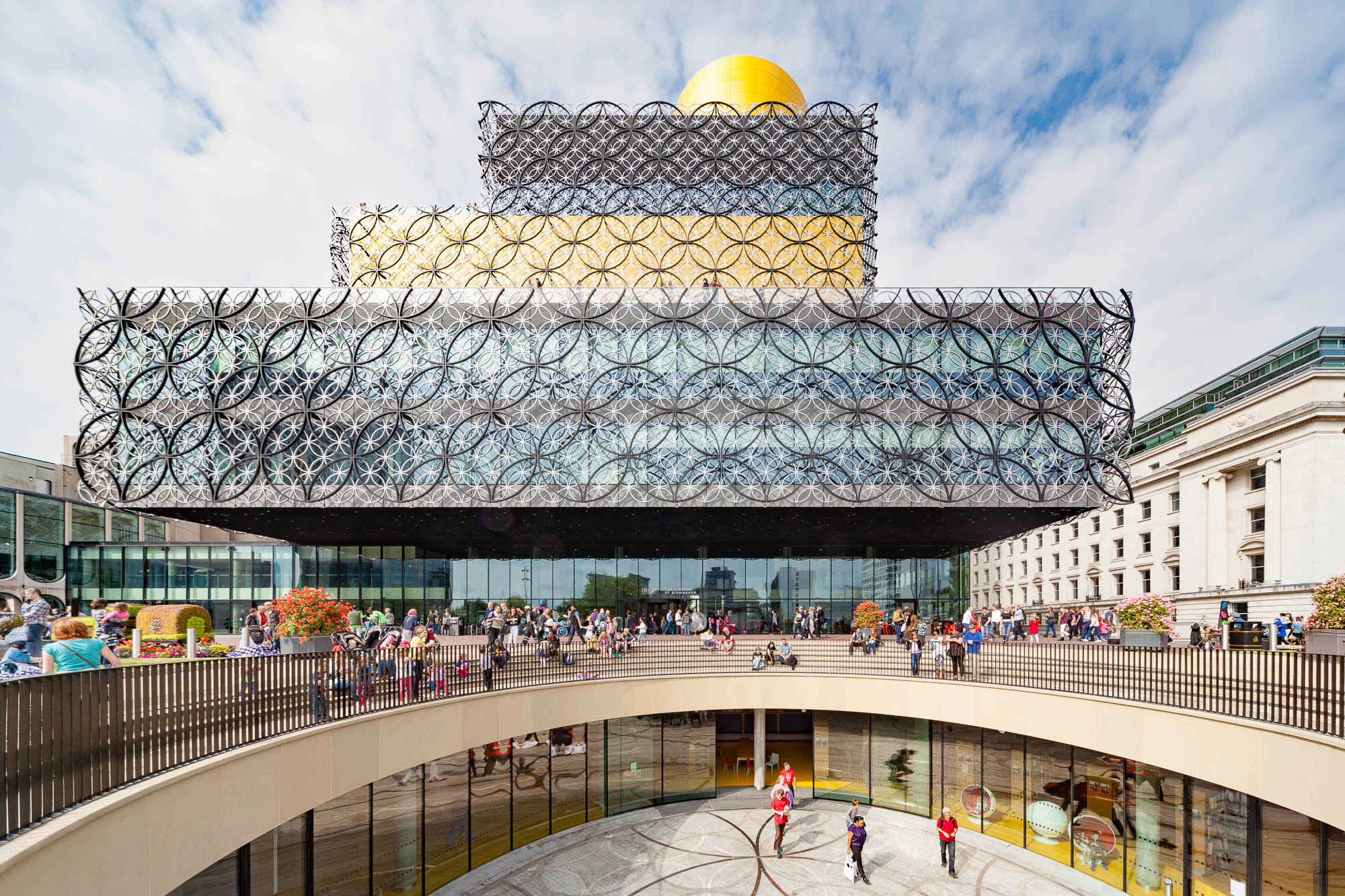
The project to relocate the library led to an international architectural competition in 2008. The winning project was proposed by the Dutch firm Mecanoo. Perhaps as a nod to the original John Maddin project, the initial plan was to clad the new library in white marble, but the city Council requested the new library to be visually striking. Mecanoo came back with an eye-catching lattice of interlocking aluminum circles that recalls Alden B Dow’s Midland Center for the Arts. The new library opened in September 2013.
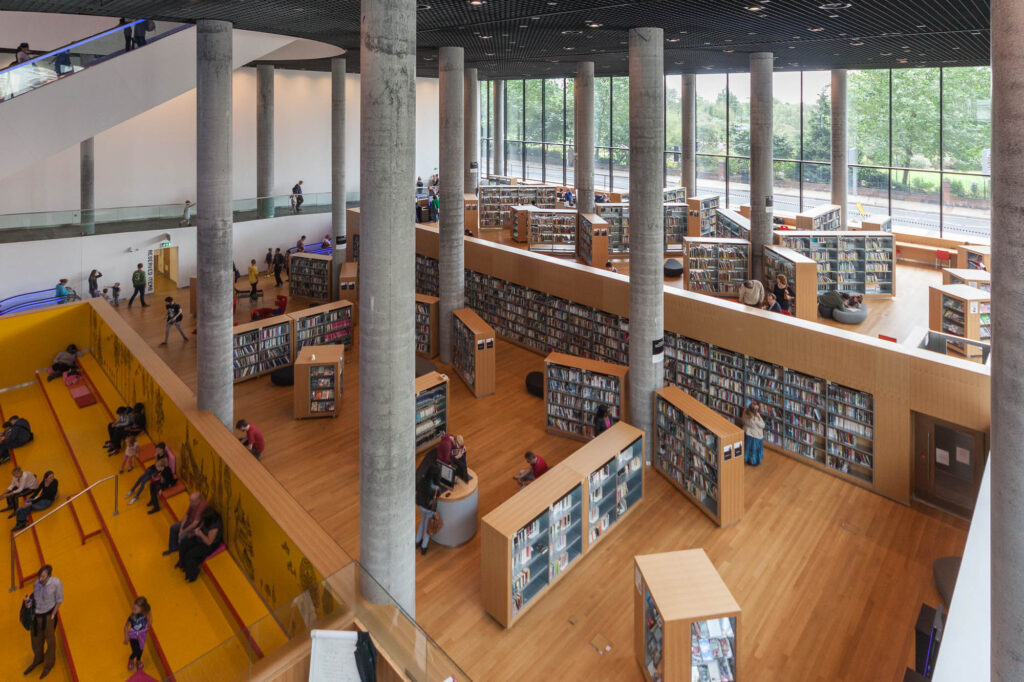
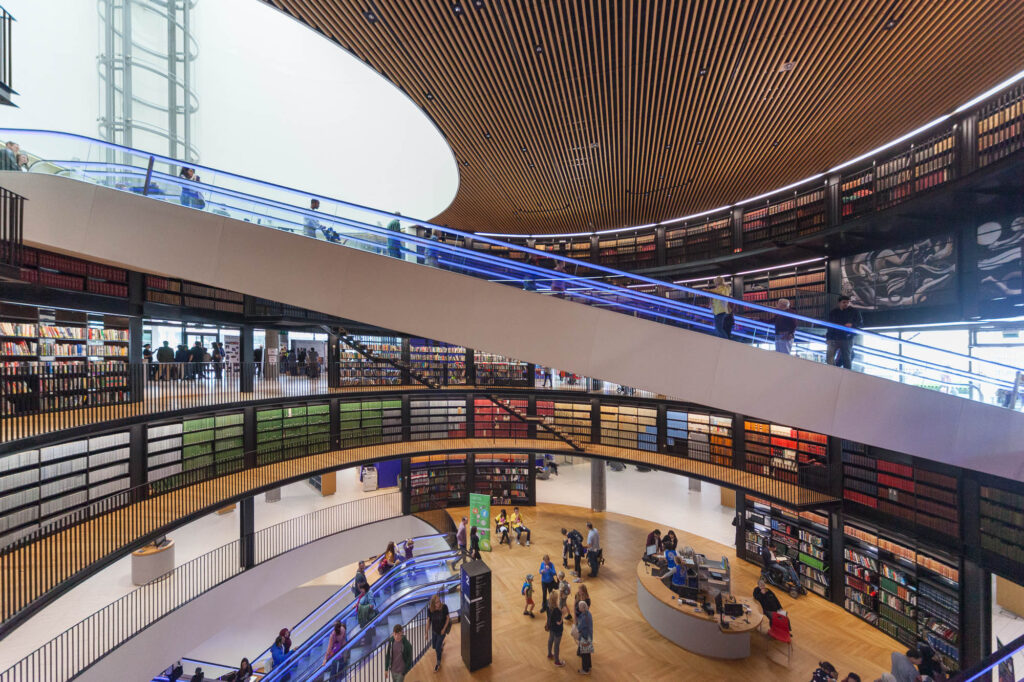
Another potential nod to the 1974 Central Library are the pairs of escalators ferrying visitors to the upper levels through the large circular atrium. The latter is lined with the exposed bookshelves of the reference collection, a space that is not accessible to the public yet thus made visible. This treatment of collections as a visual (but non-functional) backdrop brings to the mind Mecanoo’s earlier TU Delft Library.
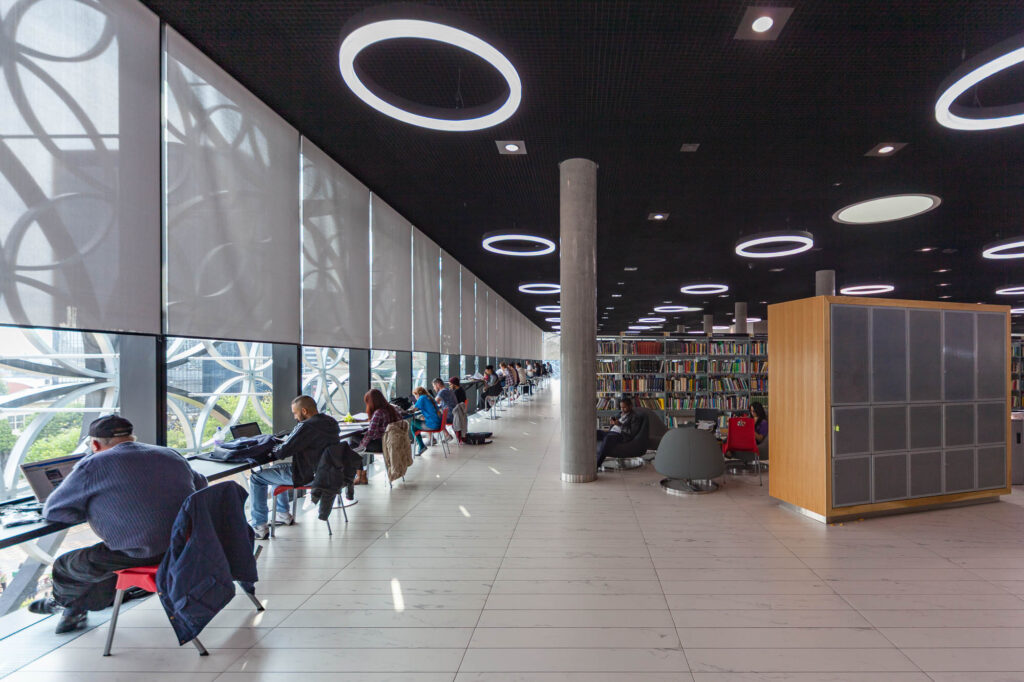
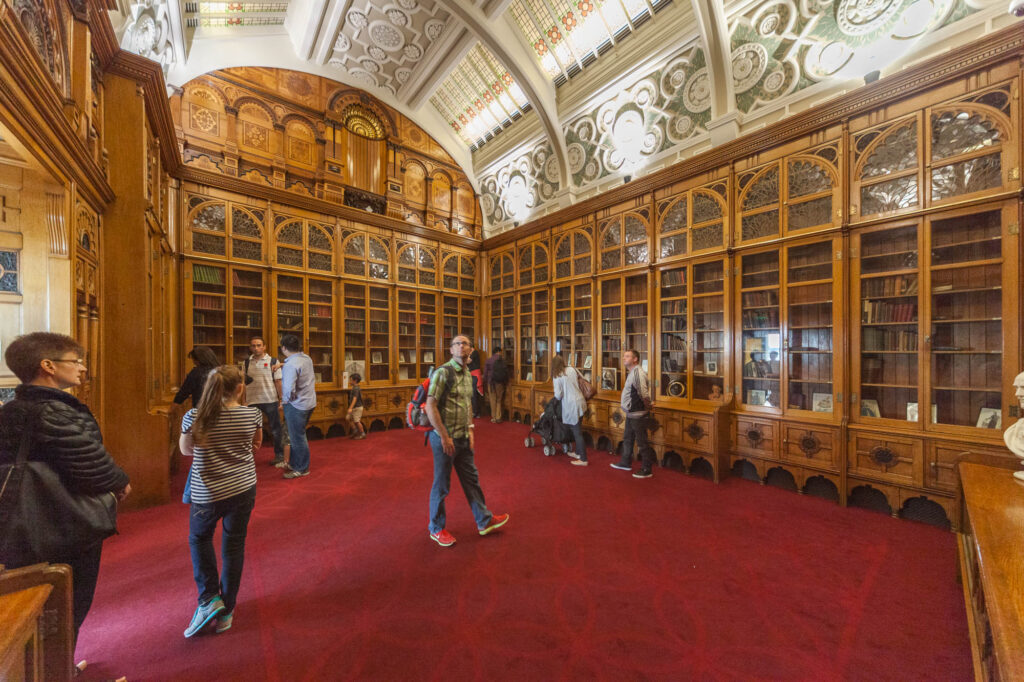
The upper floors are made of progressively smaller volumes, creating a series of planted terraces that offer views to the city and opportunities for alfresco reading. Emerging from the top terrace are two cylindrical shapes, one of which contains the original Shakespeare Memorial Library, held in storage since the demolition of J. H. Chamberlain’s first Central Library and a surprising anachronistic intrusion of Victorian architecture within the contemporary aesthetics of the building. The second cylinder serves as a light well for the atrium.

Campaigns to save the original Brutalist Central Library repeatedly failed to secure heritage status. It was eventually demolished in 2016 to make room for a new development.
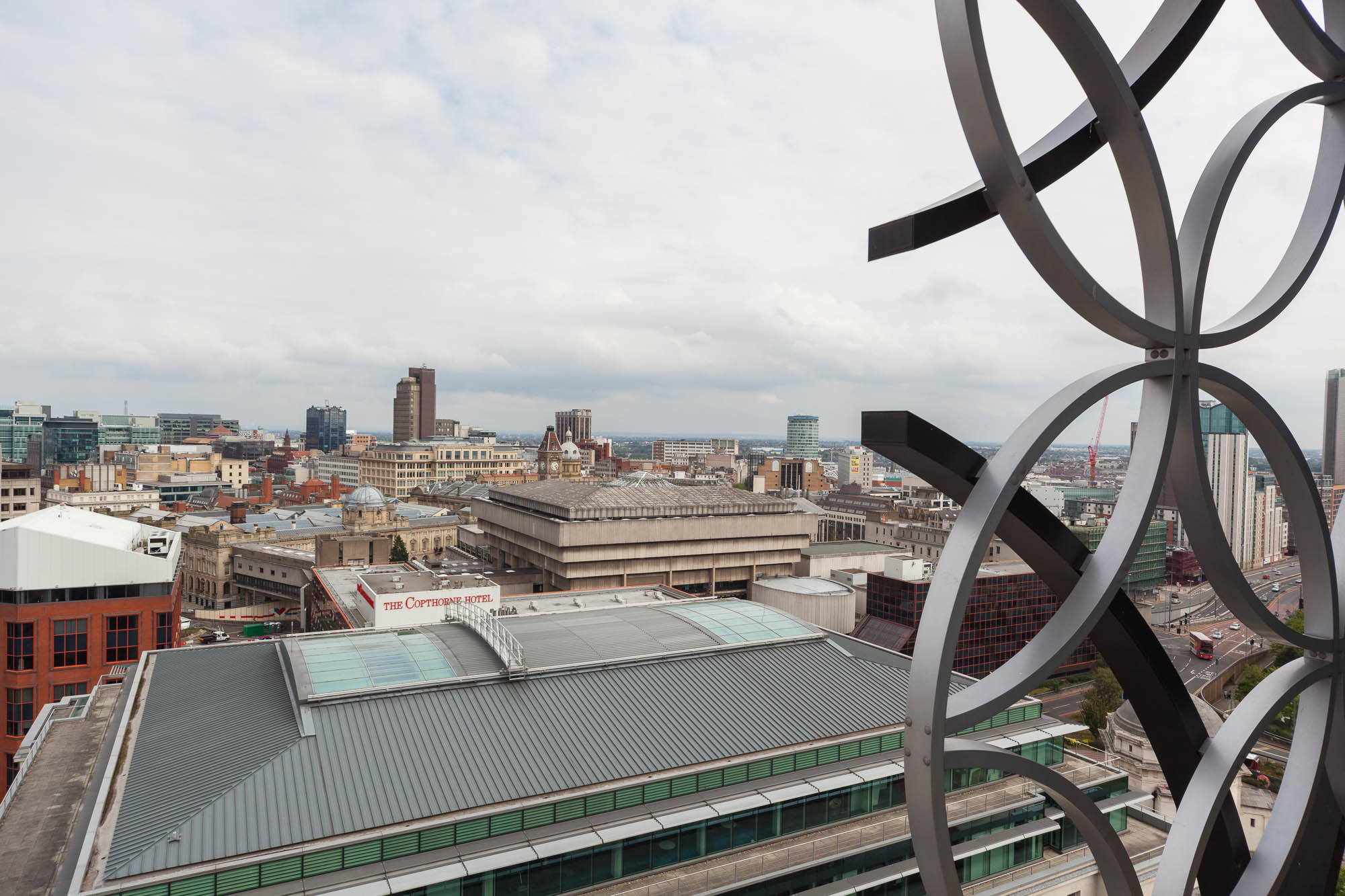
These images date from my visit in September 2014.
References
Content note
You might also like