The first central library of the Québec City public library network was built in 1983 by Paul Gauthier, Gilles Guité and Jean-Marie Roy. It was the first library to benefit from a provincial subsidy covering 50% of construction costs, part of the ambitious “Plan Vaugeois”, an initiative to help francophone Québec libraries catch up to the rest of the world after a century of stifled growth imposed by the Catholic clergy and complicit government officials.
As the vanguard of this renewal, the Gabrielle-Roy library included several revolutionary innovations for its time. Centred on the user rather than on the collections, it was a true “third place” with generous opening hours, a space for exhibitions and a theatre with programming late in the night. The city also saw the new library as a catalyst for urban renewal, opting to place it in the perennially suffering Saint-Roch neighbourhood rather than in the more affluent vicinity of the Grand Théâtre. The site chosen for the library was a lot left vacant after the demolition of Hôtel Saint-Roch, a Beaux-Arts marvel that had been left to decay piteously before the city ordered its demolition in 1974.
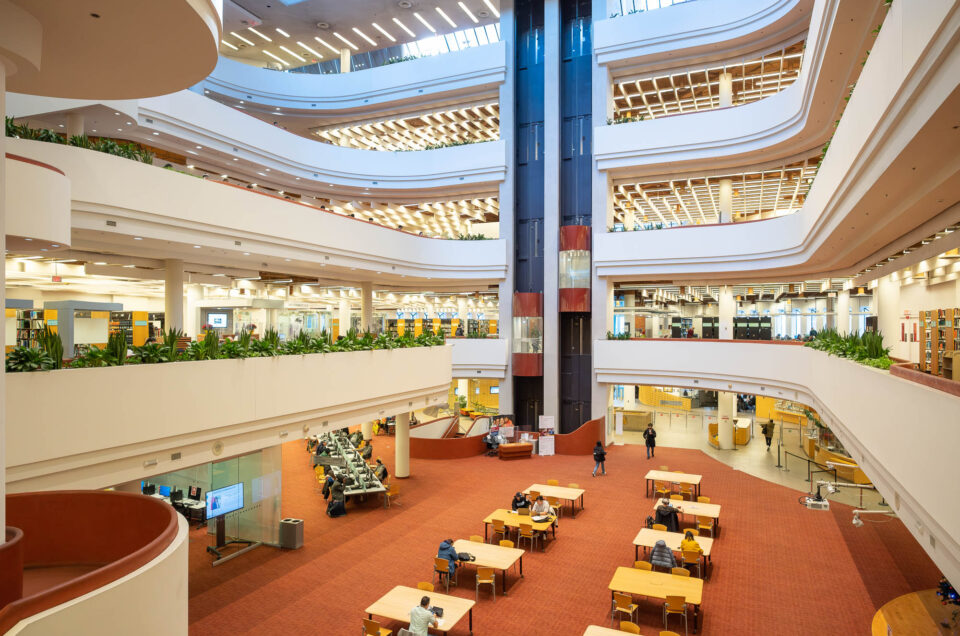
The architects drew inspiration from successful contemporary libraries such as Raymond Moriyama’s 1977 Metropolitan Toronto Library (now the Toronto Reference Library). Like its Toronto counterpart, the Québec library was had at its core a generous atrium with rounded corners lined with planters, an indoor fountain and a variety of spaces and services. It was also a child of its time, a building centred on the indoor experience behind brick walls with few openings save for the top floor. Its entrance at the bottom of an inverted pyramid disappears into darkness in many contemporary photos, an illustration of the building’s uneasy relationship with its surroundings. This was even more pronounced after the construction of an adjacent office building and mall a few years later, which moved the library’s most used entrance to an indoor connection.
While the new library quickly became a favourite of locals, its presence was not enough to save the neighbourhood from its continued decline. To revitalize St Joseph street, its main thoroughfare, the city tried converting it into a covered mall, which offered a downtown shopping experience similar to that of a suburban mall, but also contributed to isolate the area and was eventually demolished in 2000.
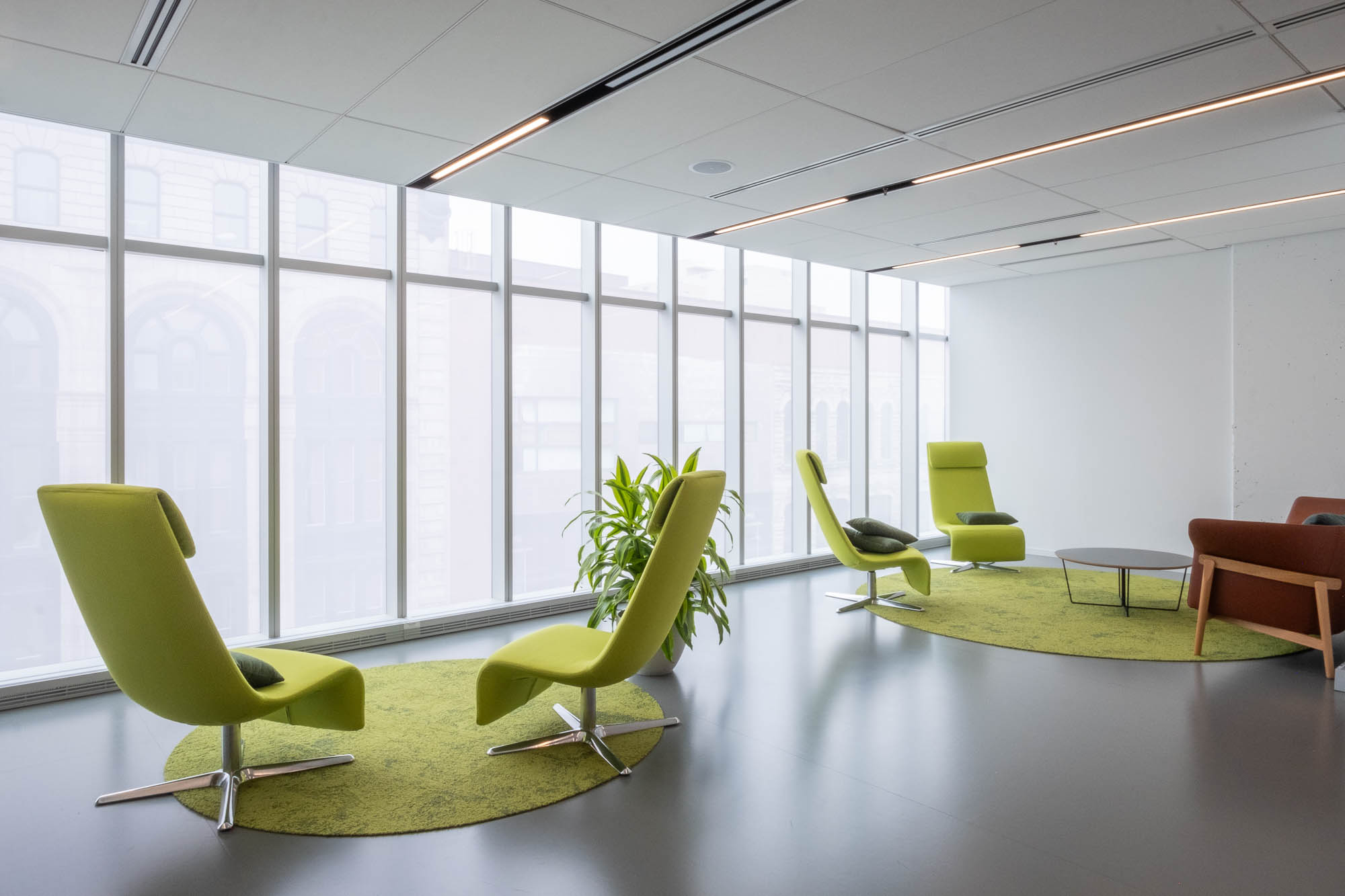
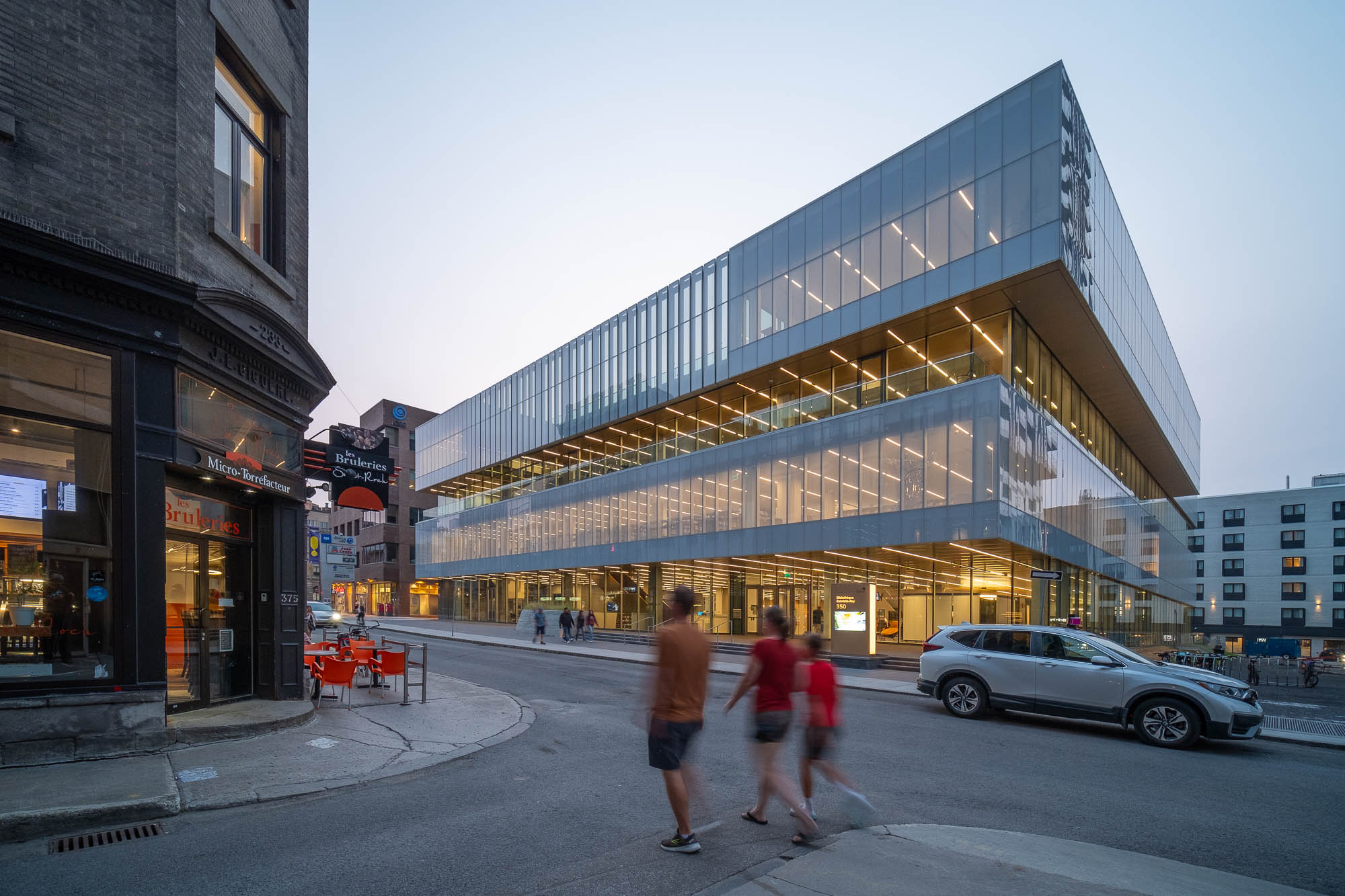
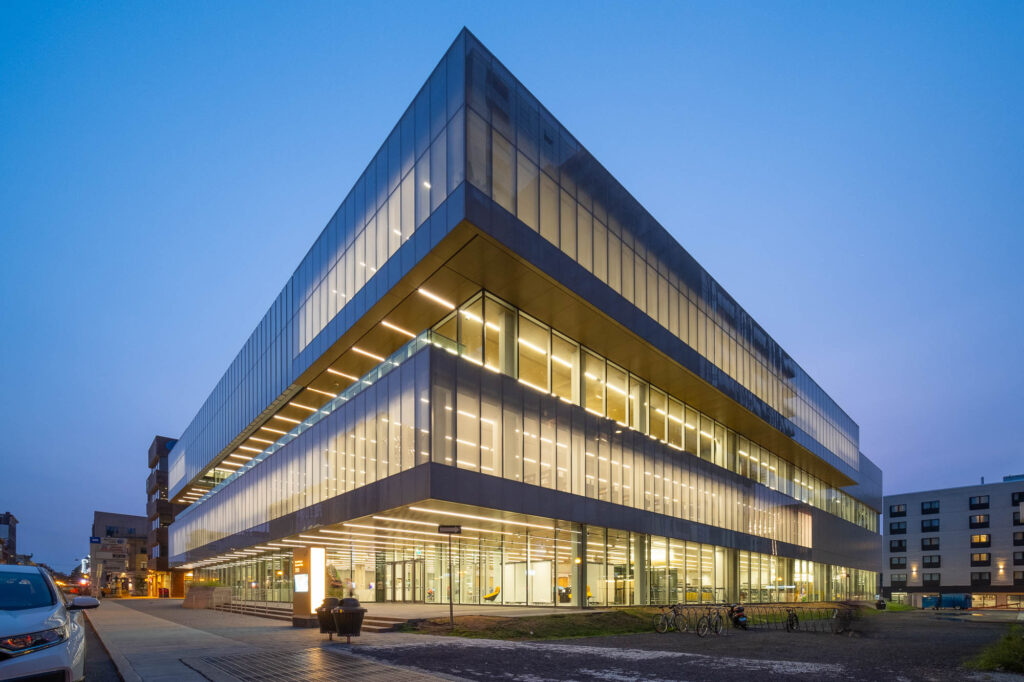
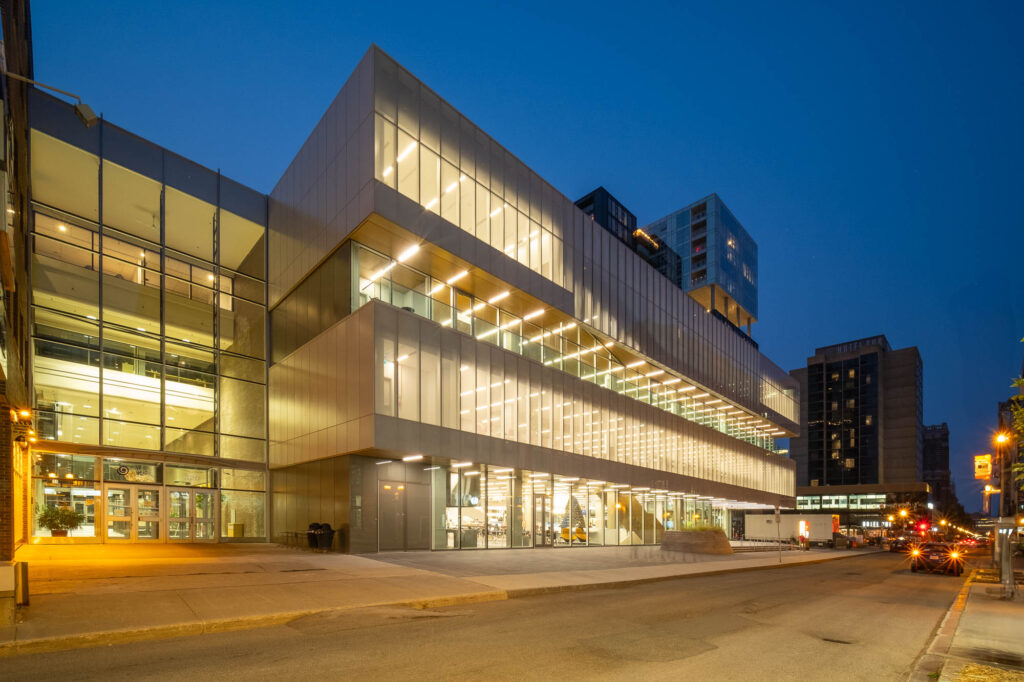
In the 2010s, a new project to revitalize the neighbourhood started taking shape, eventually leading to an extensive transformation of the Gabrielle-Roy library. Led by a consortium formed by Saucier+Perrotte and GLCRM Architectes, the project lasted from 2019 to 2023. Only the bare structure of the previous library was retained in this new incarnation. Gone are the foreboding brick walls and the dark maw of the entrance. The new library is a glass box that lights up come night time, when the translucent floor to ceiling windows become fully transparent and reveal the inner life of the building.
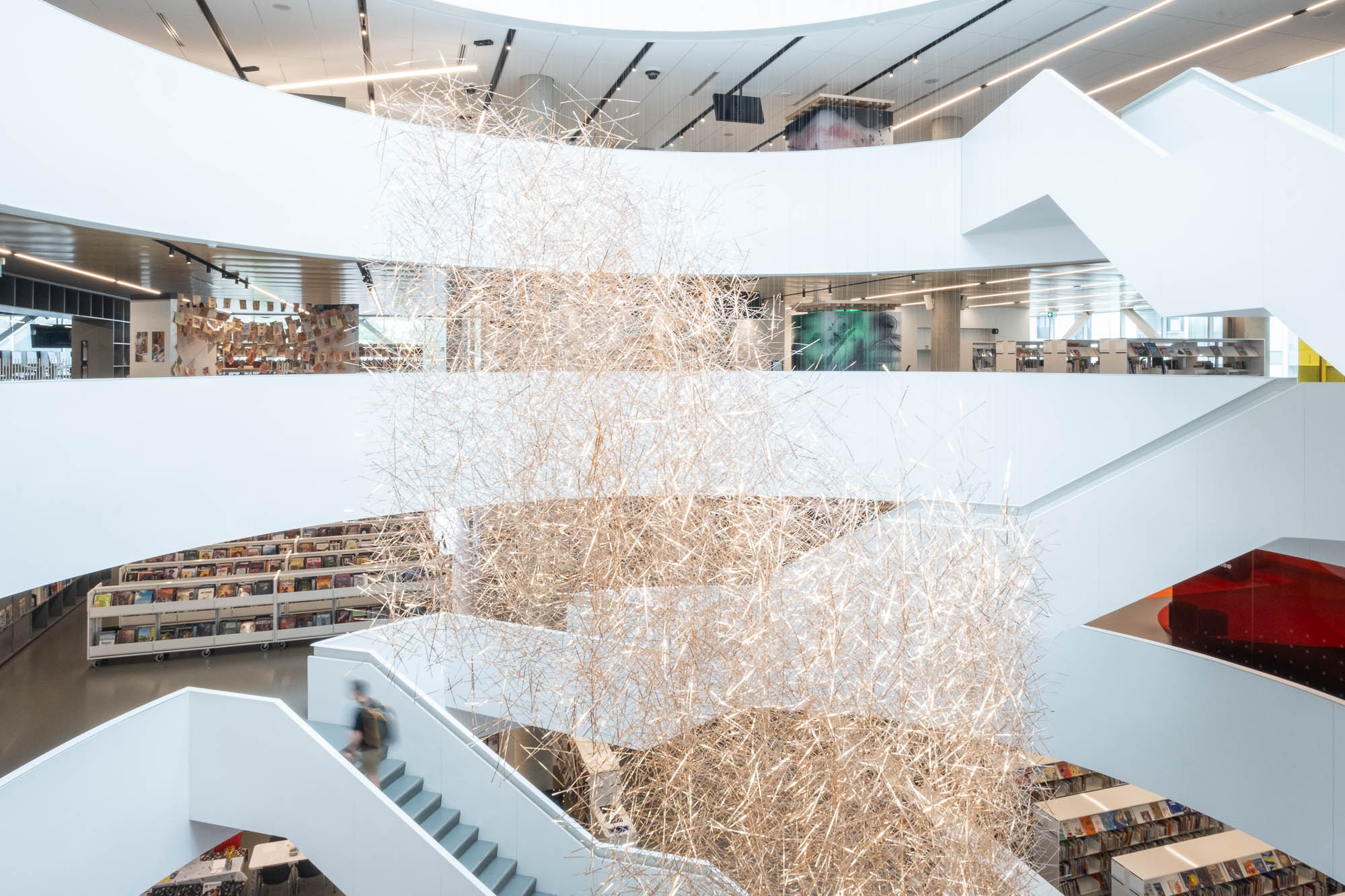
One feature that remained from the original library is the generous atrium, which still functions as a strong visual connection between floors. Its predecessor was square and lined with planters, a hanging garden full of vintage charm. Its replacement is circular and clad in sterile white panels, a change that has not been welcome by all regulars. Thankfully, it still feature the wonder that is Il semble y avoir comme une pluie d’or, the artwork by Micheline Beauchemin that’s been hanging in the atrium since 1983. The cloud of nearly 50,000 golden metal strips has been restored during the transformation and continues to shimmer at the centre of the library.
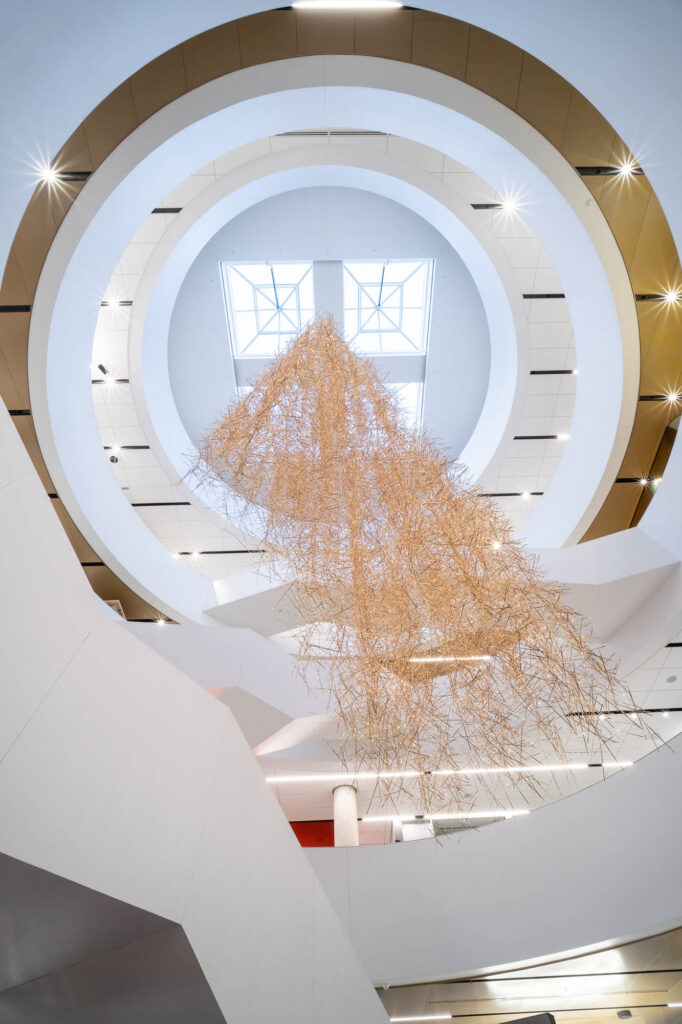
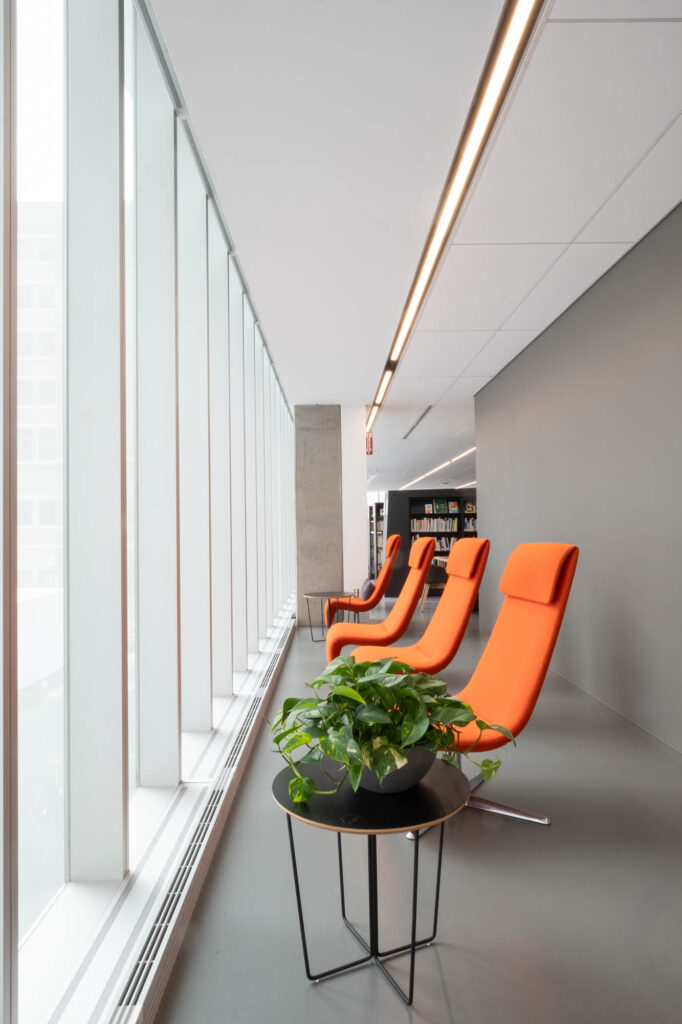
The reopening of Québec City’s central library was done without fanfare, delayed first by the Covid-19 pandemic and then by a strike of library workers. Despite this difficult start, the renewed library has taken back its spot as a beloved cultural hub.
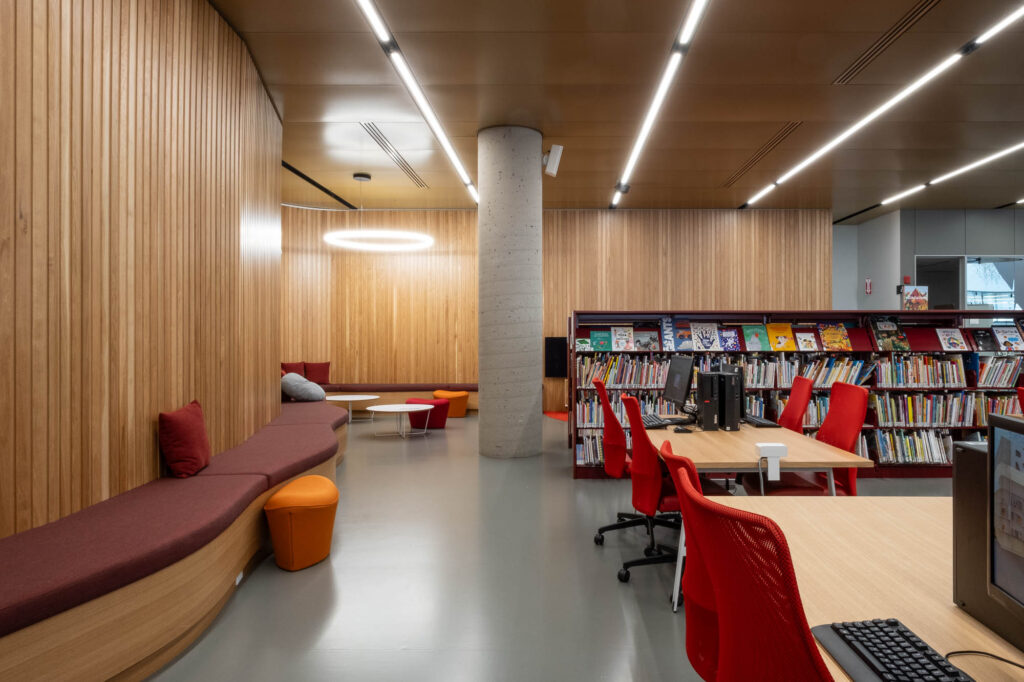
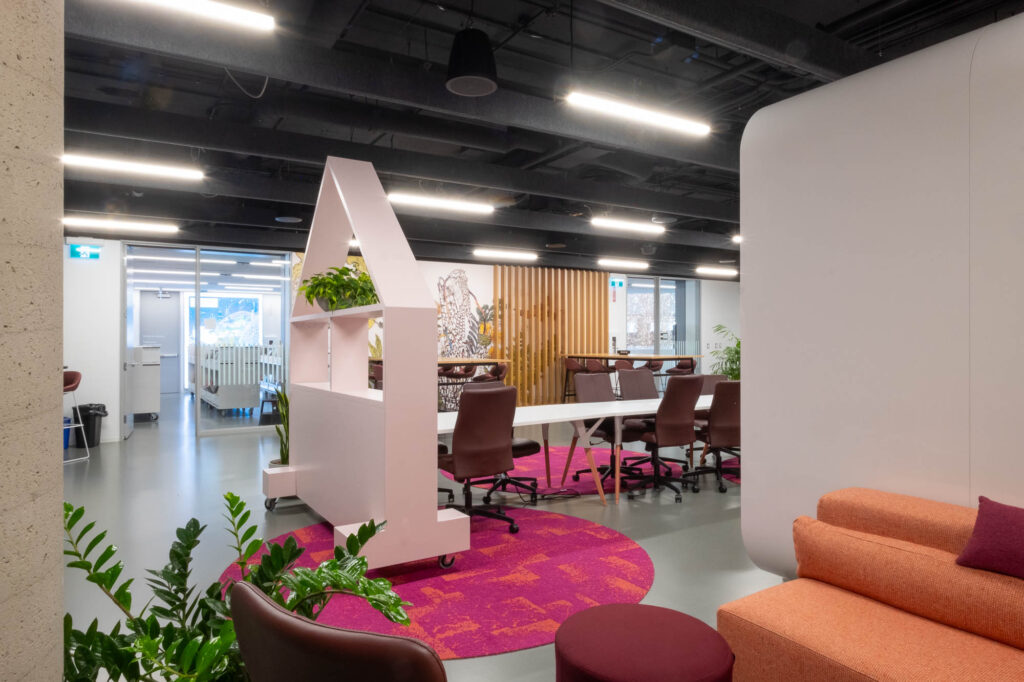
Since 1985, the library is named after Gabrielle Roy, a francophone author from Manitoba who raised to prominence following her 1945 novel Bonheur d’occasion, a realistic portrait of working-class lives in Montreal that is credited as being one of the seeds of the Quiet Revolution.
My images date from July and August 2024. Merci beaucoup à l’équipe de communication de l’ICQ et la Bibliothèque de Québec pour votre accueil!
References
Content note
You might also like