Designed by the late Raymond Moriyama, the Toronto Reference Library is among the most significant public buildings constructed in Canada in the second half of the twentieth century. Completed in 1977, its design and construction reflected both the ambitions and the constraints of a rapidly growing city seeking to redefine its cultural infrastructure.

The project began in 1971, when the Metropolitan Toronto Library Board commissioned Moriyama with a project to replace the previous Reference Library. Since its completion in 1909 thanks to a Carnegie grant, the Beaux-Arts building was a much loved edifice, but could no longer effectively function as the central library of a metropolis of nearly 3 million. The brief for the new library was framed by a broader civic aspiration to create a central reference institution that could serve an expanding population while keeping its strong public presence.
The site for the new library was strategically located near the intersection of Yonge and Bloor streets, of of the busiest in the city and a major transit hub. Moriyama’s first proposal was in line with the aesthetic of the 1970s, a sleek glass cube that would reflect its surroundings and turn transparent at night, revealing the activity within.

City Council however reacted negatively to the proposal, faulting both its heavy price tag and its imposing appearance. The oil crisis of the early 1970s had also brought a new focus on energy efficiency and less costly construction materials. More fundamentally, there was a growing recognition that a purely glass envelope risked producing a structure that was visually striking but insufficiently grounded in the scale and texture of the surrounding streetscape, which wasn’t yet marked by the high-rises of today.

The resulting revisions transformed the project for the better. In its revised 1974 proposal, Moriyama introduced a brick-clad exterior, articulated with a rhythmic pattern of recessed windows and deep reveals. More than just replacing one material with another, the choice of brick also anchored the library within the material vocabulary of the city. Another significant change was replacing the sheer vertical walls of the initial proposal with a stepped construction, reducing visual impact from the sidewalk. Where the entrance meets the street, the perceived height of the building is greatly reduced and human-sized.


Inside, the scale shifts dramatically. One element that the architect kept from the original proposal was the large, open central atrium, rising through multiple levels and encircled by gracefully curving tiered balconies. A bank of space-age elevators zip patrons up and down while offering dramatic views of the building interior.

This spatial arrangement creates visual continuity across floors and facilitates orientation within the building. Indirect natural light, introduced from curved roof louvres of Scandinavian inspiration, filters down into the core. The interior thus retains some of the openness originally envisioned in the glass scheme, but in a controlled and inward-facing manner.

Over time, Moriyama’s “Metro library perfection” has demonstrated the durability of its design decisions. The brick facade has weathered well, both materially and aesthetically, avoiding the obsolescence that has affected many fully glazed buildings of the same period. More importantly, the building continues to function effectively as a major public institution, accommodating evolving uses while preserving its original spatial logic. The original colour scheme of deep orange carpet and wall linings contrasting with the clean white walls has been mercifully maintained and still evokes the groovy 1970s of its youth.
Several small interventions have kept the building current and in line with its users’ needs, but without altering its visual impact. They were led by Moriyama & Teshima, the still-operating firm of the original architect.


When I lived in Toronto, the Reference Library was hands down my favourite space in the city. Despite its vastness, it offers a unique combination of calm and muted energy. As beloved by the public as ever, the library is the host of several main cultural events, such as the Toronto Comic Arts Festival and plays an important role in the Toronto psyche, appearing in many pop culture references from Scott Pilgrim to The Weeknd.
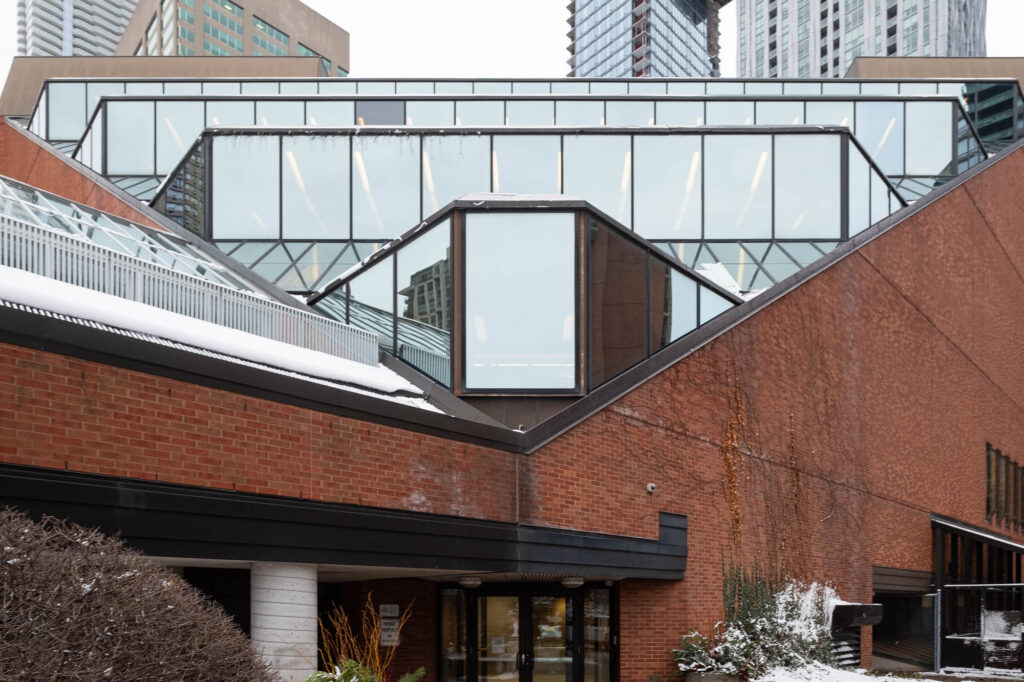
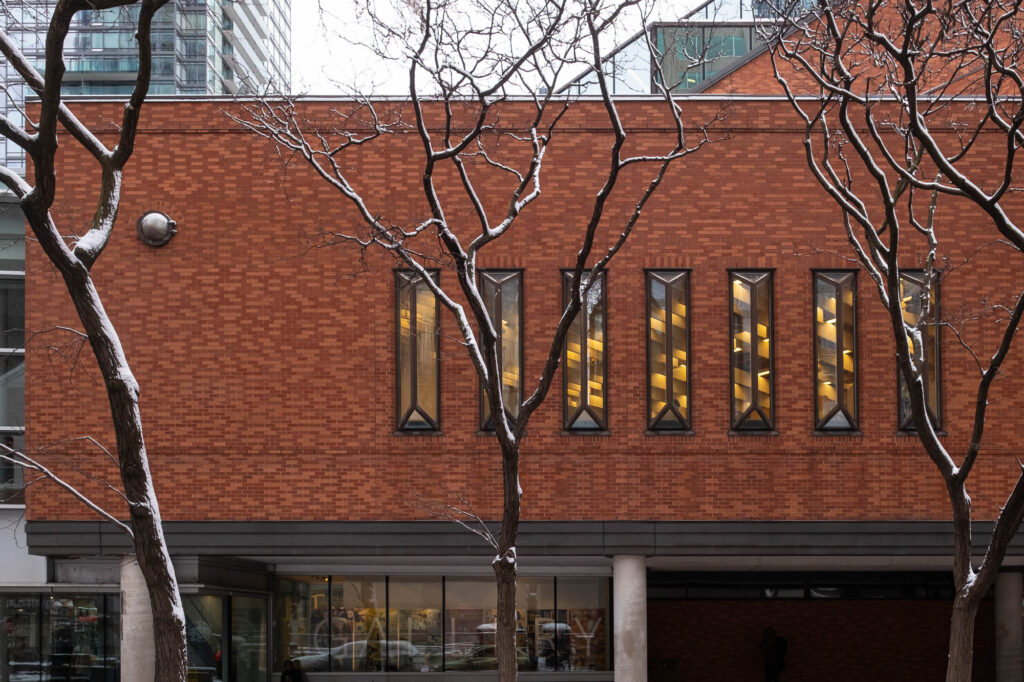
The images shown here date from December 2022.
References
Content note
You might also like