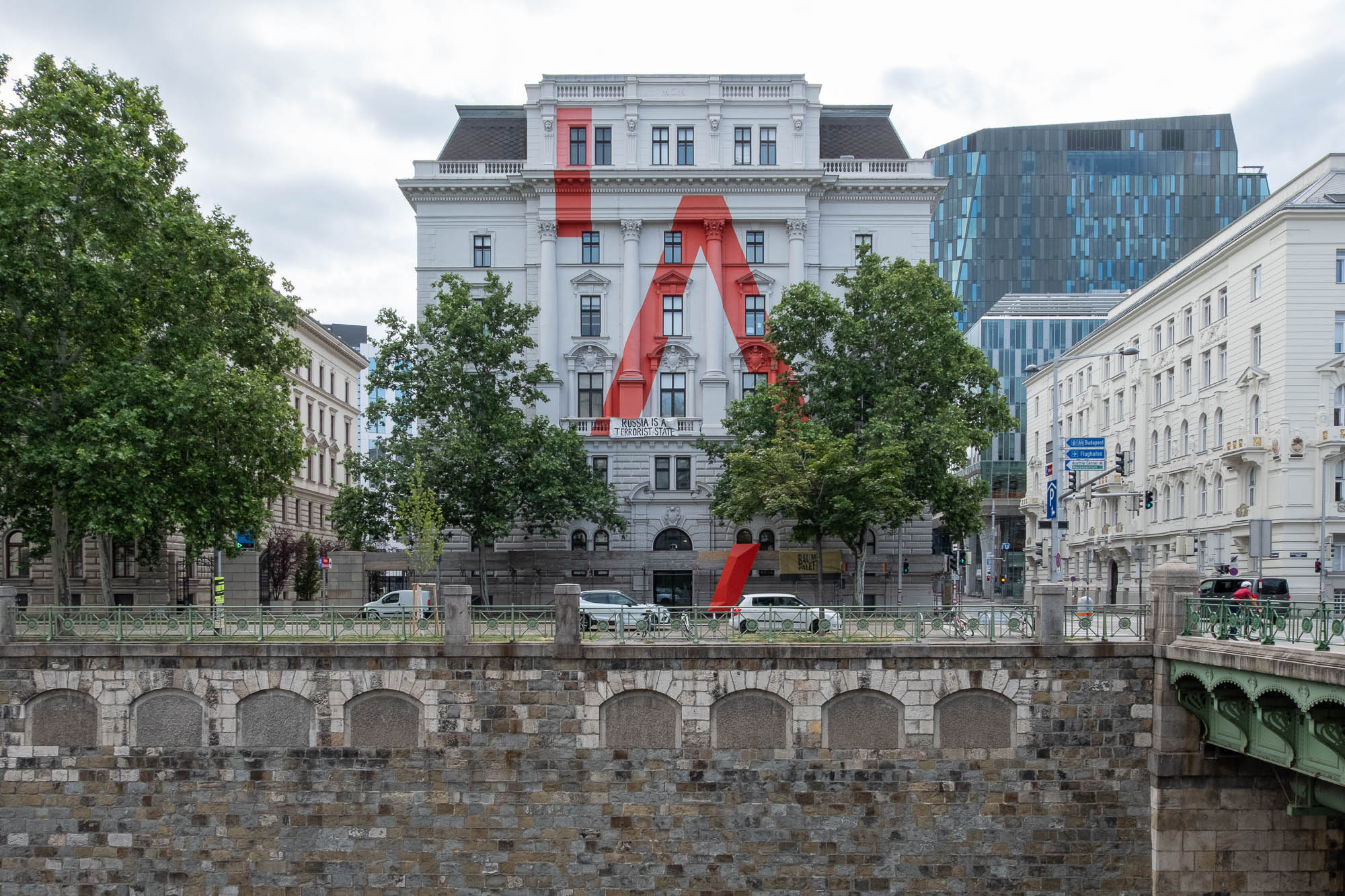
The former Customs and Finance Directorate building in Vienna was built by Alois Schumacher in 1895-1901 as part of the second Ring development. Its wedge shape tapers towards the banks of the river Wien, where it ends in a handsome narrow facade with a portico of Corinthian half-columns.
The Directorate vacated its building in 2003, after which it was used as a hostel for asylum seekers, the largest in the city. It is now used by the Vienna University of Applied Arts (“die Angewandte”), which had outgrown its historical location across the river.
Completed in 2018, the transformation was led by Riepl Kaufmann Bammer Architekten and was the continuation of the transformation of the 1960s Wörle-Schwanzer-Trakt across the river, also taken over by the Angewandte. Both projects earned the ZV building prize in 2019.
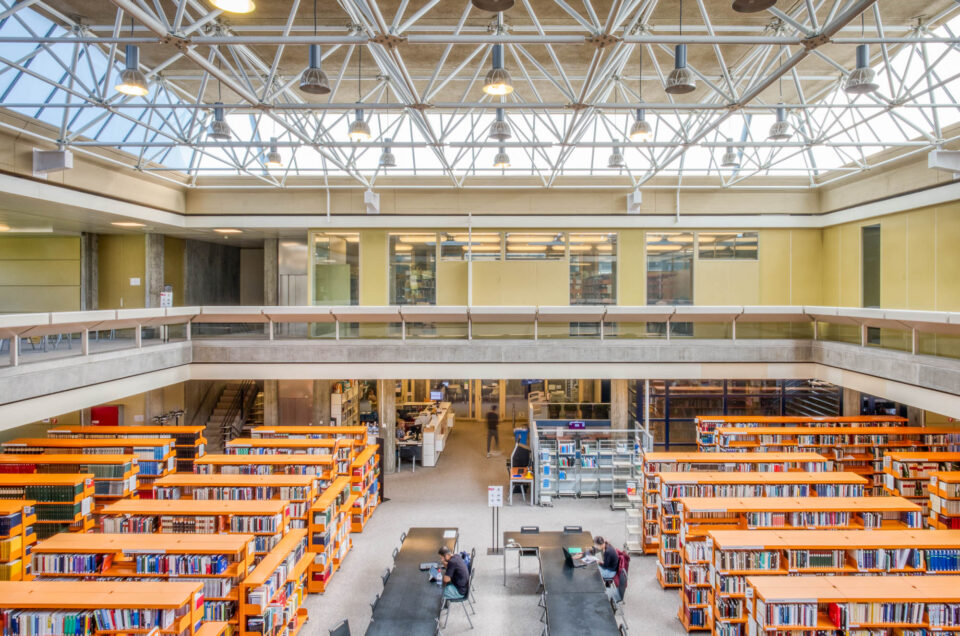
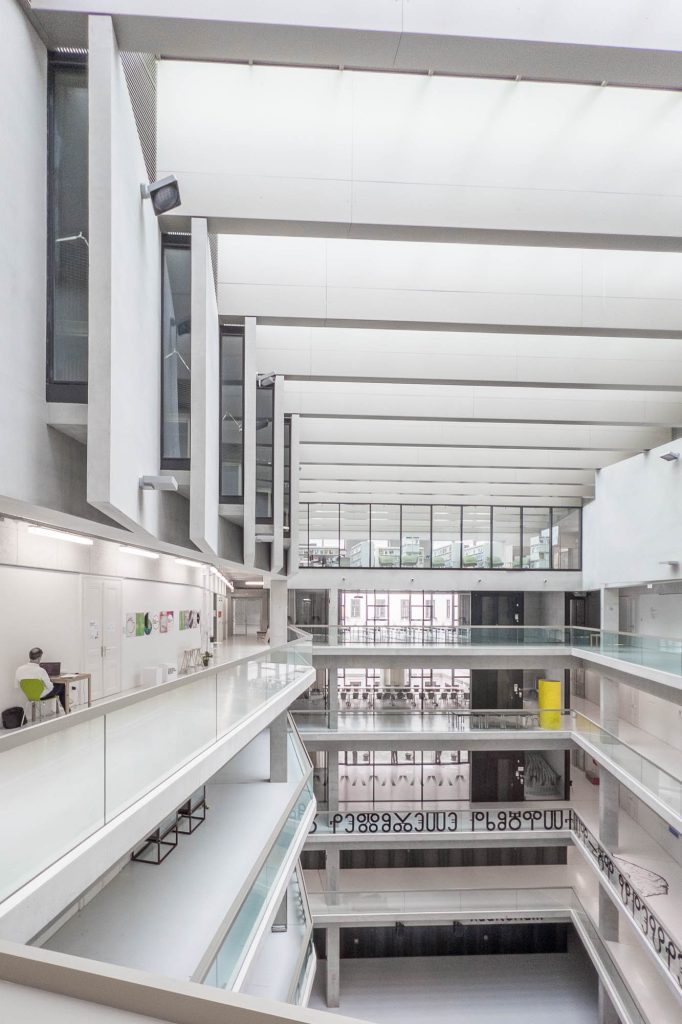
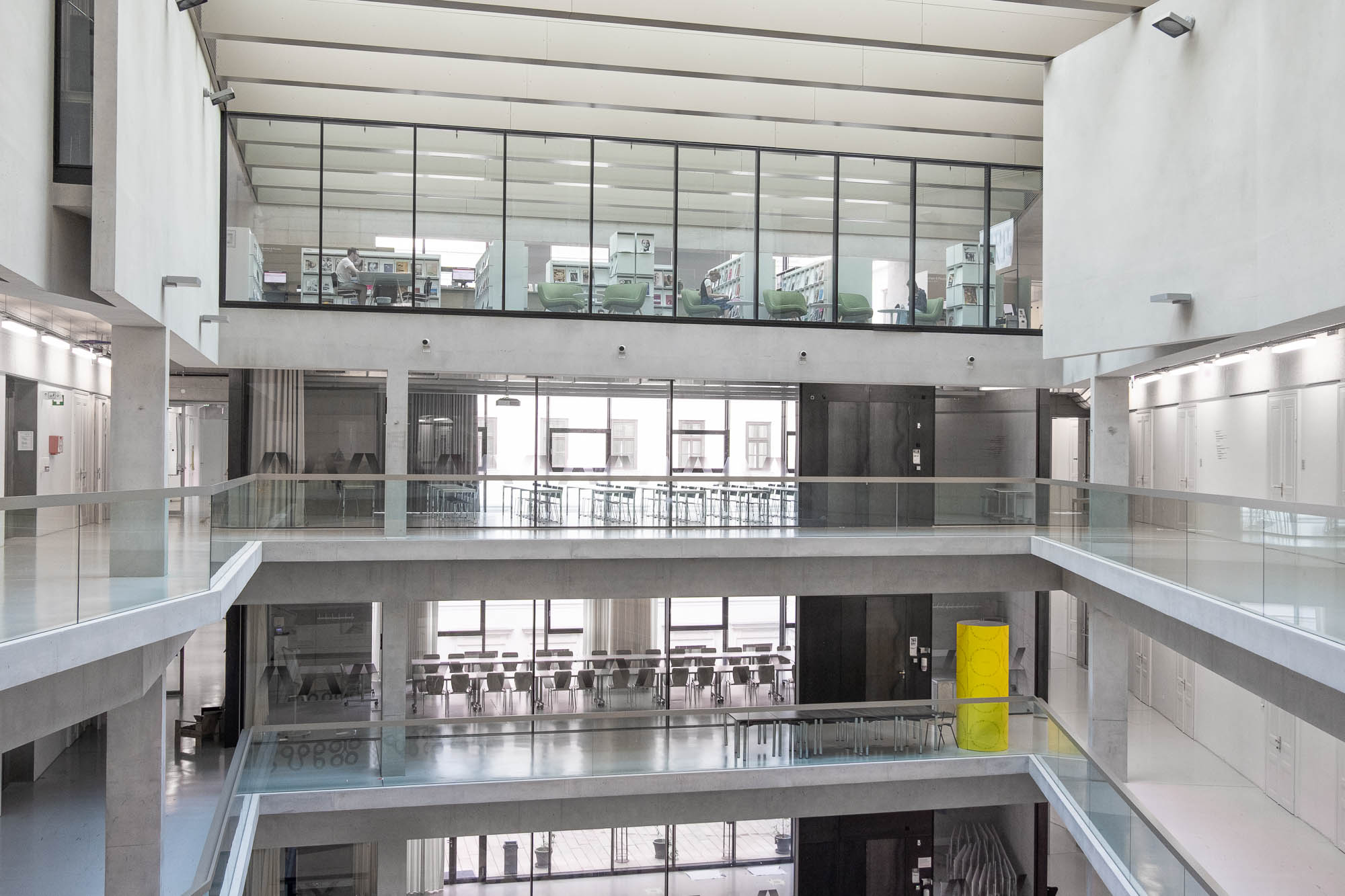
The front portion of the Finance Directorate building, with its monumental stairwell, was preserved in its entirety. Of the rest of the complex, only the exterior facade remains. Inside, the architects have installed a vertiginous atrium, around which classrooms and studios are arranged to form an “introverted campus”. The reinforced concrete structure surrounding the atrium holds the building together and was accordingly carefully designed in partnership with Swiss civil engineer Jürg Conzett.
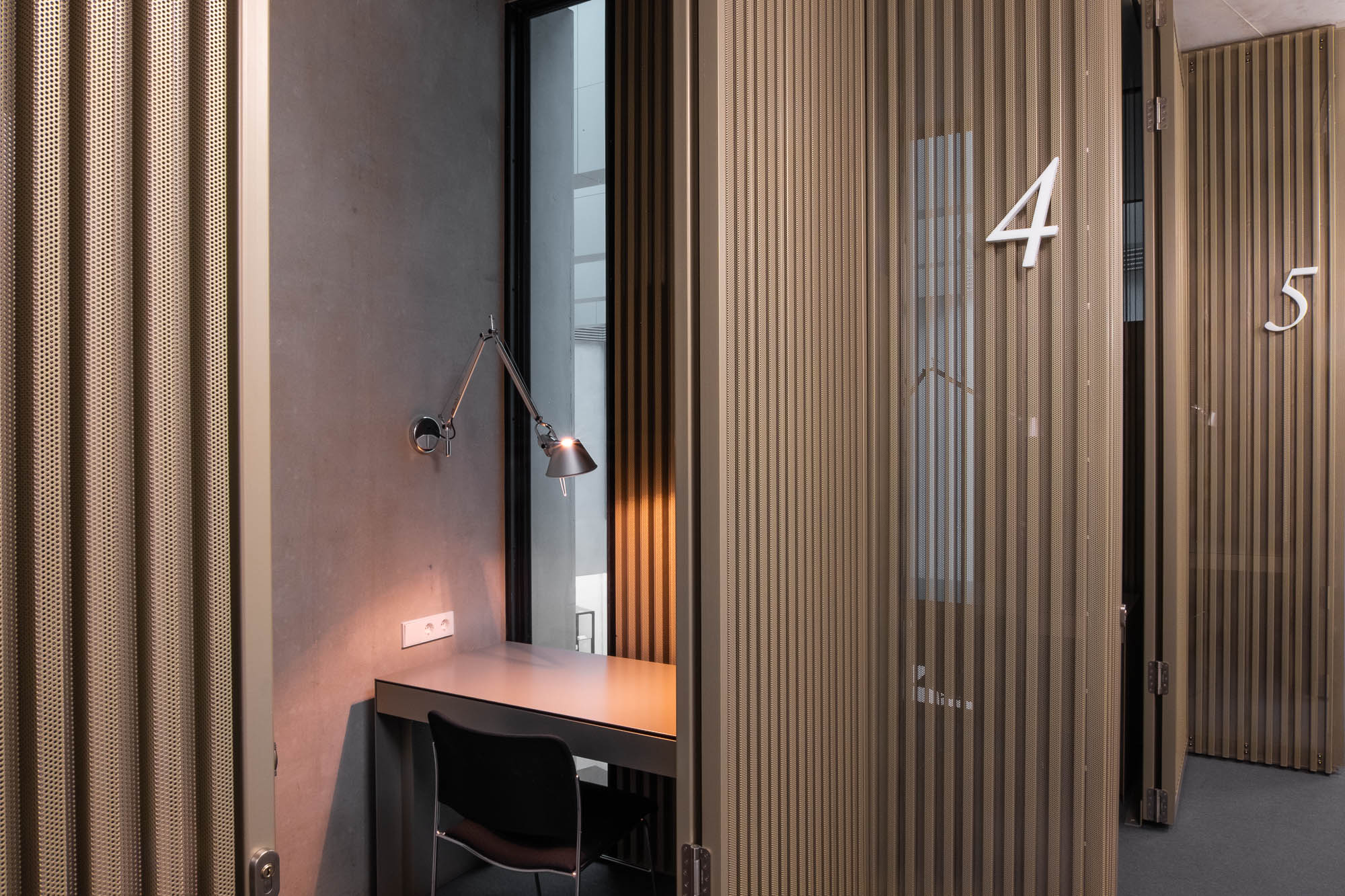
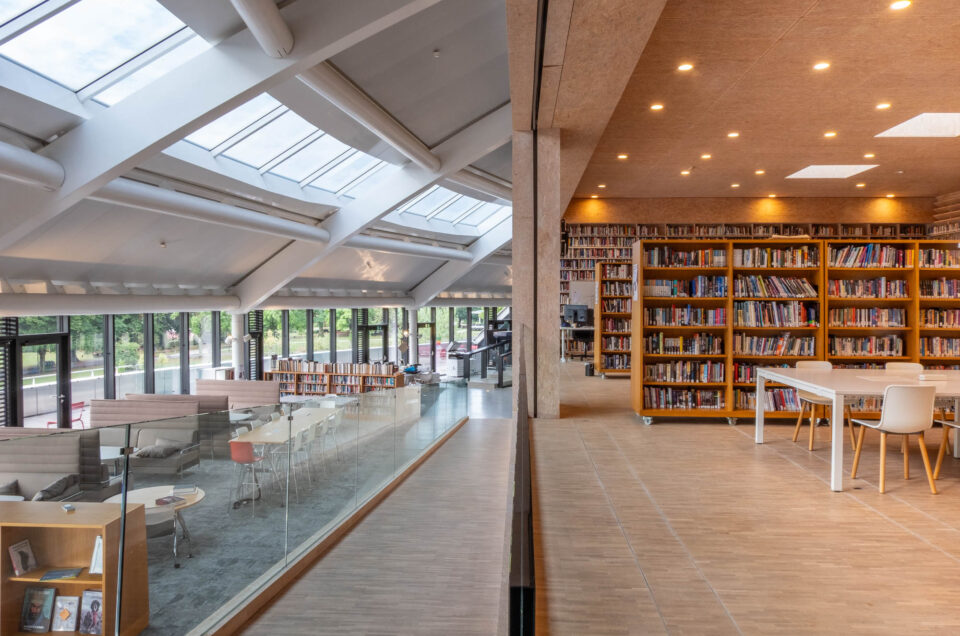
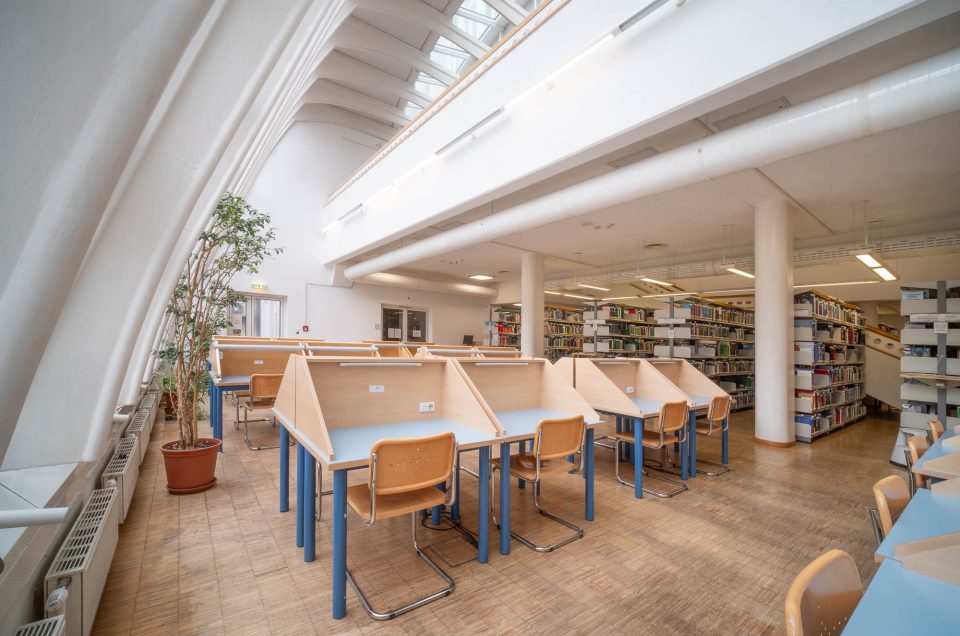
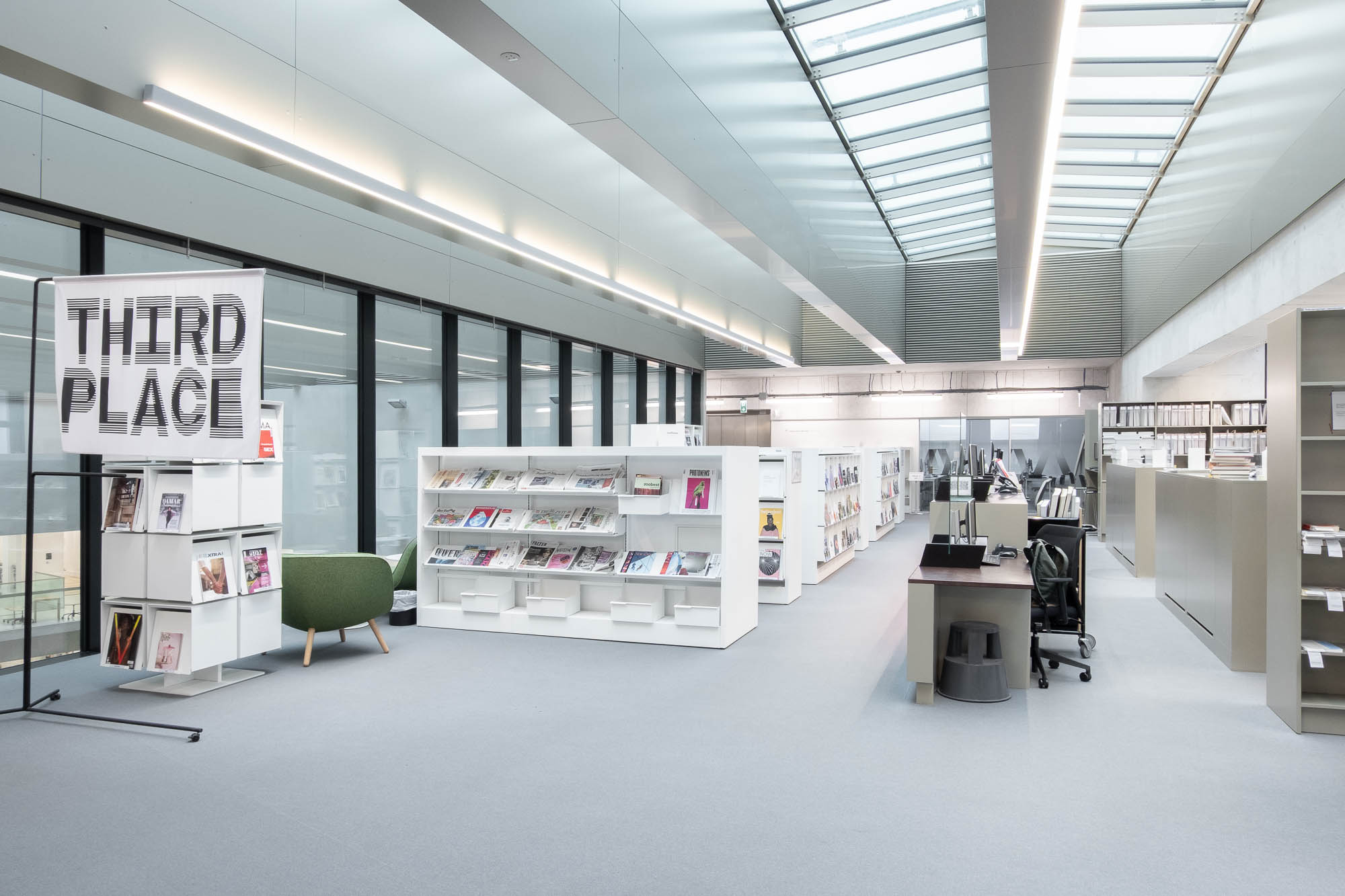
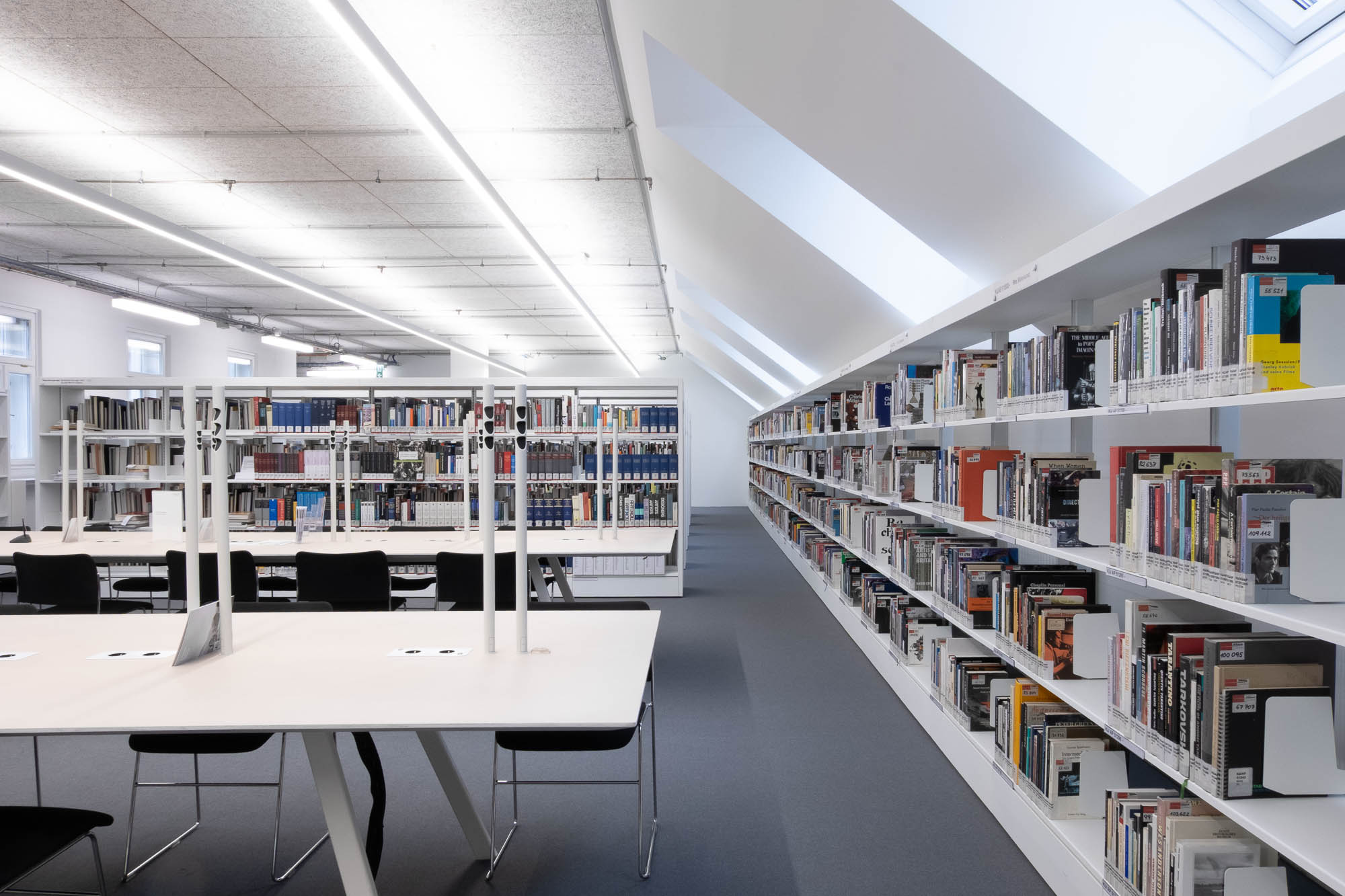
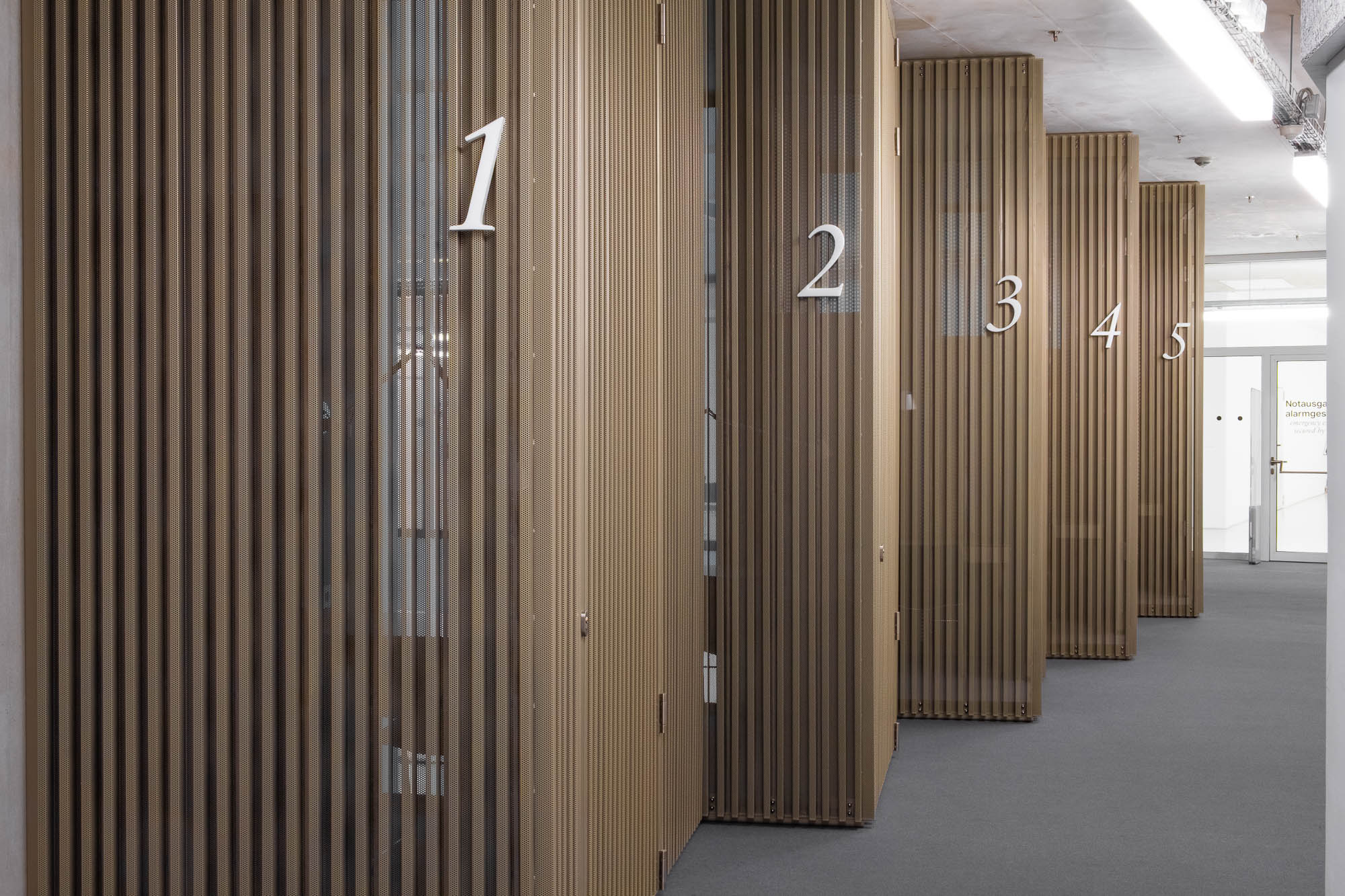
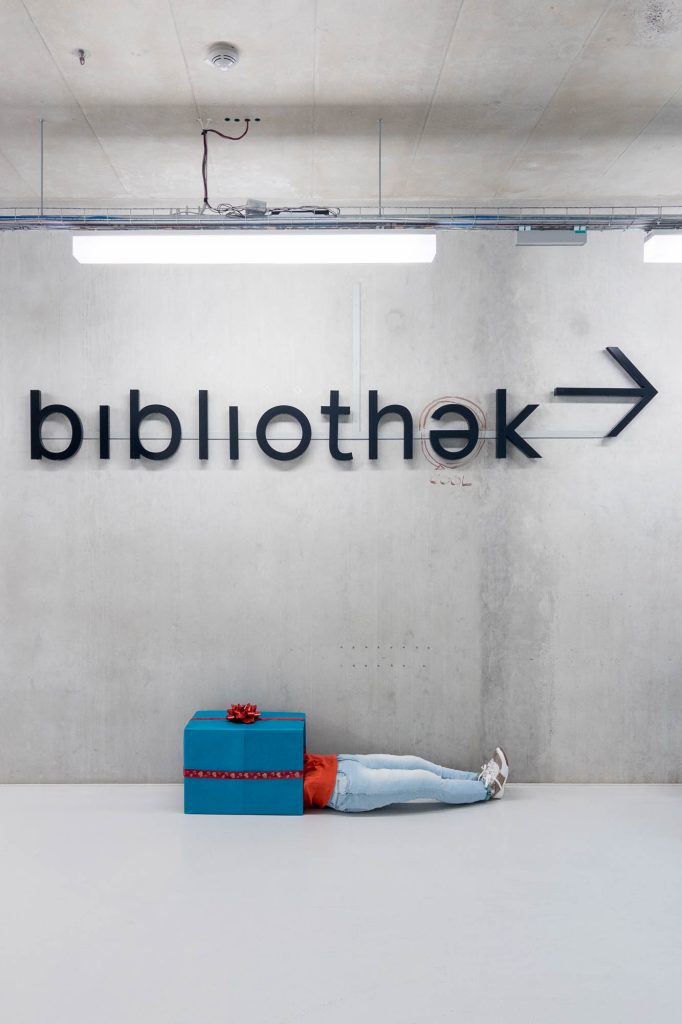
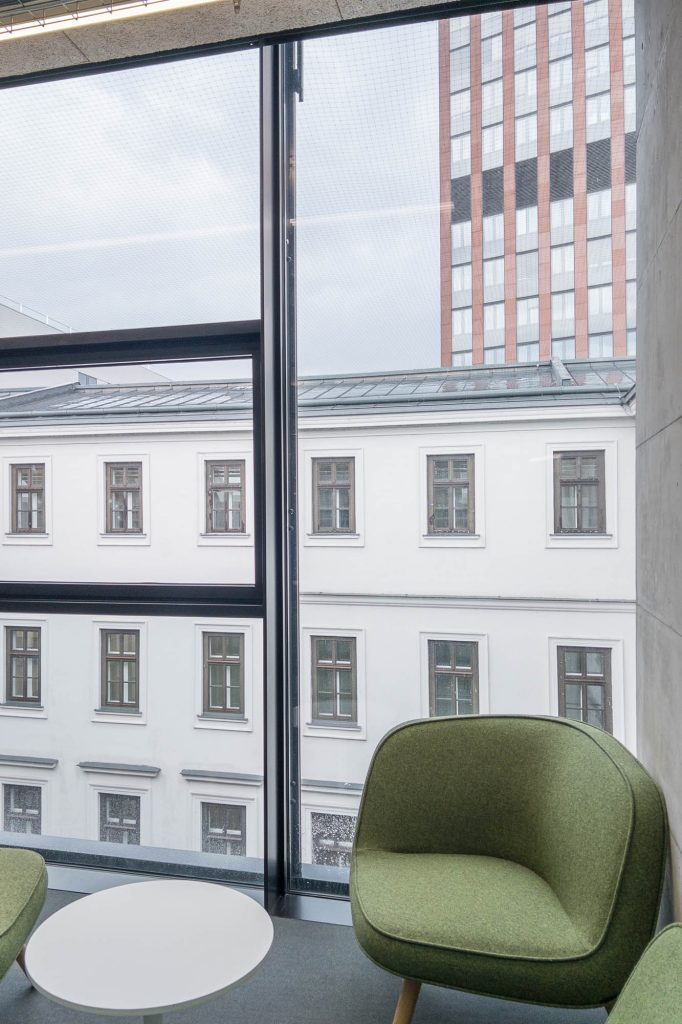
The library sits at one end of the atrium, on the top floor. This disposition allows the reading rooms to be generously lit by skylights and dormers. A series of individual working spaces are staggered on one side of the atrium, hidden behind a copper coloured lattice.
This post is part of a series on adaptive reuse in libraries. See the list of such projects I am maintaining or view other posts in this series.
The images shown here are from July 2025.
References
Content note
You might also like