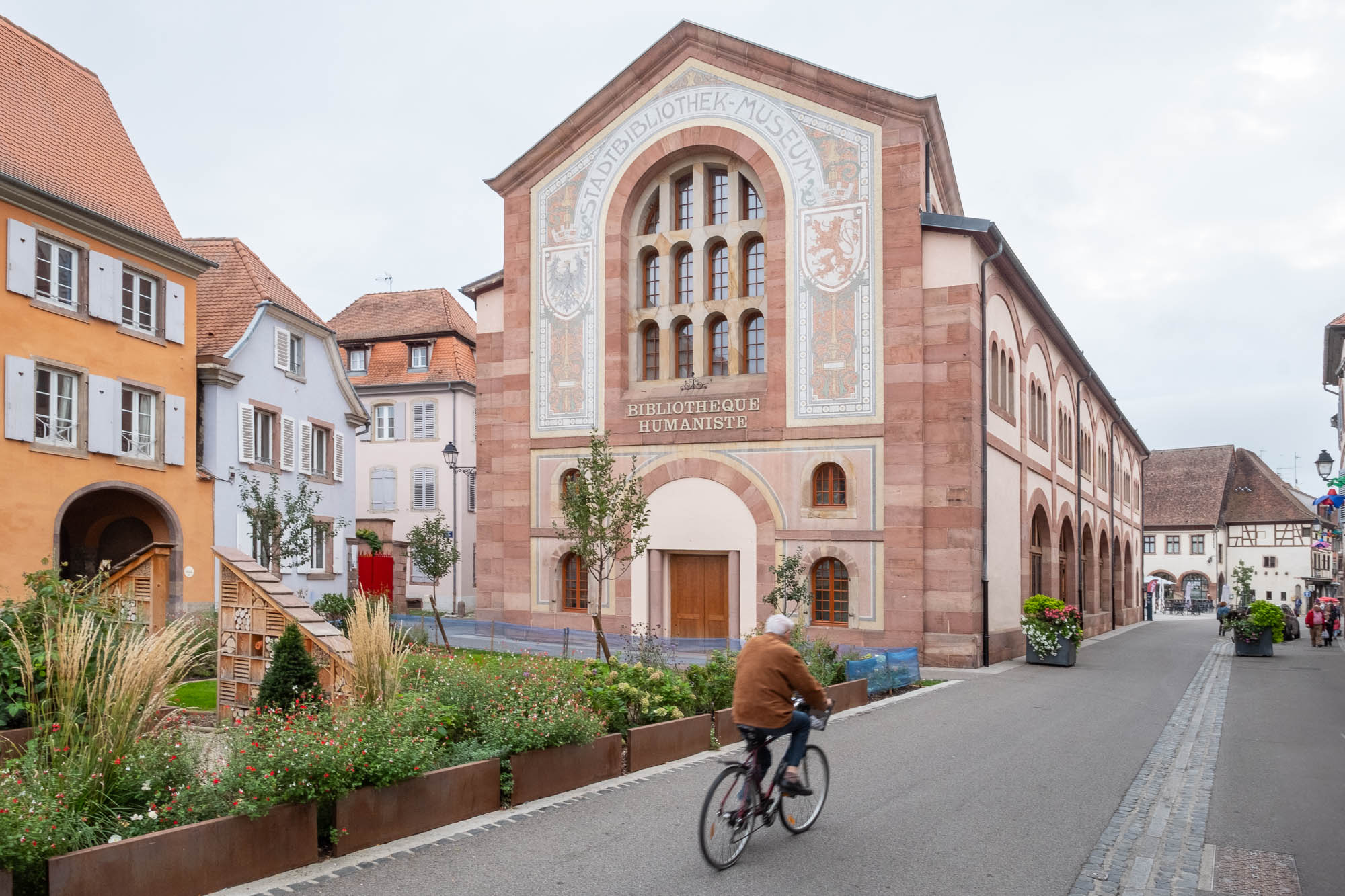
The origins of the Sélestat Humanist Library can be traced to the parish library established in 1452 by a gift from rector Johannes von Westhuss. Collections grew steadily thanks to further bequests by former pupils of the town’s famed Latin school. One such alumnus was the humanist writer and publisher Beatus Rhenanus, who upon his death in 1547 gave his considerable collection to his native town. From its creation until 1840, the library was inside St. George’s church, where von Westhuss officiated. It was then held in the town hall until 1889, when it moved to its current location inside the former granary.
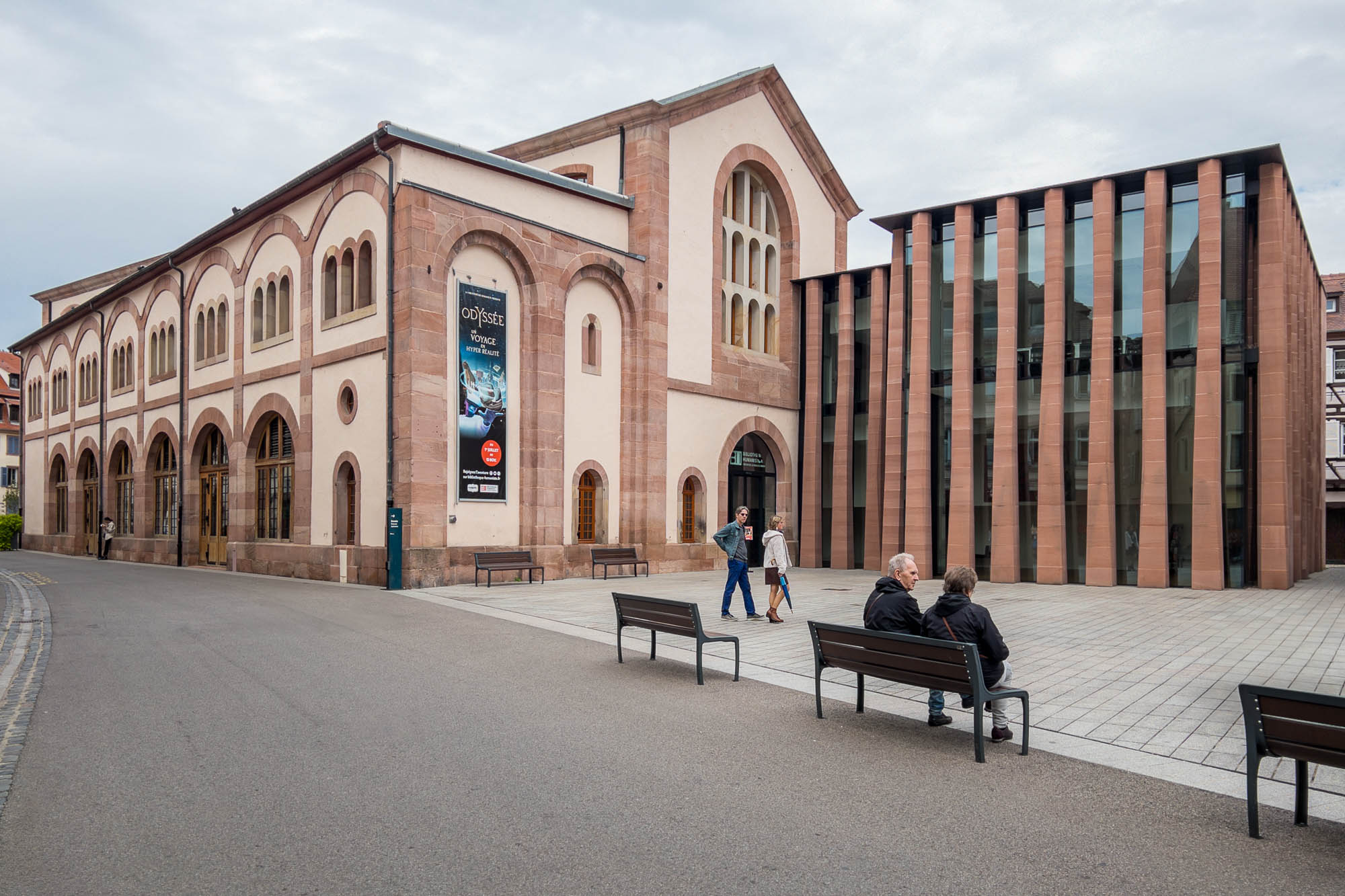
The Sélestat granary was built between 1843 and 1845 on the location of a former customs house. Its design by Strasbourg architect Gustave Klotz, in collaboration with municipal architect Louis Rivaud, followed the Romanesque revival movement popular throughout German-speaking Europe and known as Rundbogenstil. The granary was modified by the next Sélestat municipal architect Jean Jacques Alexandre Stamm in 1888, who added a second floor and replaced its timber roof with a metal beam structure to welcome the library. In 1907, an ornate mosaic was added to the West facade by César Winterhalter. It depicts the coat of arms of Imperial Germany (eagle) and the town of Sélestat (lion).
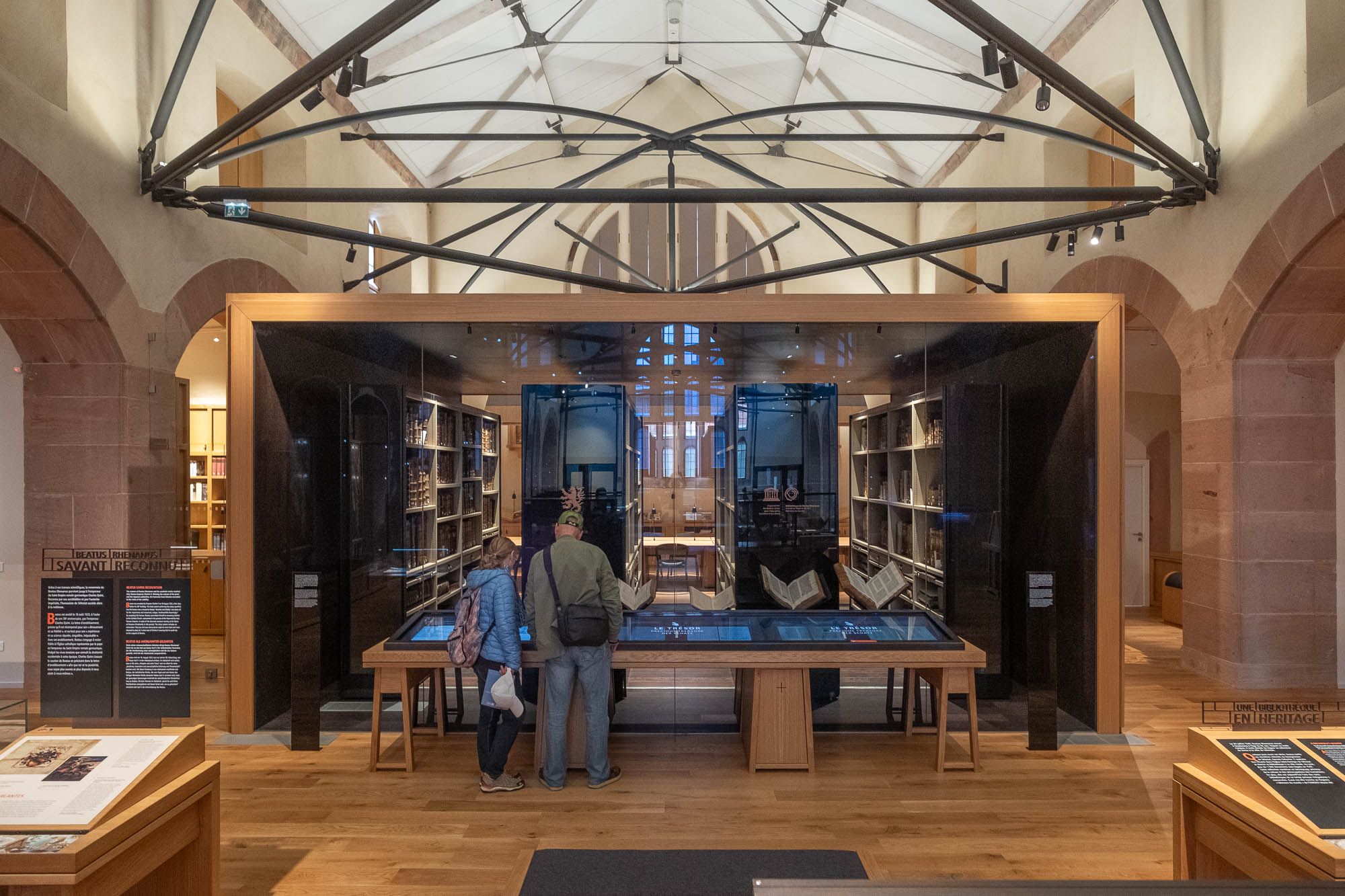
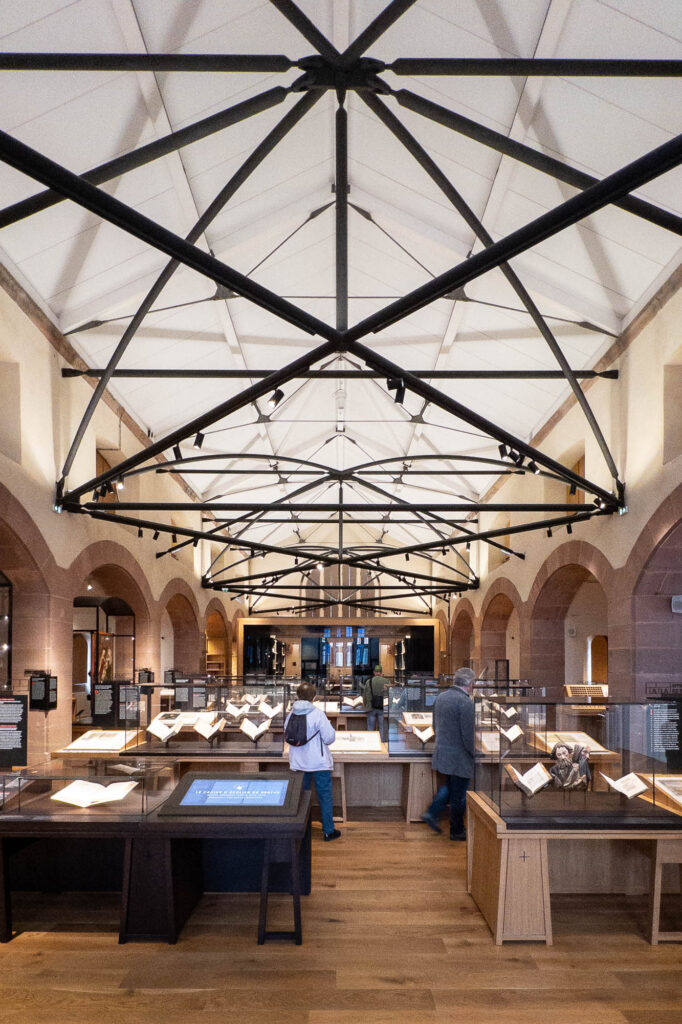
In 2016-2018, the building underwent extensive renovations and extension by Rudy Ricciotti, who replaced the 1888 metal roof structure with an innovative lattice of steel beams that made it possible to open the room all the way to the roof while reinforcing the entire structure of the building and make it earthquake-resistant.
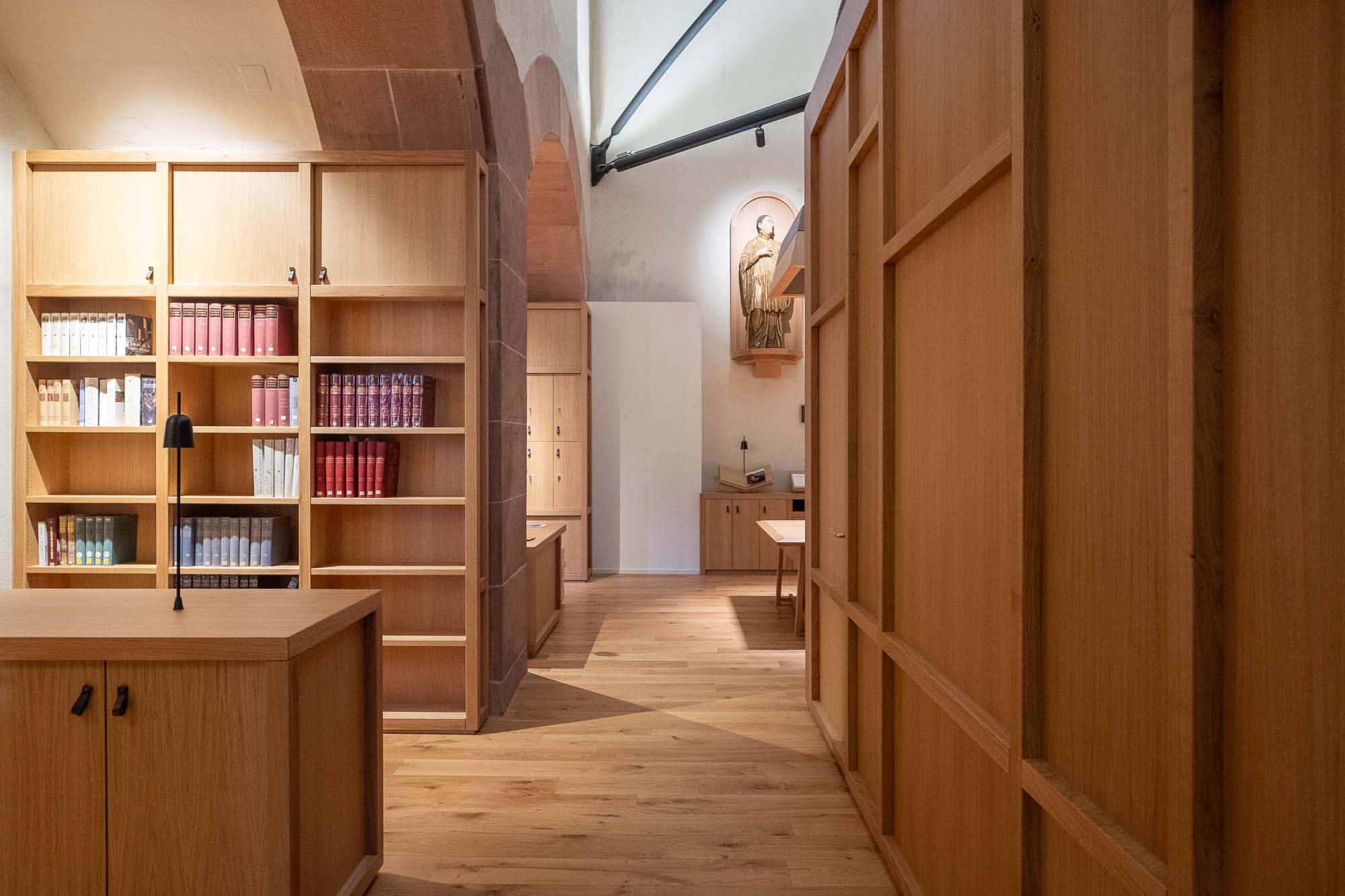
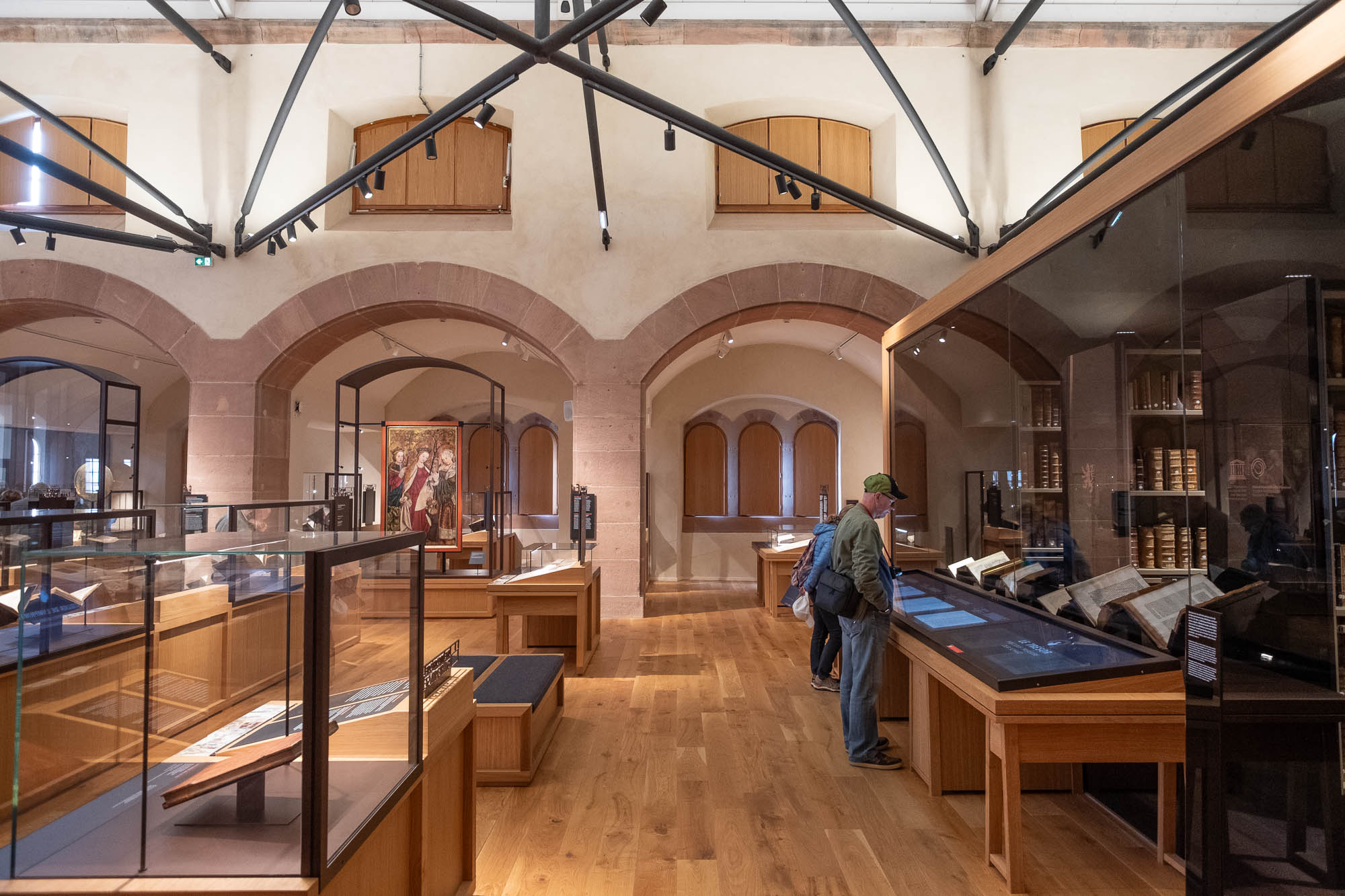
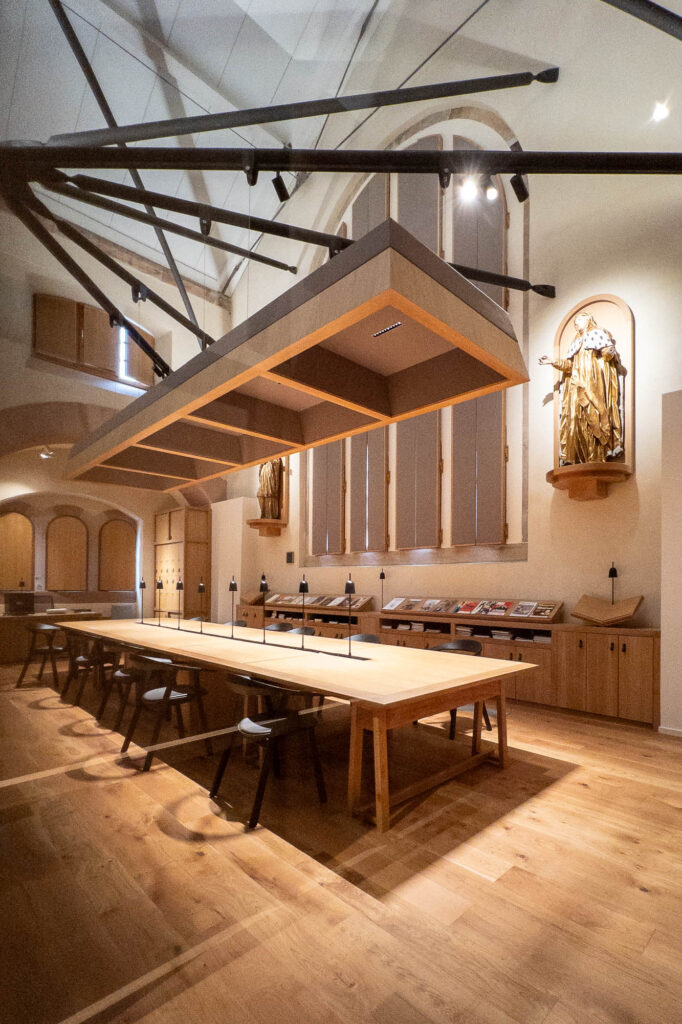
Most of the floor is open to visitors and dedicated to exhibiting a representative selection of works from the collection. Beatus Rhenanus’s collection is stored in an enclosed climate-controlled box of wood and dark glass, a treasure room and display cabinet in one. Behind and around it is a small reading room, closed to the public and reserved to researchers accessing the collection.
The extension is a two-level glass cube hidden behind a forest of irregular red sandstone pillars, a nod to the stone details of the original granary. It contains modern administrative offices and a new welcome and temporary exhibitions hall on the ground floor.
The images displayed here date from September 2022.
References
Content note
You might also like