To alleviate the effects of the economic crisis precipitated by the 1929 markets crash, Toulouse’s then socialist city government launched a series of large public works projects. Besides public housing, public baths and infrastructure, mayor Étienne Billières also pushed to develop education facilities: no fewer than fifteen schools were built during his decade at the city’s helm.
A key element of the municipality’s progressive policy development was the establishment of a modern public library. The existing library was cramped, unsanitary and downright dangerous: in a city of 200,000, it only had room for less than 50 patrons, its priceless collection of medieval manuscripts and incunables was rotting in damp cellars inches away from gas burning lights.
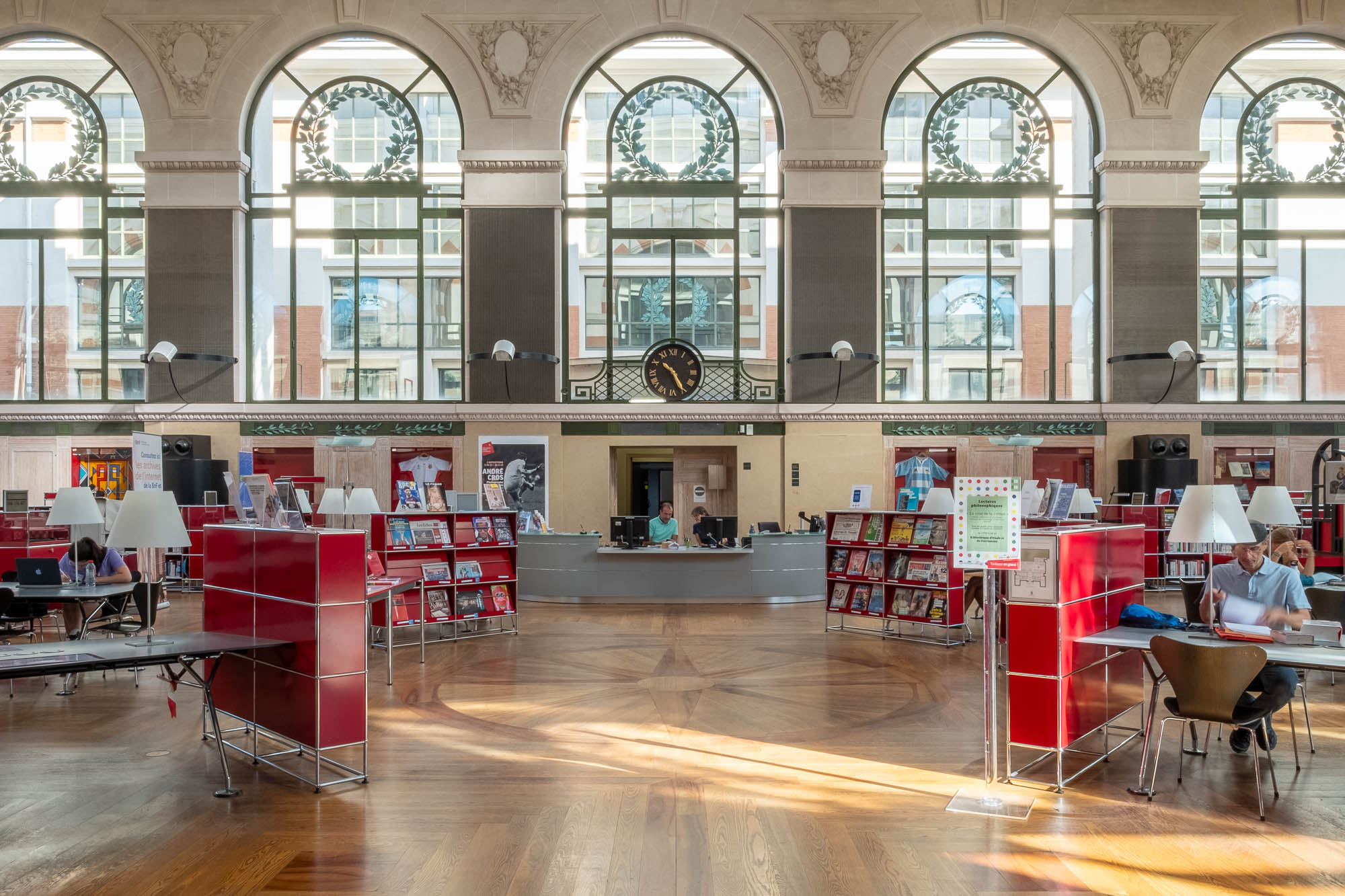
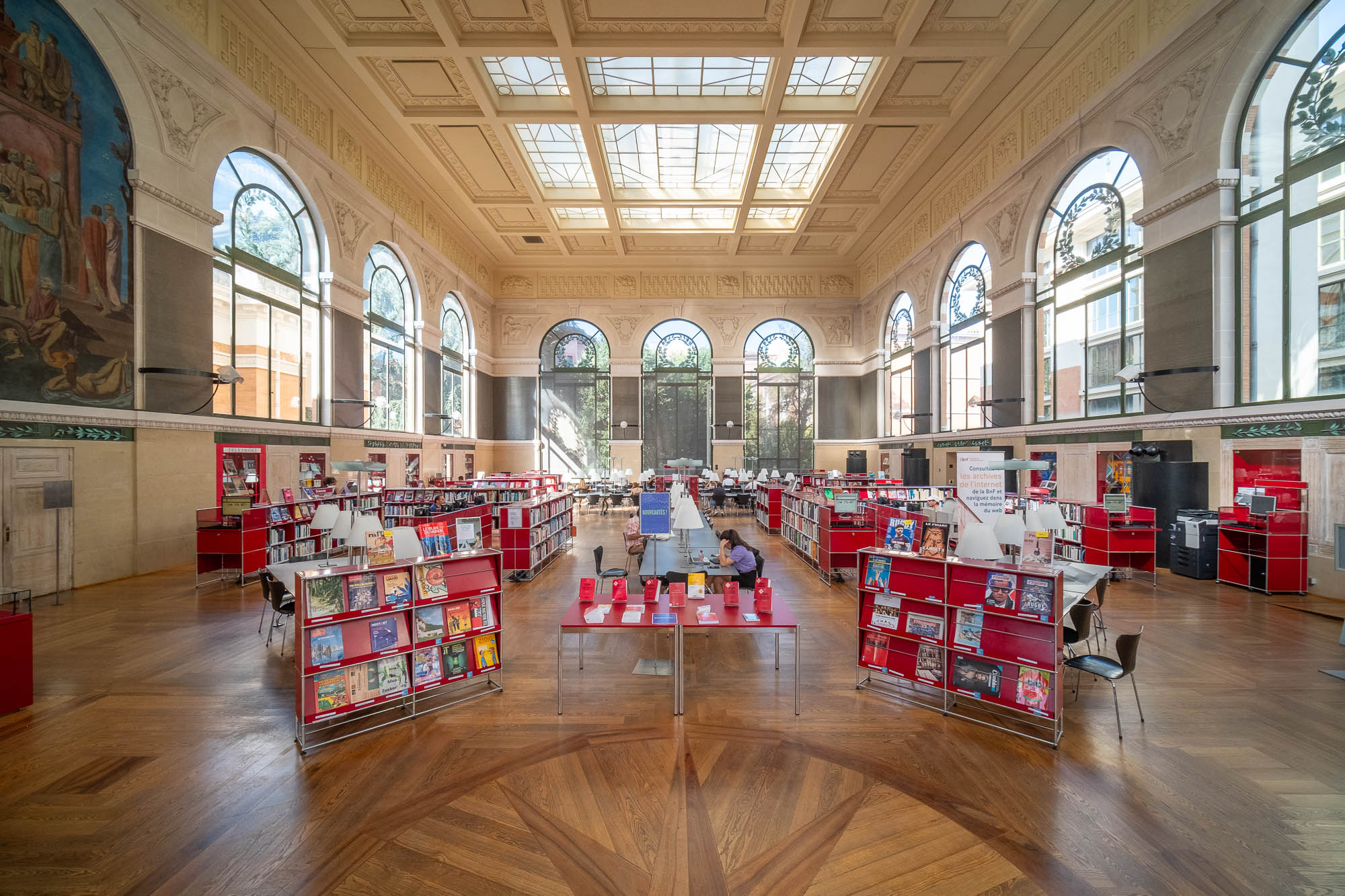
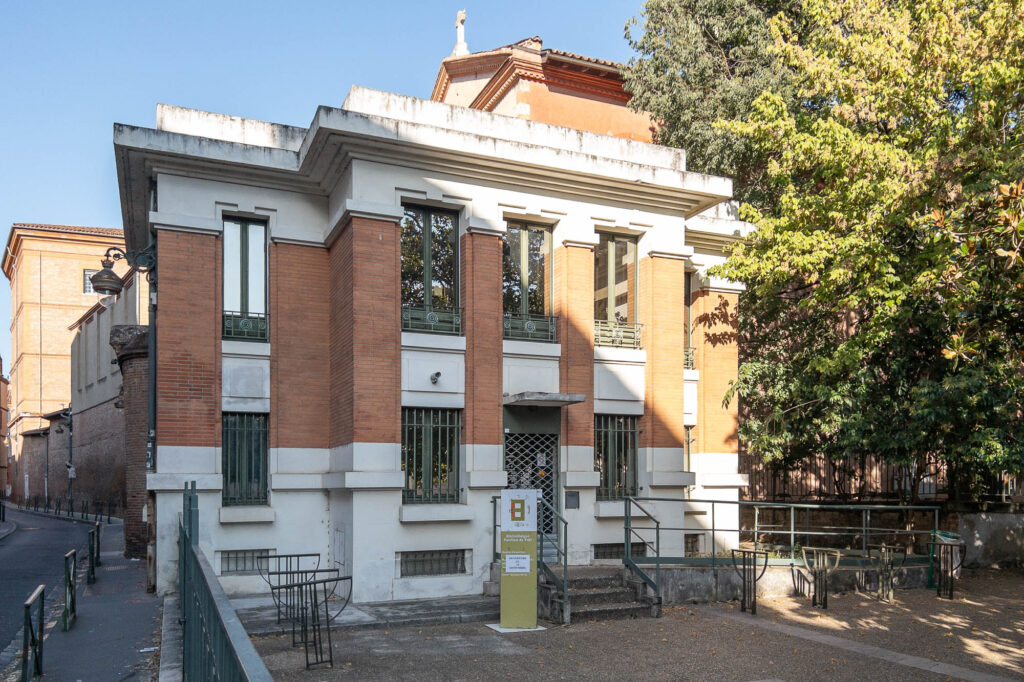
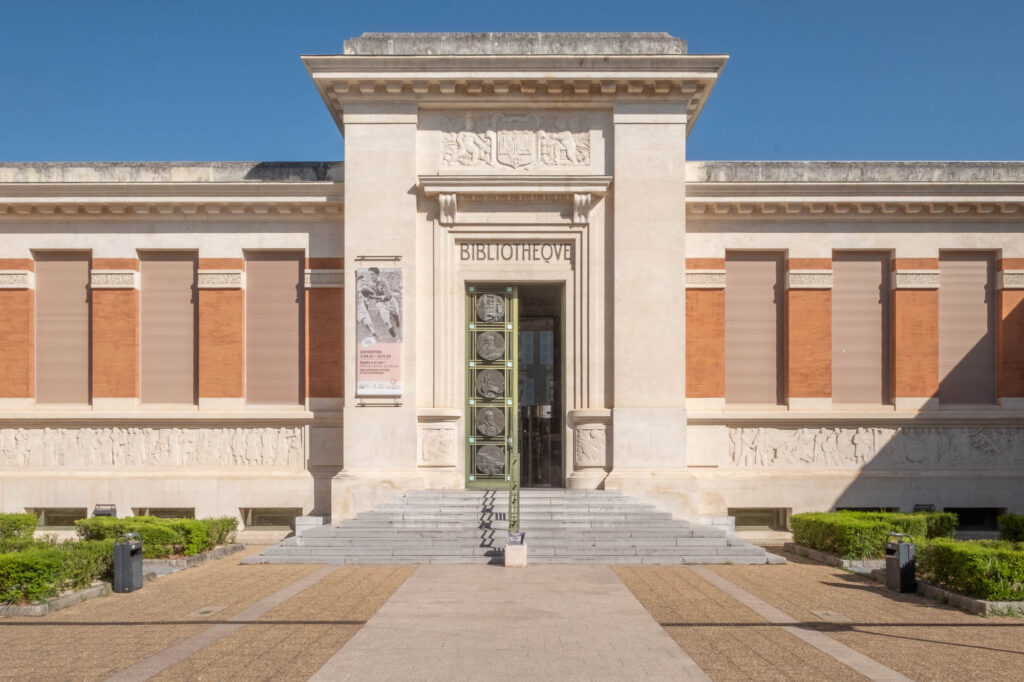
The brief for the new library was not only for a much larger facility, but a modern and palatial one, a “dream palace for books and workers”. Built on the site of a former Carmelite convent, the Art Déco masterpiece was designed by Toulouse’s city architect Jean Montariol to follow the trends of American and European libraries of the time. The reinforced concrete structure is organized around a vast central building for the public, flanked by pavilions for staff, conservation labs and six levels of book stacks.
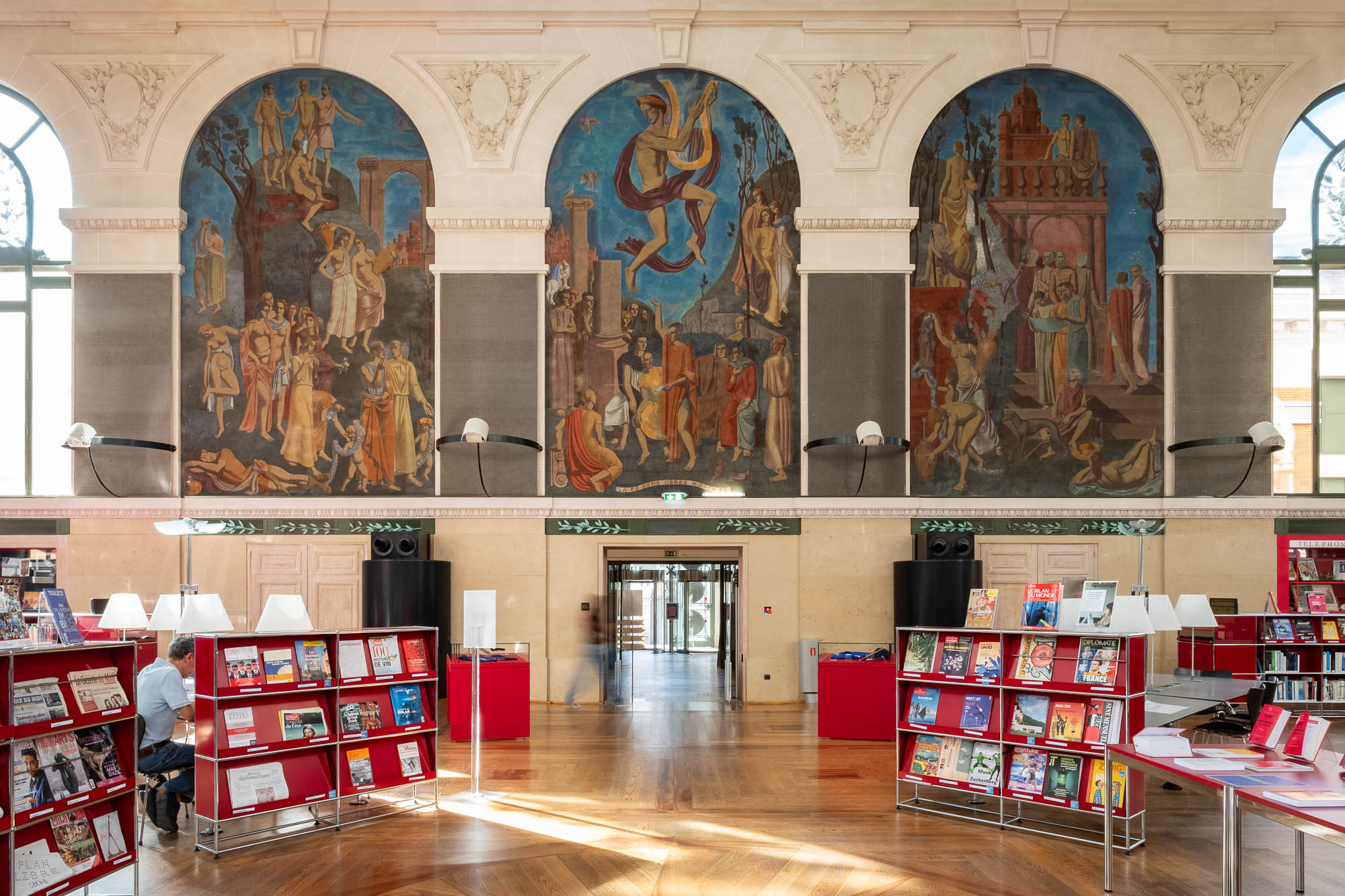
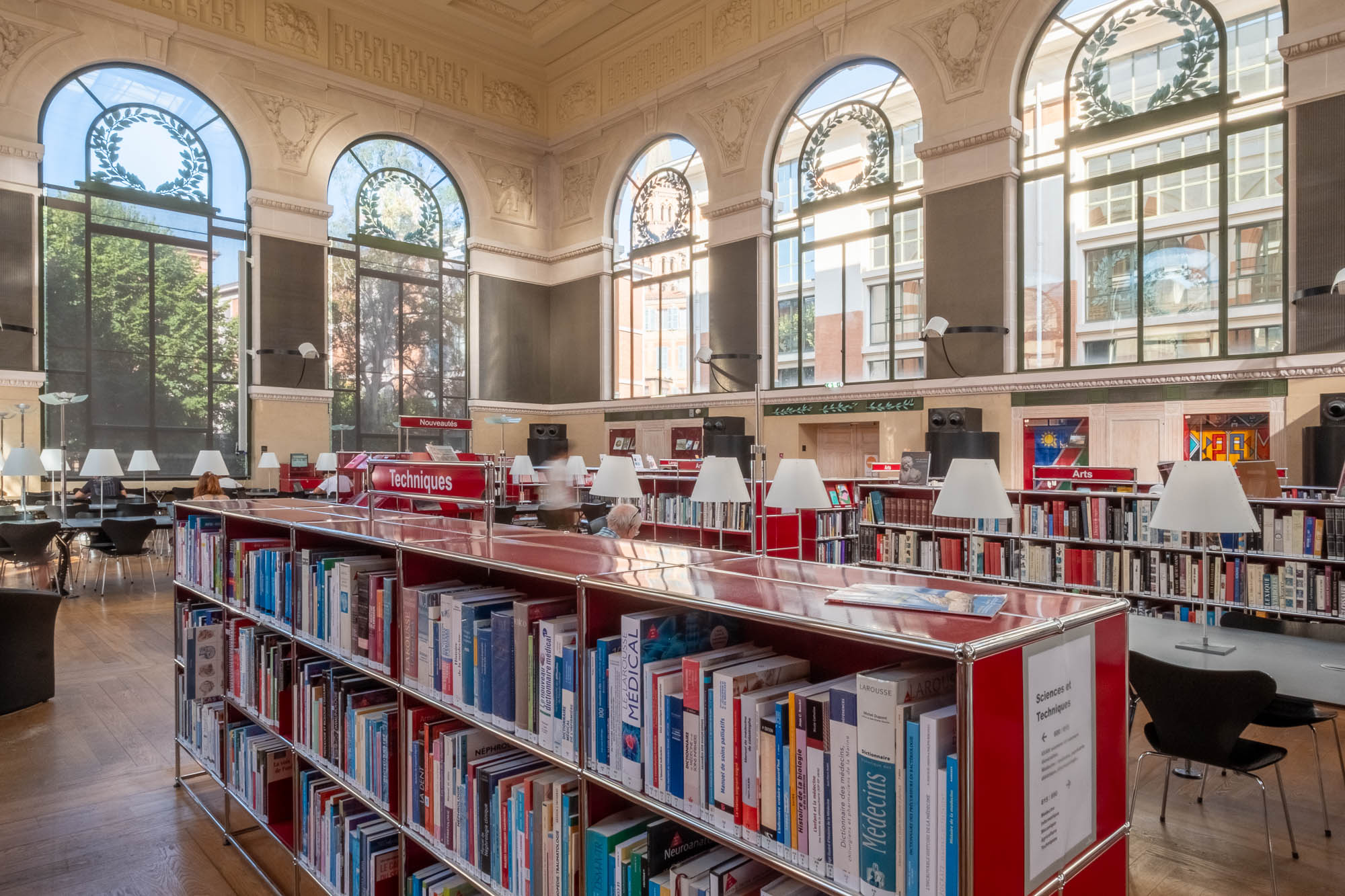
The structures are decorated following their function, with ancillary buildings in elegant but simple brick and concrete construction, reserving the most lavish treatment for the main reading room. Consistent with the municipality’s public works goals, its decoration was entrusted to local artists and artisans, in particular Marc Saint-Saëns, who painted the large fresco triptych above the library entrance. Titled “Le Parnasse Occitan”, it represents an occitan version of the Muses’ garden, one that has nothing to envy to other cultural capitals. Montariol also designed all the library furniture (unfortunately gone now), which was manufactured by woodworker Maurice Alet. On the roof of the large room is an innovative cupola of glass bricks inset in a concrete matrix.
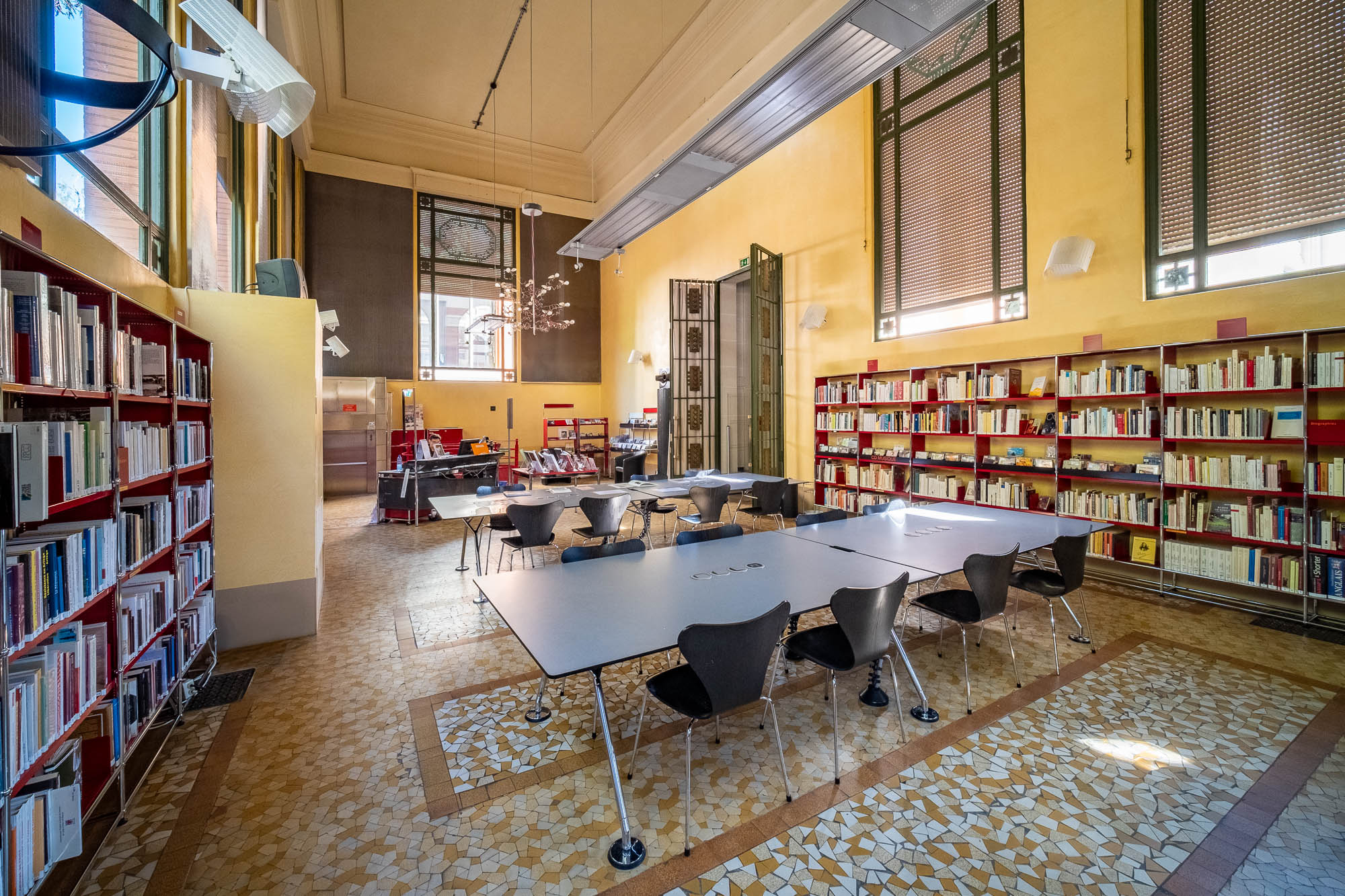
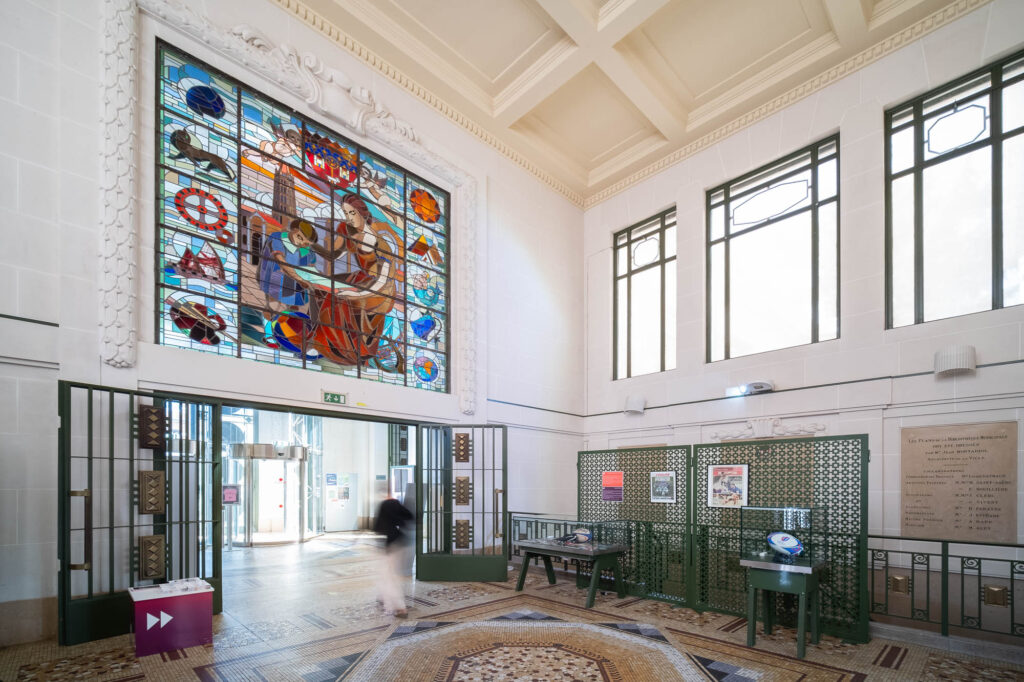
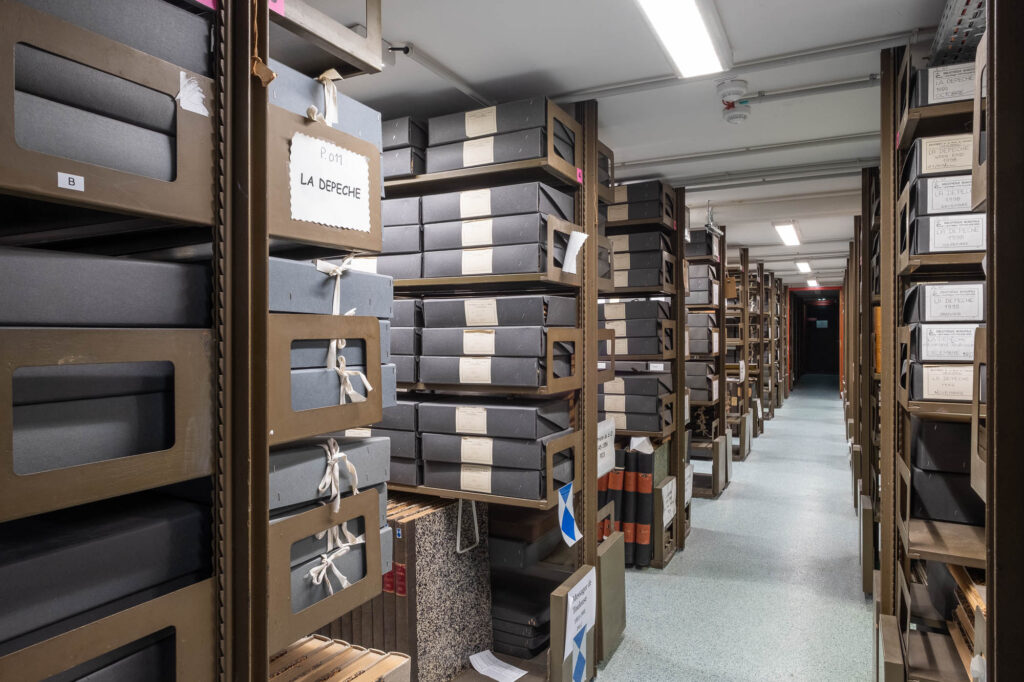
Montariol’s library opened on March 30, 1935 and served as Toulouse’s main library until the opening of the new Médiathèque José Cabanis in 2004. This prompted a reorganization of library services. Between 1999 and 2003, the original library was extensively renovated by Dominique Letellier. This addressed some much needed structural and building safety issues, and opened more rooms to the public by converting former offices into reading rooms. The beautiful parquet floor of the main reading room was added at this occasion. Other changes are more disputable, such as the replacement of all original furniture with contemporary USM shelves and designer tables and chairs. The library’s focus also shifted away from a public lending library to a non-circulating research and reference library.
The images shown here date from my visit in September 2023. Merci beaucoup à l’équipe de la bibliothèque pour votre accueil!
References
Content note
You might also like