When French President Georges Pompidou set about to build the contemporary art museum he was envisioning as a way to put Paris back at the centre of the art world, only one location was found to be large enough. That location, a large hole in the Beaubourg neighbourhood left by the demolition of the Halles food market, was however already allocated to another project spurred by Pompidou, that of a large public library. Both projects were eventually combined as a cultural centre, the idea being that visitors would be drawn by the library, and then be inspired to visit the museum.
Under the direction of Jean Prouvé, an international architectural competition was organized for the design of the new cultural centre. A whopping 681 projects were submitted, but eventually the joint proposal by Renzo Piano, Richard Rogers and Gianfranco Franchini was selected. An early example of “inside-out” architecture, the project was vividly criticized for deliberately exposing the technical “guts” of the building. These pipes and ducts may have earned the building a number of colourful monikers (my personal favourite being Notre-Dame de la Tuyauterie – Our Lady of Plumbing), but it also made it an instant popular success. Piano’s plan to “demolish the image of the foreboding cultural centre” had paid off.
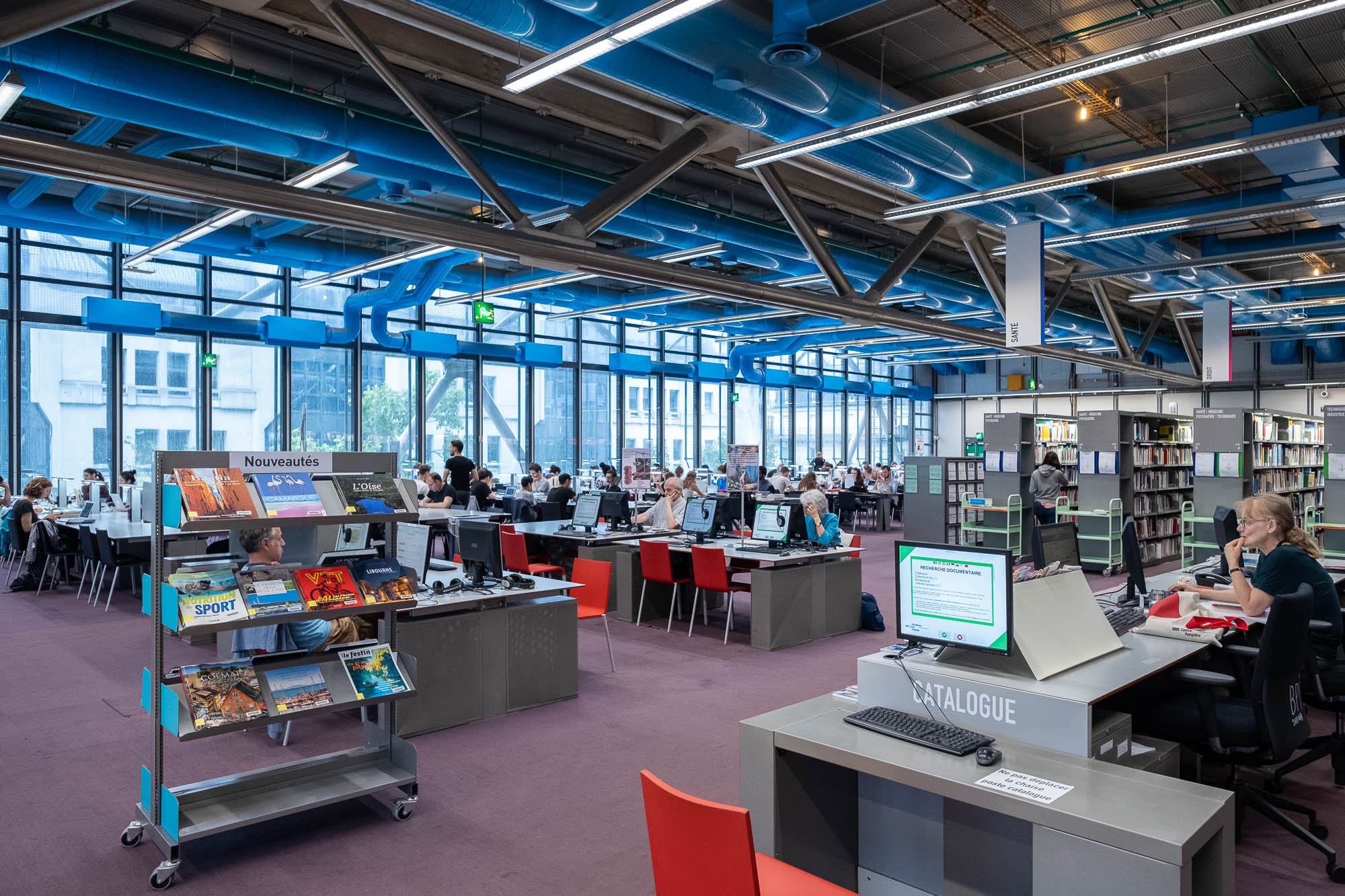
With its industrial appearance, the new Centre national d’art et de culture Georges-Pompidou was the diametric opposite of Paris’ other great museum, the Louvre. Rather than the gilded baroque halls of the royalty, which were by design elitist and built to establish distance between the rulers and their people, the Pompidou museum was proletarian and transparent. Its honest materials didn’t hide artworks made for the aristocracy and pilfered colonial treasures, but the works of contemporary artists as well as Paris’ largest free and publicly-accessible library: la Bibliothèque publique d’information (Bpi).
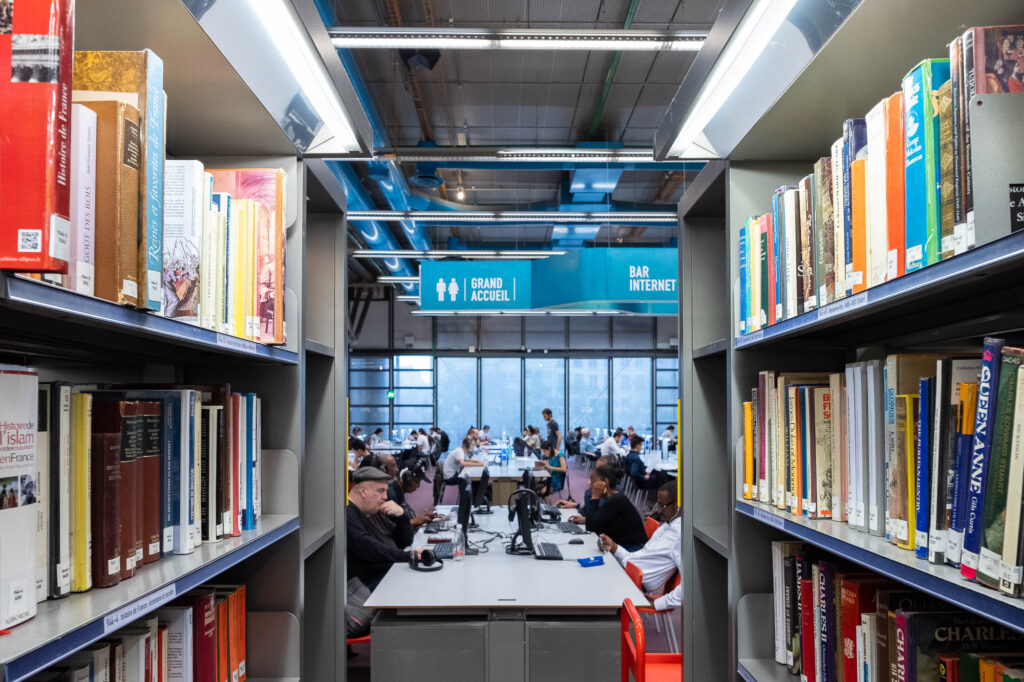
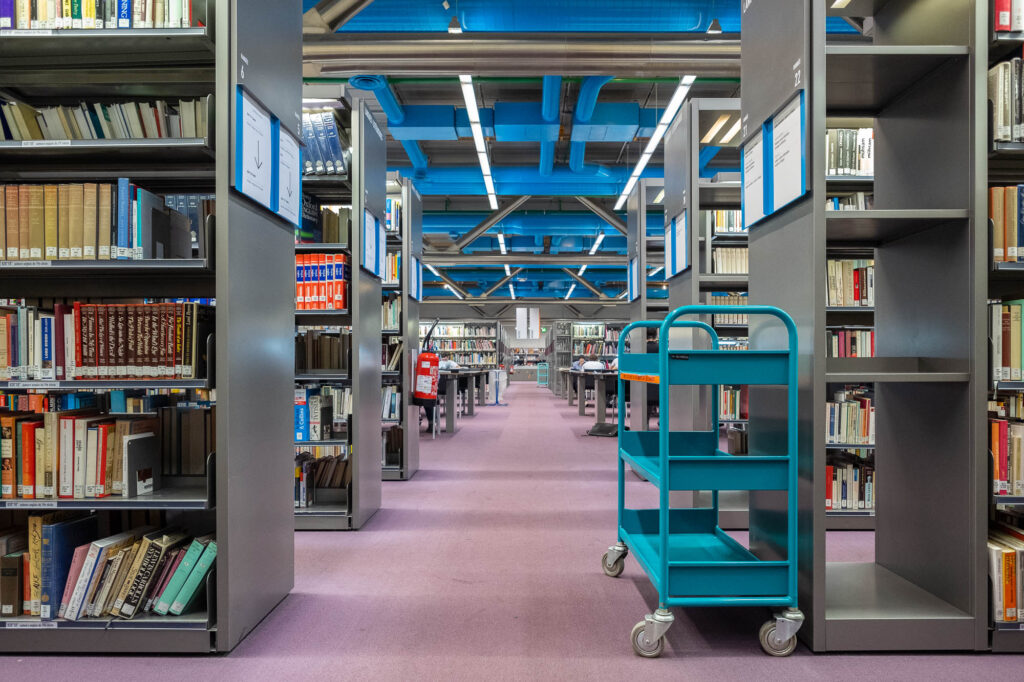

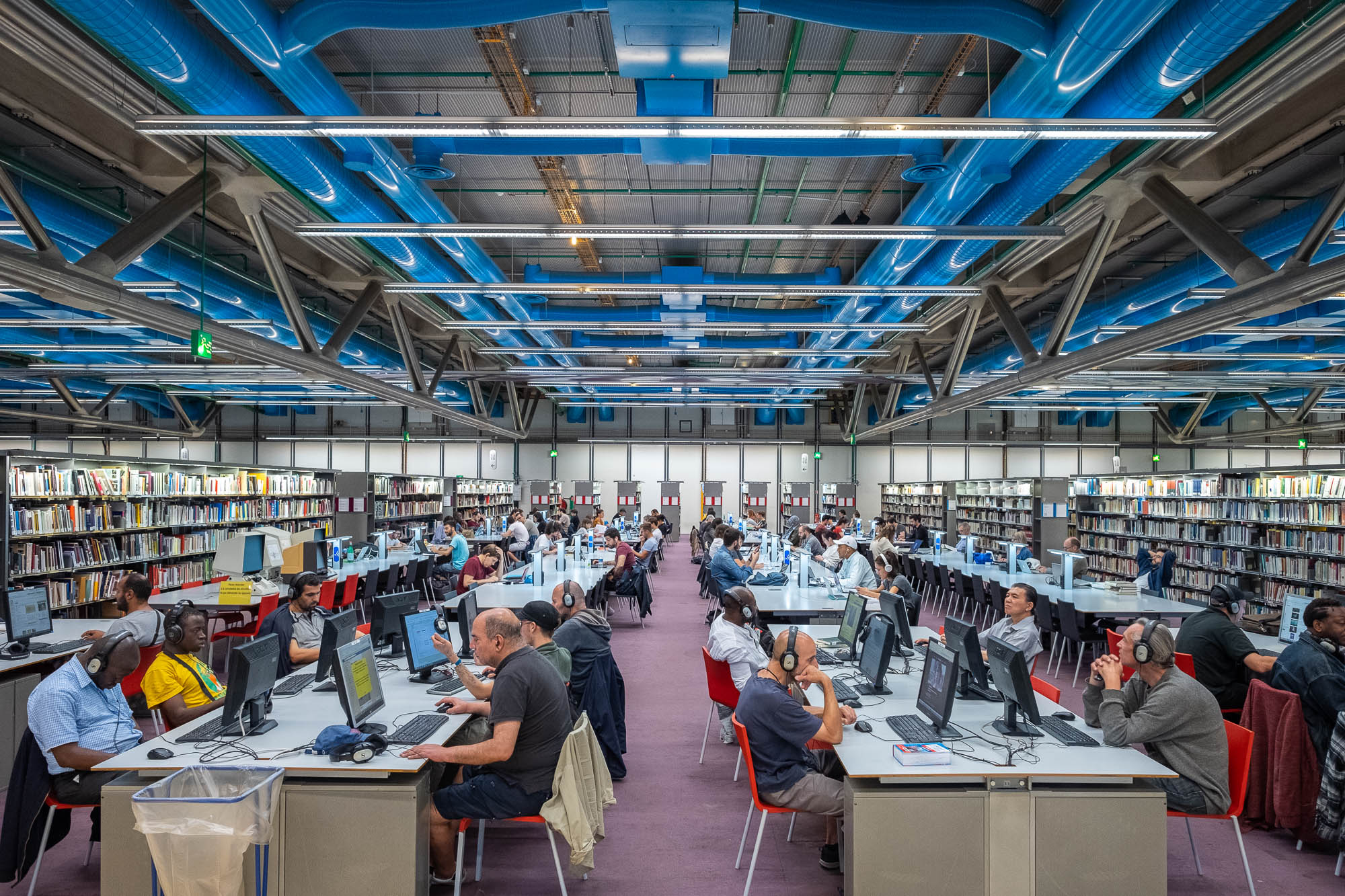
The Bpi differs from a traditional public library in that its collections are not circulating. It was designed to be multimedia from the get go, with a focus on audiovisual materials and one of the earliest examples of a public-facing computer system. It pioneered putting the entirety of its collections in public access, and regular weeding (removal of less used materials). The largest in the city, it also has the most extensive opening hours and is consequentially very popular with students and the general public.
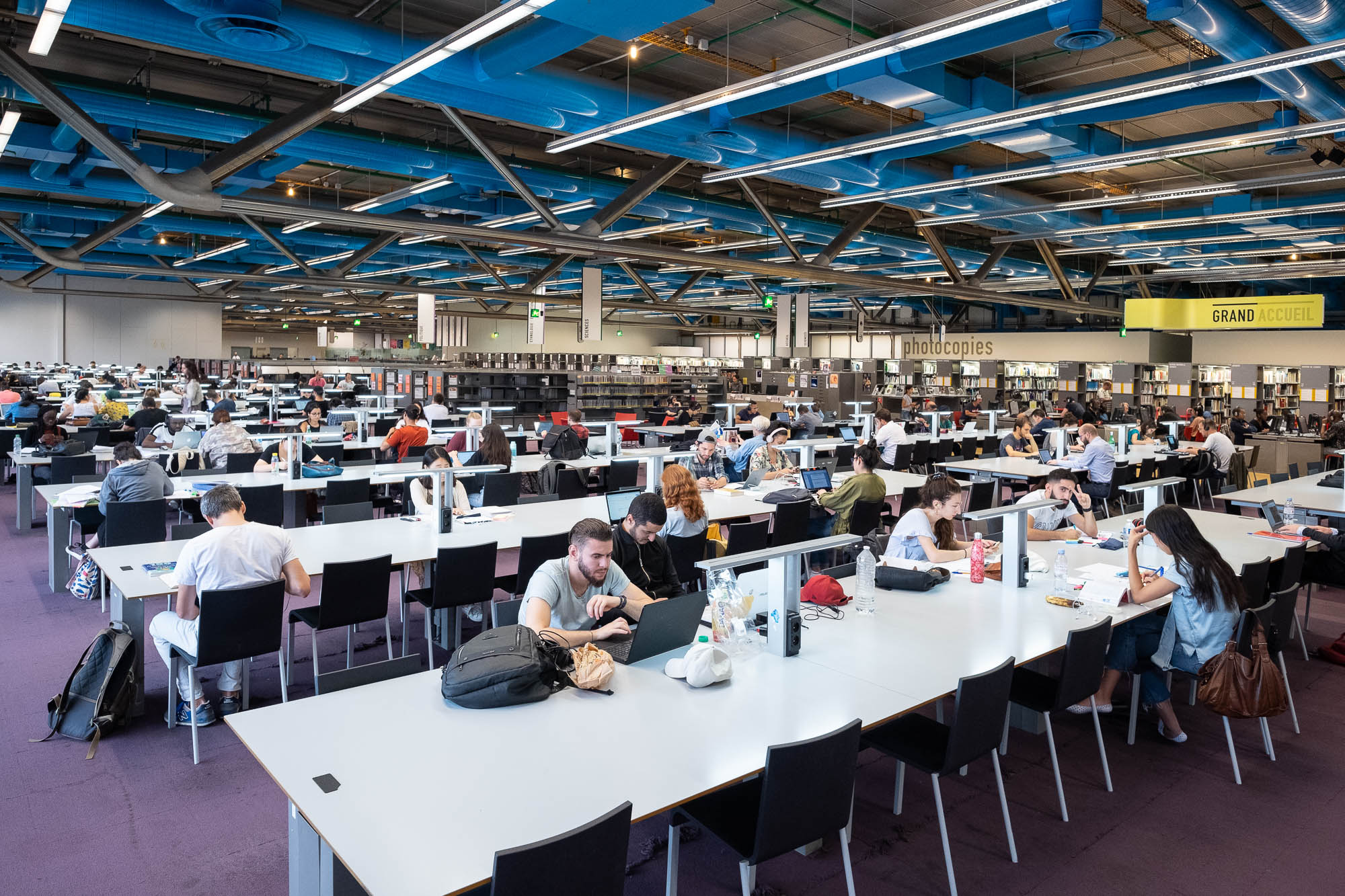
With its massive uninterrupted spaces, and the industrial feel of the steel trusses and bright blue HVAC piping on the ceiling, the Bpi shares the characteristic visuals of Centre Pompidou. The 2019 signage visible on these images was done by Travaux-Pratiques.
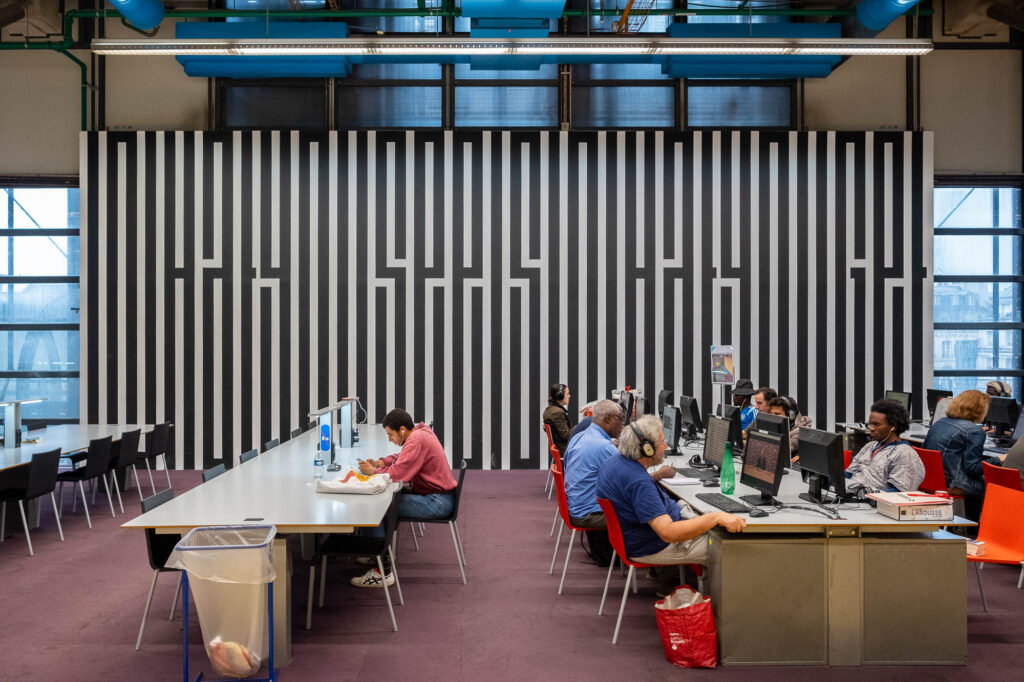
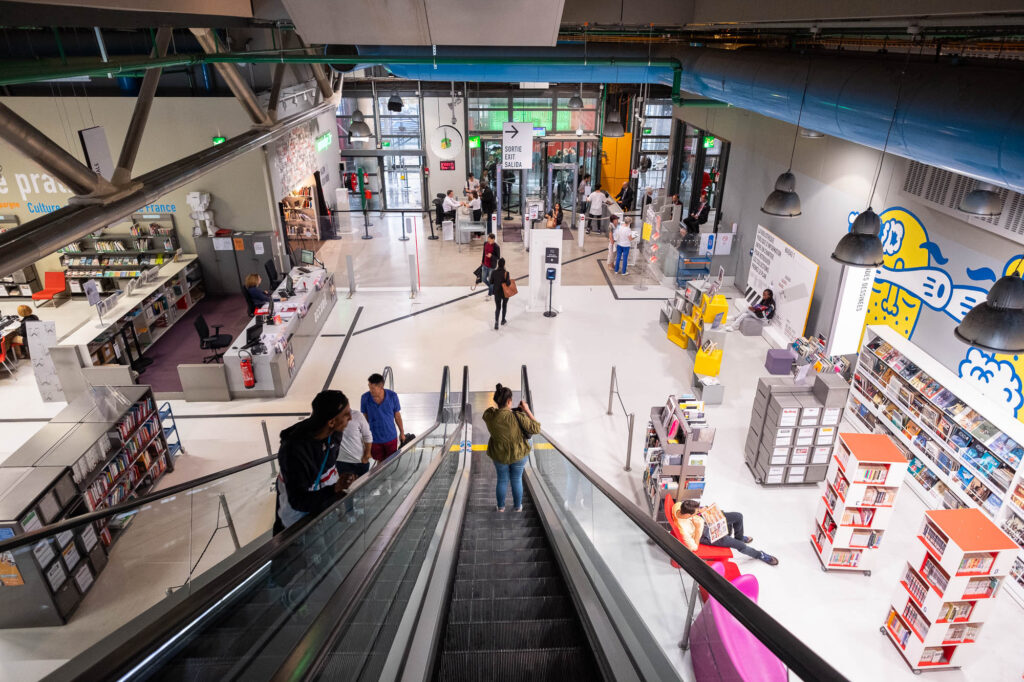
After nearly 50 years of use, the Centre Pompidou was due for an extensive renovation. Led by Moreau Kusunoki with Frida Escobedo in consultation with Renzo Piano, the renovation started in the Fall of 2025 and is scheduled to last until 2030. In the interval, the library moved to the Lumière building in Bercy. Built in 1996 by Henri de la Fonta, Lumière was originally an exhibition hall and later converted into offices for the French government.
The images shown here predate that project and are from August 2019.
References
Content note
You might also like