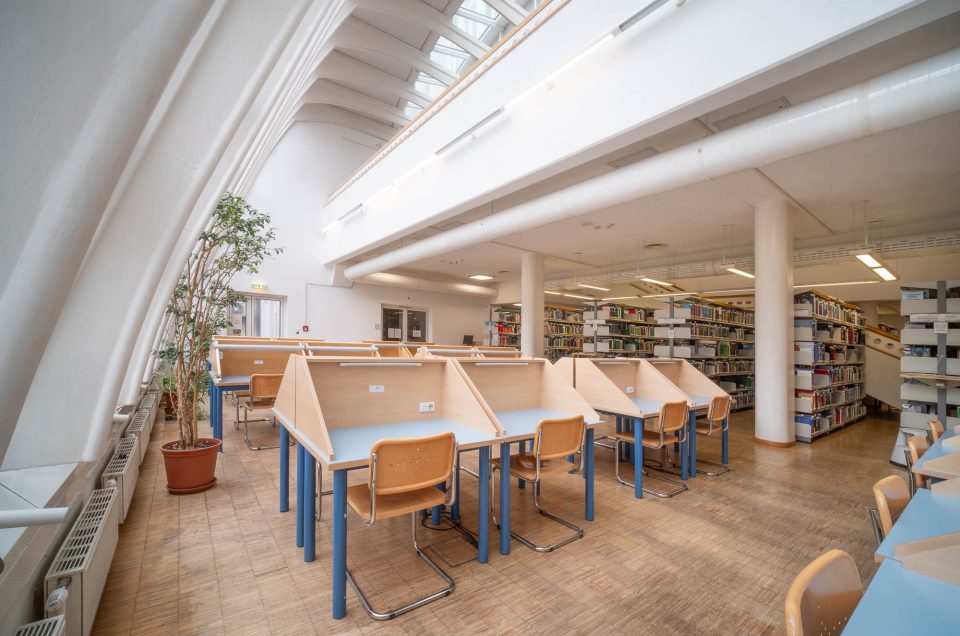
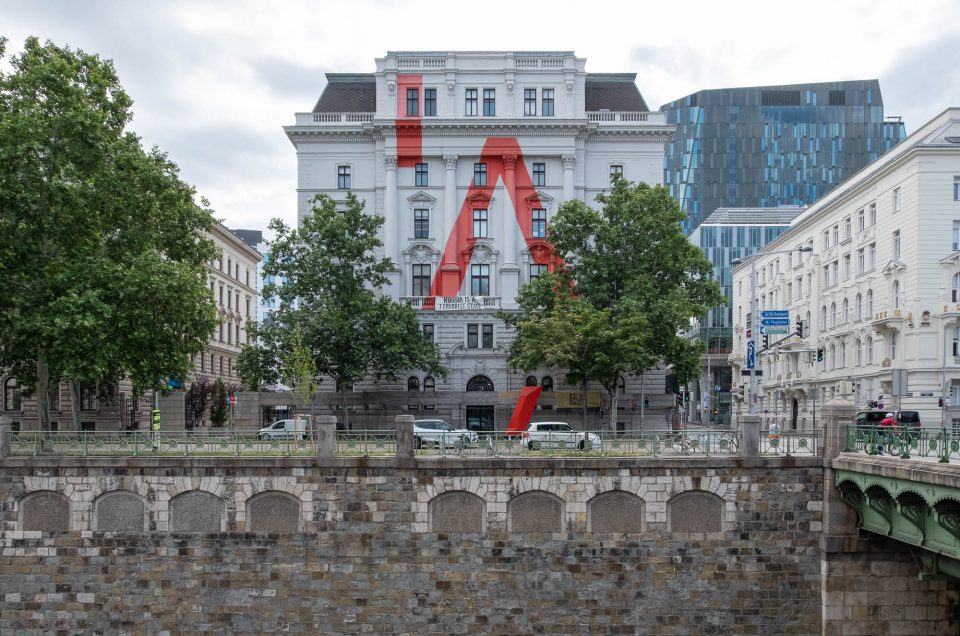
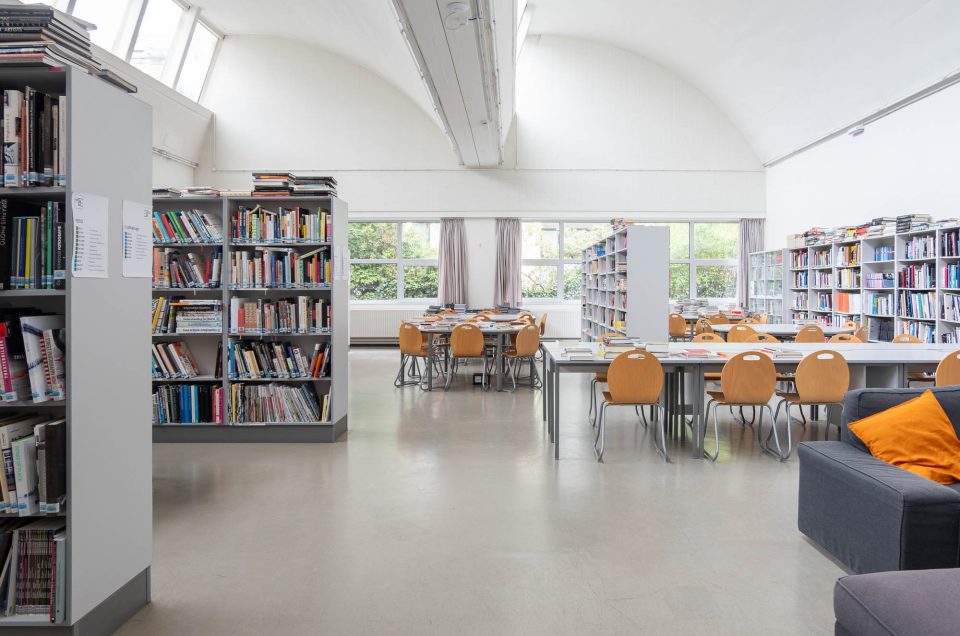
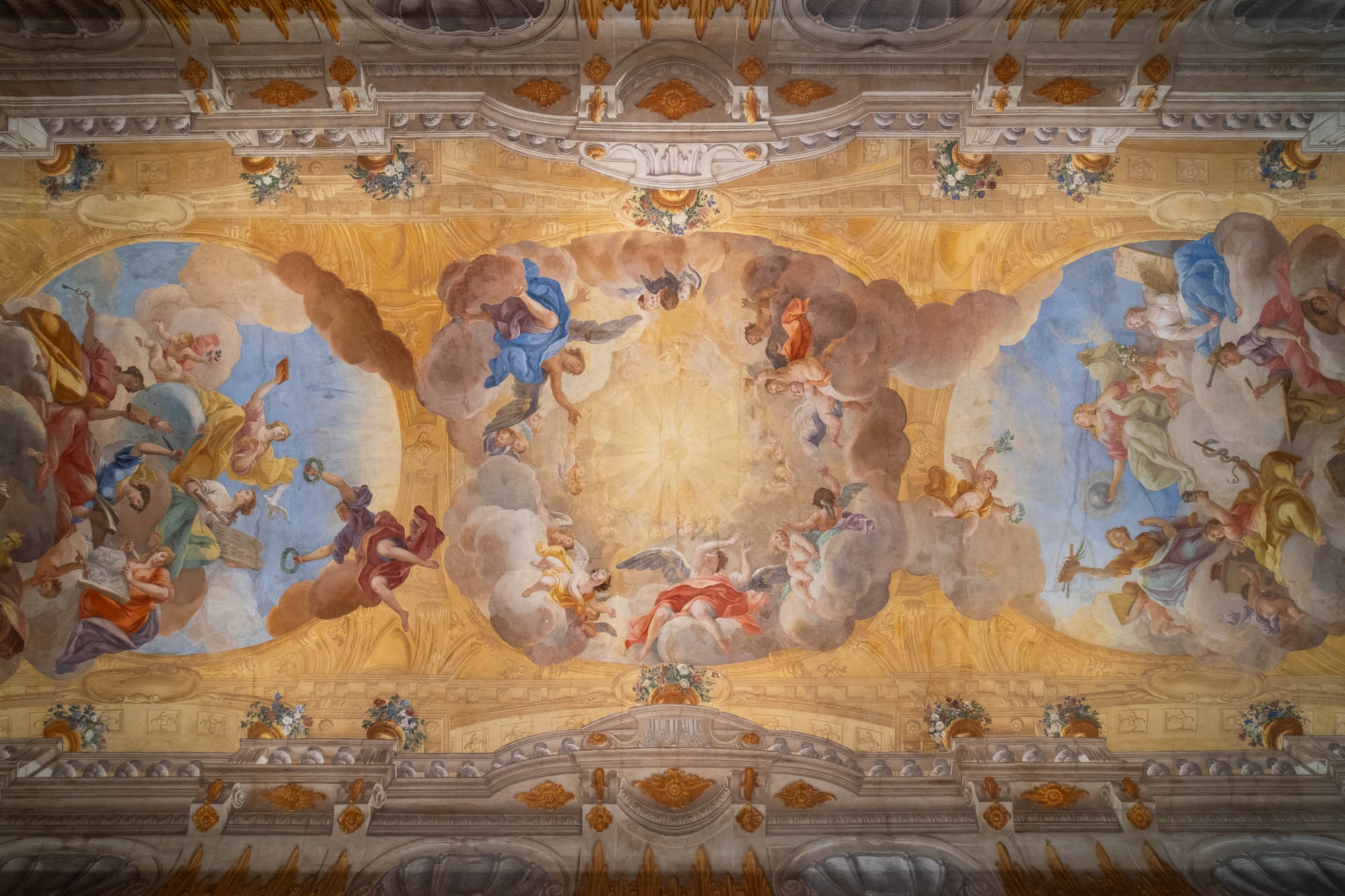
The roots of the University of Vienna can be traced to the foundation of the Collegium Ducale in 1385 by Duke Albrecht III. In 1622, the administration of the university was given to the Jesuits by Emperor Kaiser Ferdinand II. The order set about to modernize the medieval Collegium and the hodgepodge of buildings that had grown around it over the centuries. Between 1624 and 1639 they rebuilt the entire area into an elegant cluster of buildings arranged around a porticoed cloister. Several rooms were lavishly decorated, among them the library, where in 1734 artist Anton Hertzog added a ceiling fresco representing faith and the sciences personified.
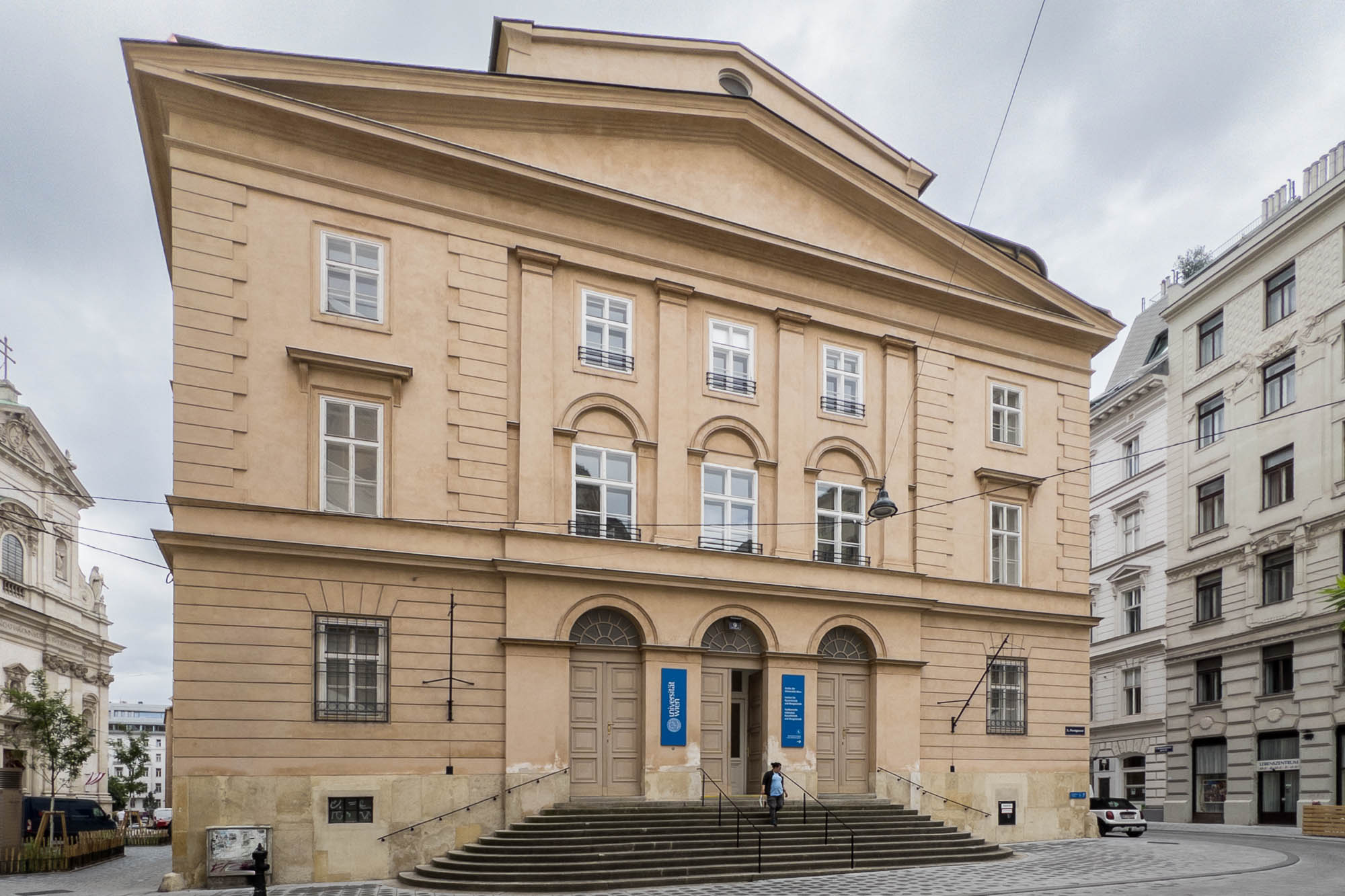
At the dissolution of the Jesuit order in 1773, the university continued operations as an independent entity. In 1857, it moved to its current location on the Ring, and the former Jesuit college buildings were taken over by multiple institutions. In particular, the Akademie der Wissenschaften (Academy of Sciences) settled in the former main hall of the old university, the Alte Aula by Jean-Nicolas Jadot de Ville Issey, completed in 1753.
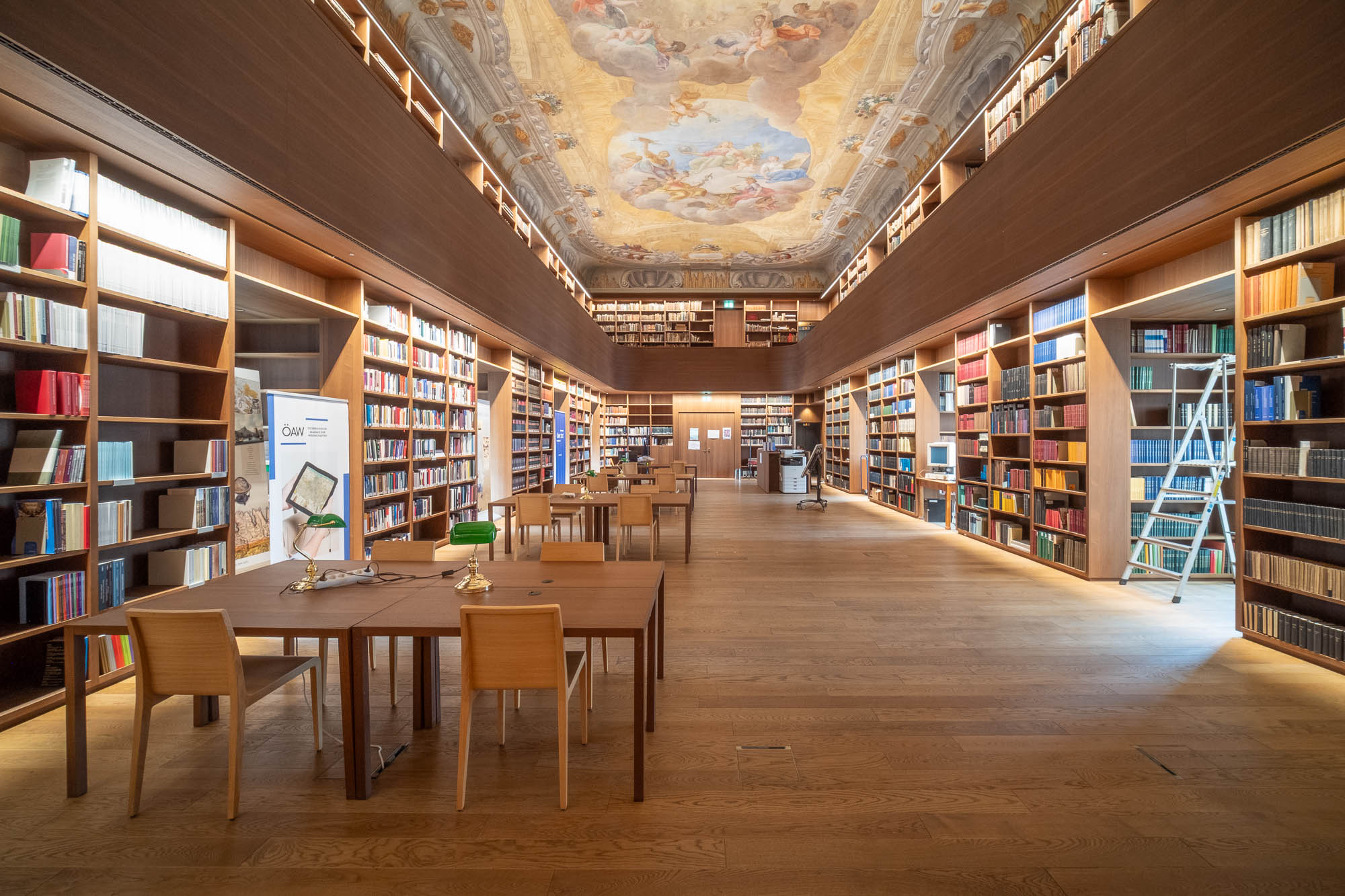
The now vacant library was used as offices for a string of tenants, among which were the postal savings bank, police directorate and passport administration. By the 1980s, the baroque bookshelves of the library reading room were long gone but the ceiling fresco had survived. The personified sciences and their posse of puttis no longer presided over scholars, however: the room was then used as table tennis court for the policemen’s union.
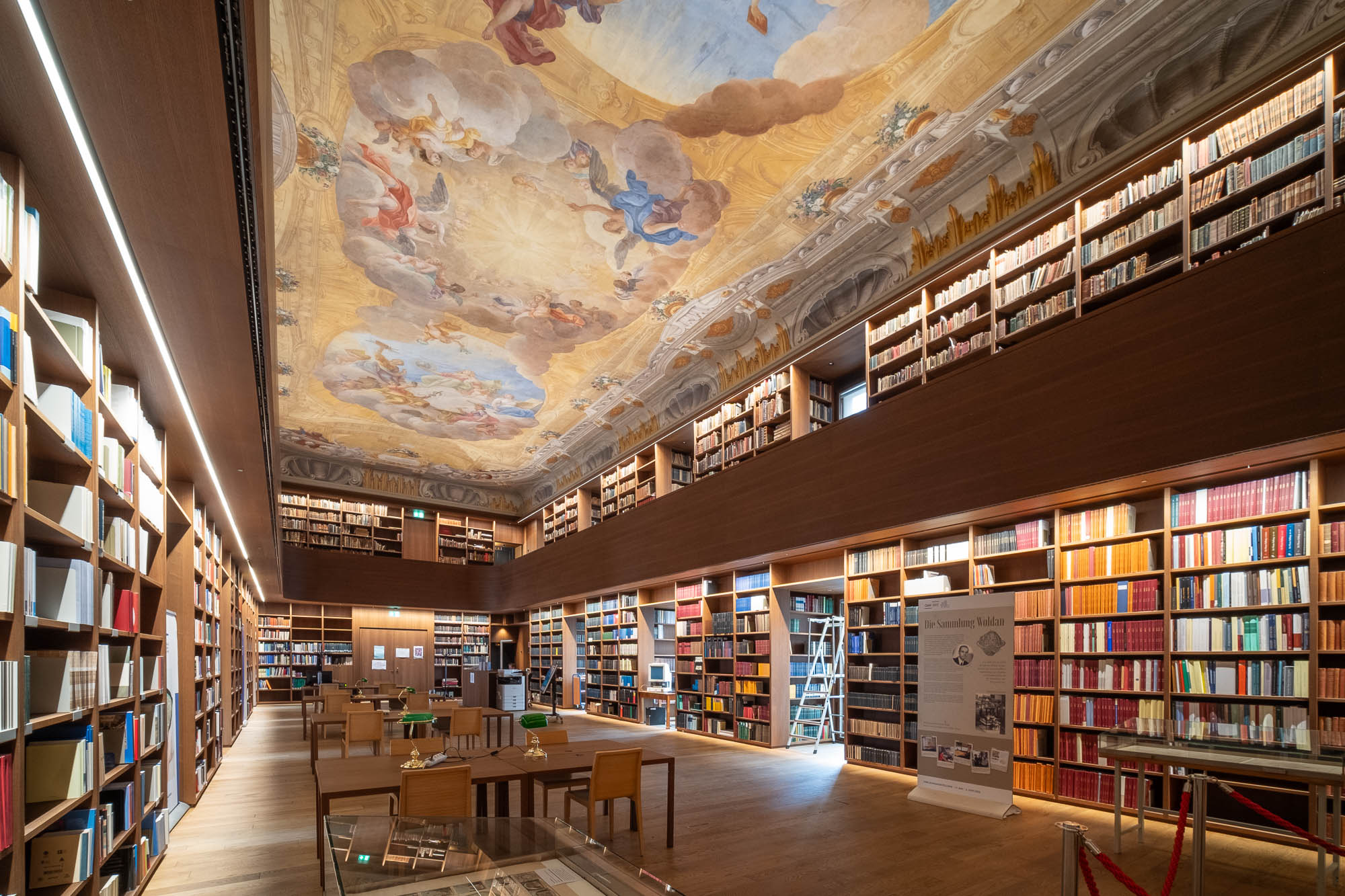
An ambitious revitalization project has since given back the former Jesuit college to the pursuit of science. Having outgrown the Alte Aula, the Austrian Academy of Sciences now occupies the entire complex. Riepl Kaufmann Bammer Architektur led the extensive restoration and transformation of this new Campus Akademie, completed in 2022.
As part of this transformation, the Jesuit’s library was returned to its original purpose. Contemporary furniture have replaced the lost baroque fittings, recreating the original arrangement of the library with bookshelves around the walls and wraparound mezzanine. Hertzog’s ceiling fresco was also restored and is now superbly highlighted by cleverly hidden light sources.
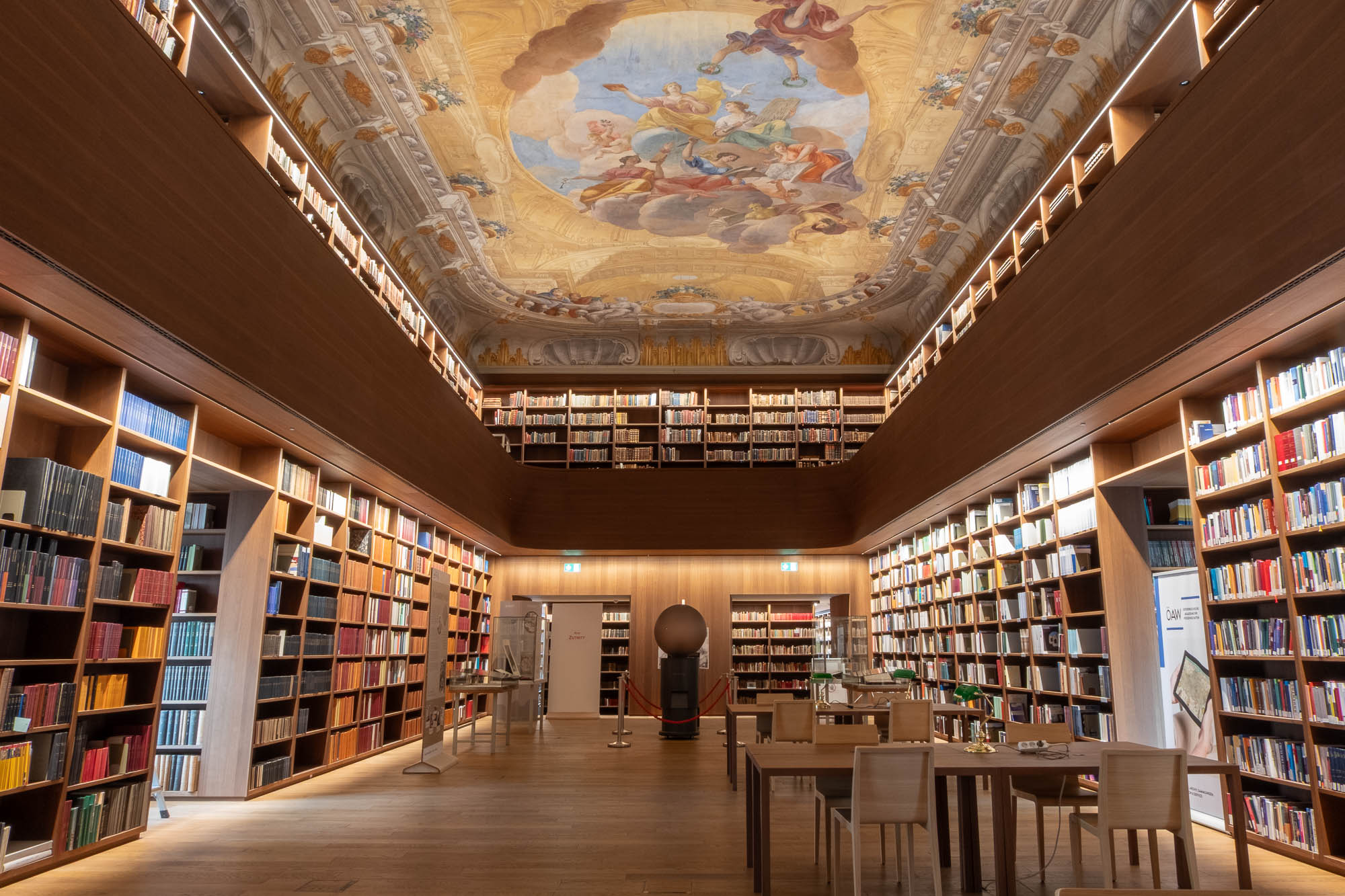
The Academy of Sciences library is publicly accessible and features rotating exhibitions. Highlights of its rich collection are also available online.
The images shown here date from my visit in July 2025. Dankeschön to the library staff who allowed me to take a few images of the reading room!
References
Content note
You might also like