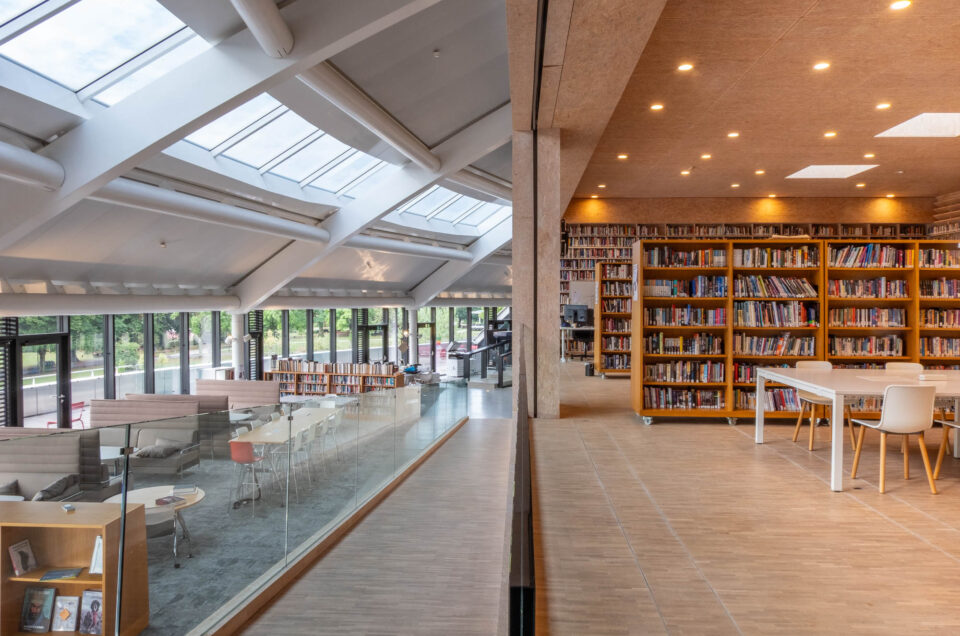
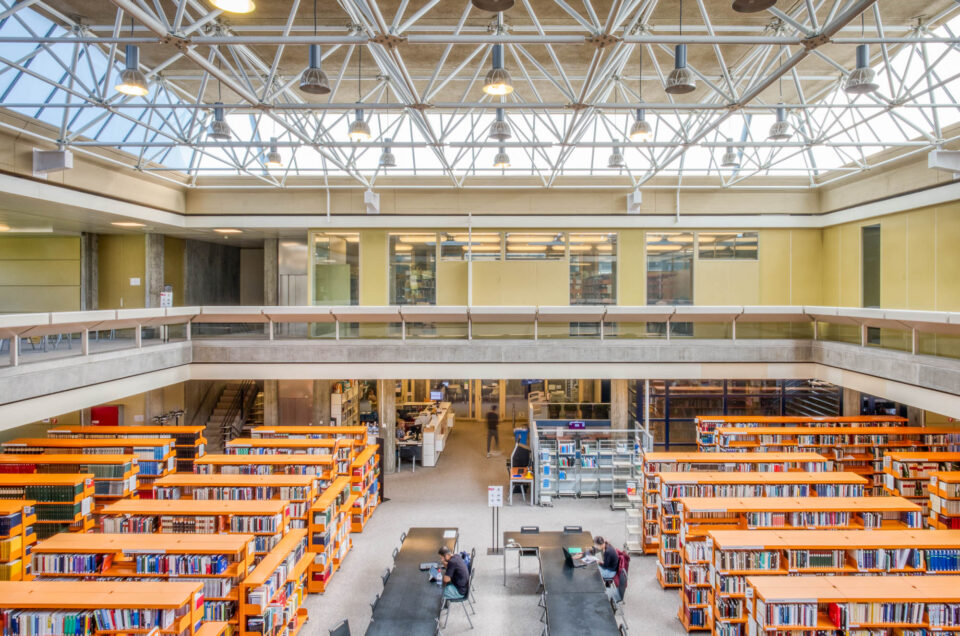
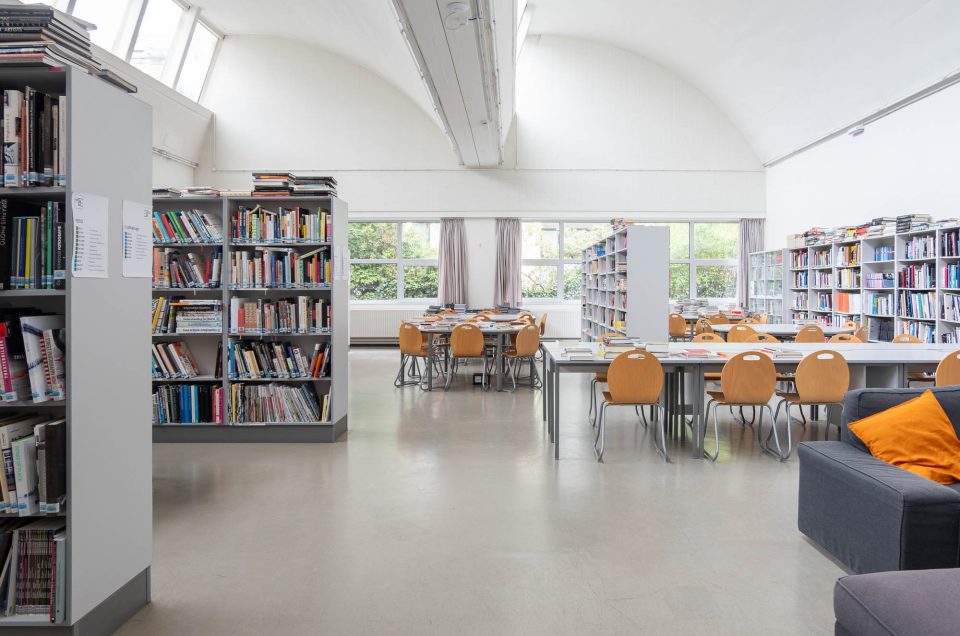
In 1936, the government of the Swiss canton of Ticino led an architectural competition for the construction of a new cantonal library. The institution, founded in 1852, was until then sharing facilities with the Liceo high school in the San Antonio convent in Lugano and space was running low. Sustaining local culture is of particular importance in Switzerland’s only Italian-speaking canton, a mandate that is shared by the cantonal library. Consequently, the competition was open only to local architects. The winning proposal by Rino and Carlo Tami was however entirely compelling on its own merit. Departing from the Italianate Neobaroque style that official buildings used to underline the canton’s italianità, the Tami brothers were intent to show that Ticino was also capable of modernity.

Inaugurated in 1942, the cantonal library in Lugano is a prime example of Swiss Neues Bauen, with its distinctive streamlined modern forms. The book storage wing that forms the north arm of the L-shaped library is directly inspired by Walter Gropius’ Bauhaus in Dessau. Above a recessed first floor, the four original storage floors are flanked to the north by a corridor lit by a grid of cathedral glass windows above which are narrow slit windows for ventilation. Connecting the floors is a round stairwell that juts out prominently over the west facade. Relying solely on artificial lighting for conservation, the book stacks themselves have no windows, leading to the blind facade to the south, whose monotony is broken by the judicious placement of a figure of Minerva by sculptor Remo Rossi. The visually distinctive top floor of the book storage wing was added in 1969 following plans by Rino Tami, who had anticipated the needs for extension. Plans further anticipated room for future growth with two repetitions of the book storage wing to the north of the building, which were never built.

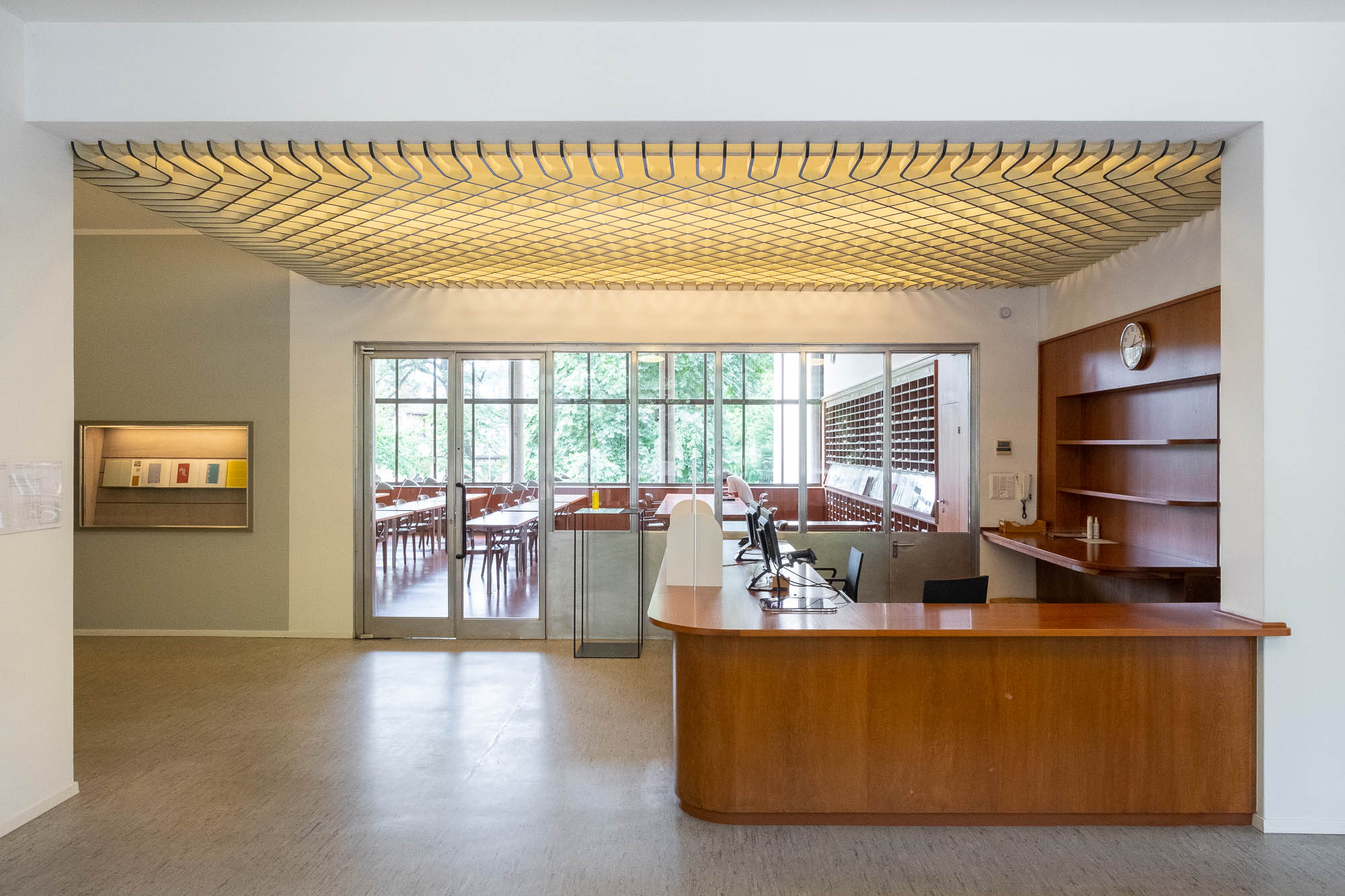
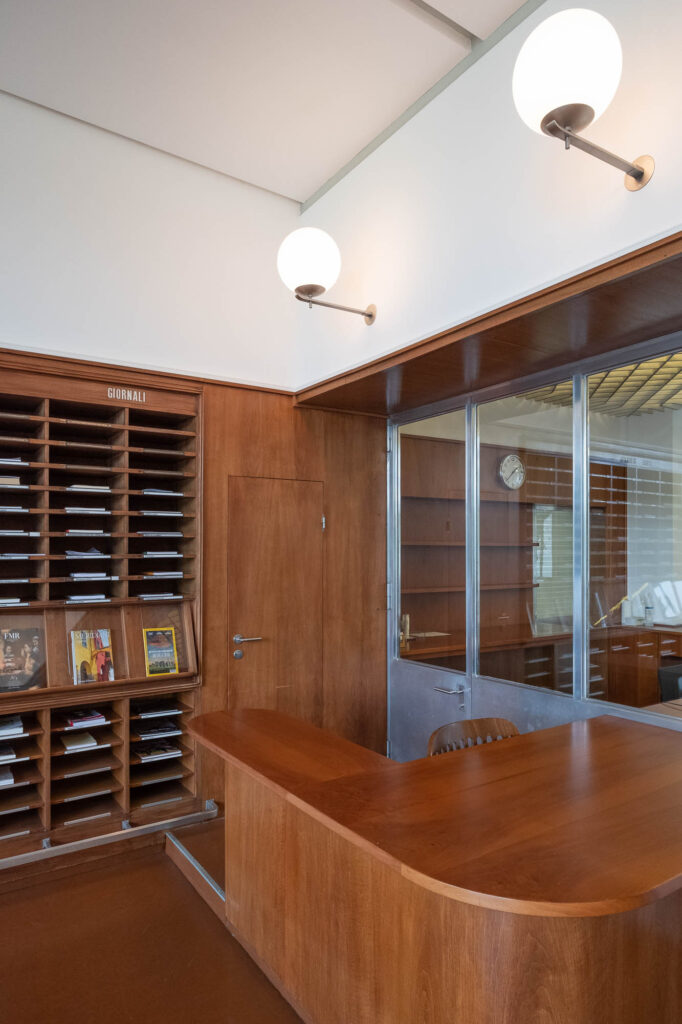
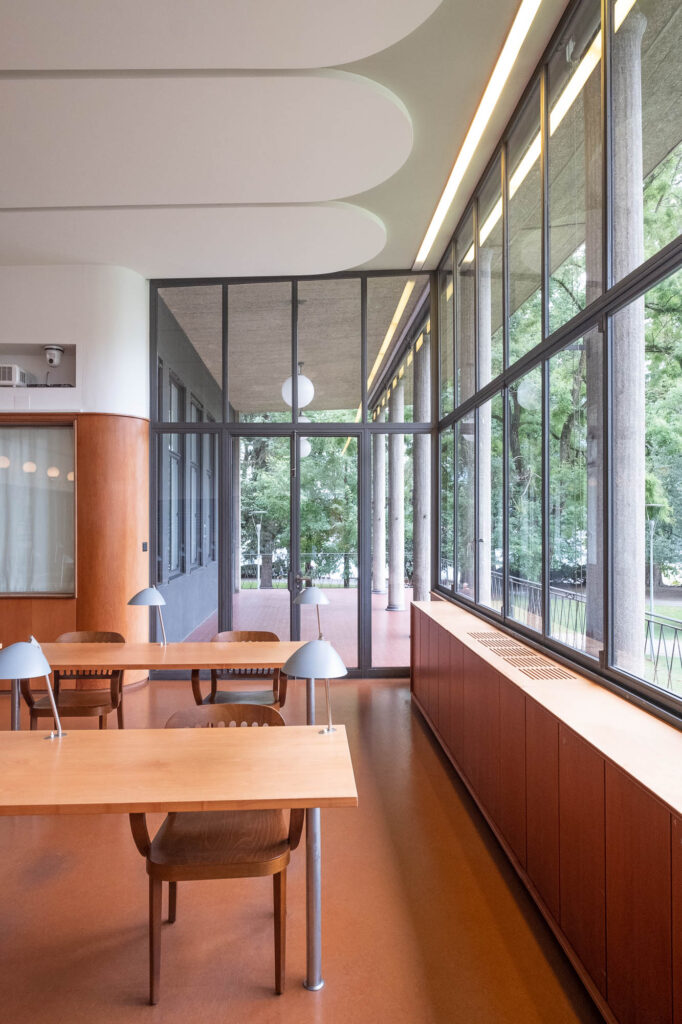
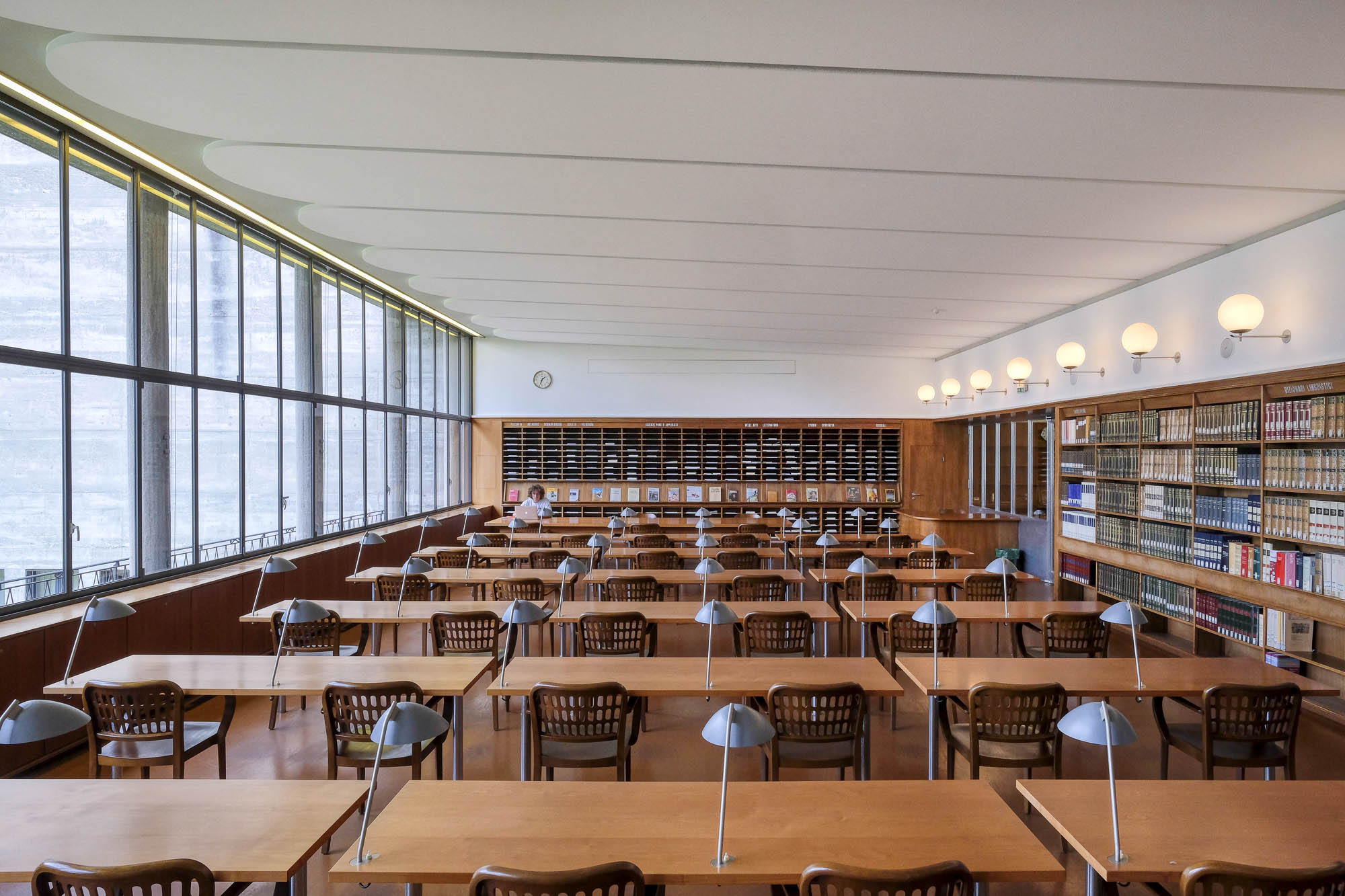
The other wing of the library holds a grand welcome area atop a flight of stairs, leading to an exhibition room and a vast wooden welcome desk guarding the entrance to the reading room. Nowadays, this desk is no longer in use, but this would have been where users would request documents to be fetched from storage. Separated from the desk by a glazed wall, the reading room opens to the lush panorama of Parco Ciani and the lake through a slender colonnade, extended to the south by a small terrace. Next to the welcome desk, an elegant spiral staircase leads to management offices on the top floor. On the other end of the building, besides the grand entrance, a discreet flight of stairs led to a small apartment for the building’s curator.
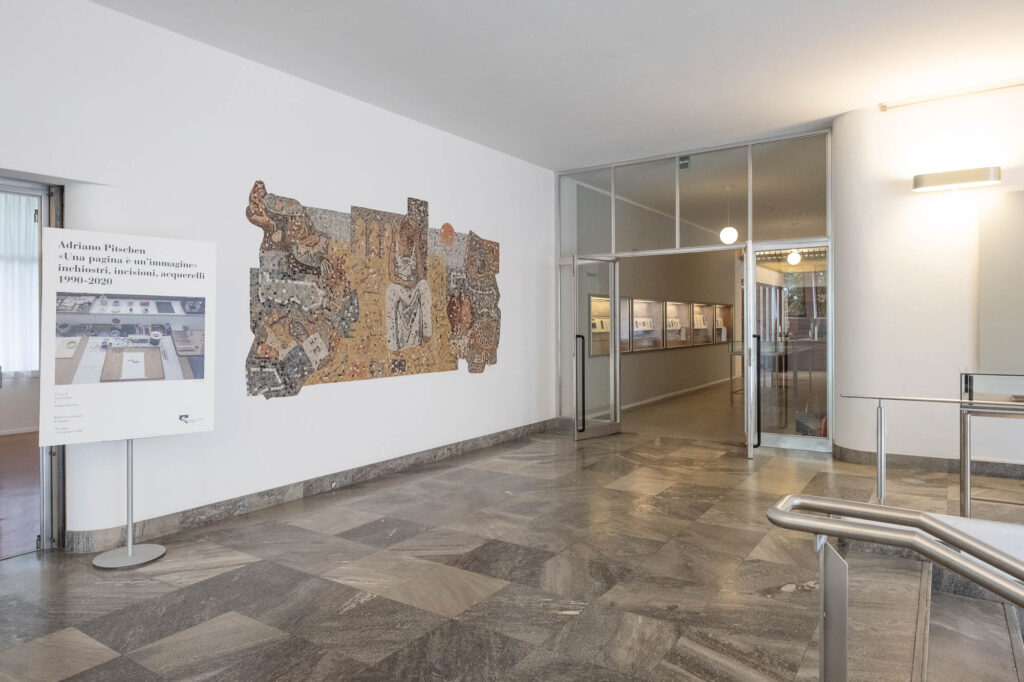
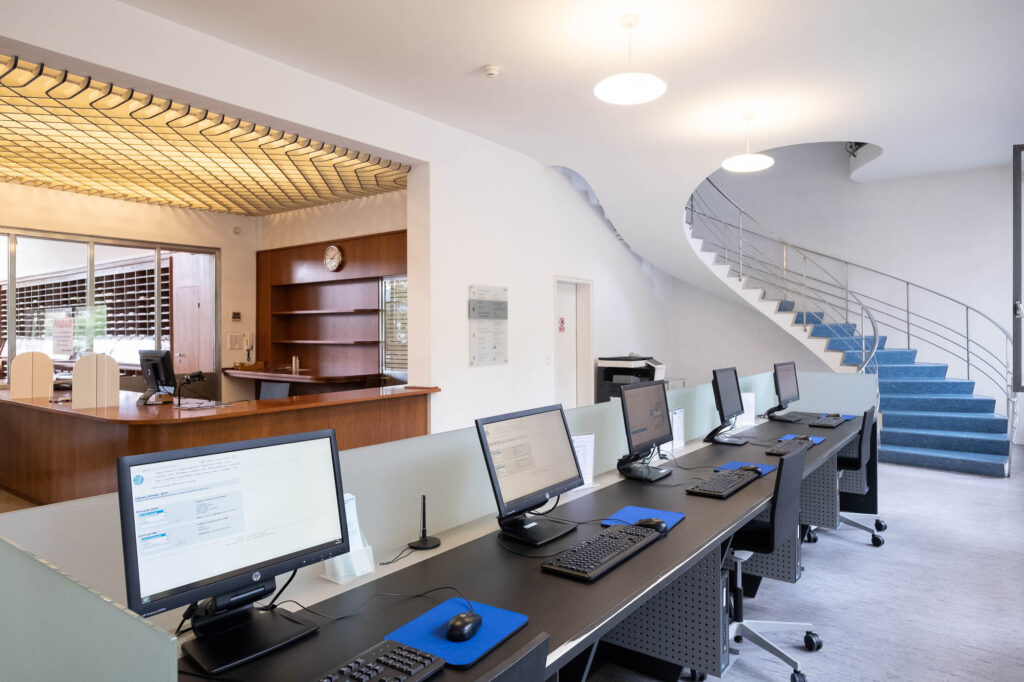
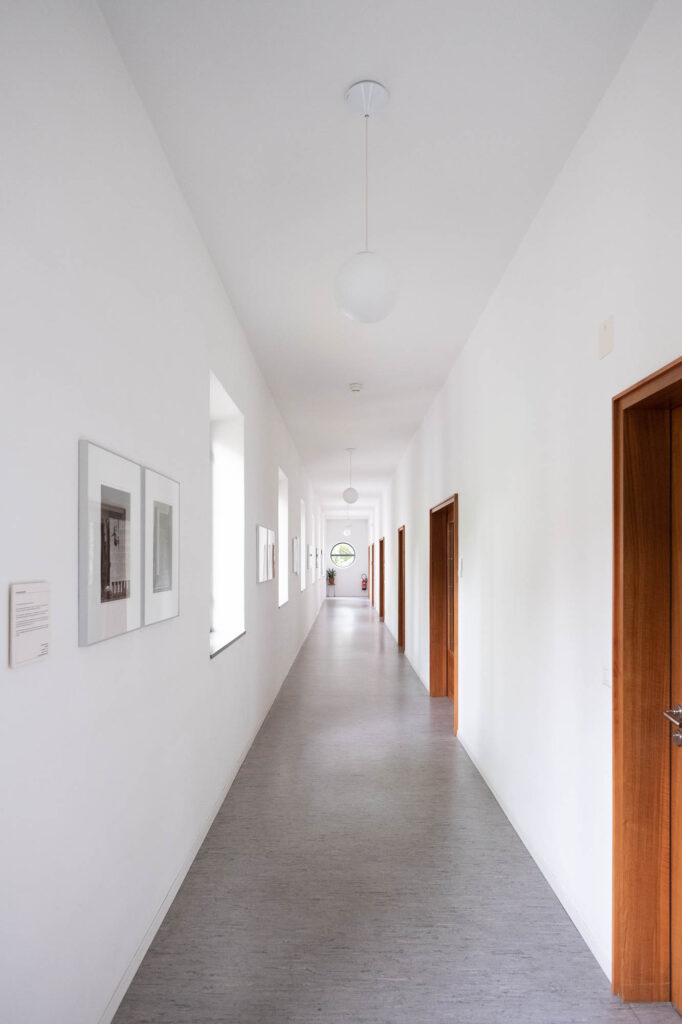
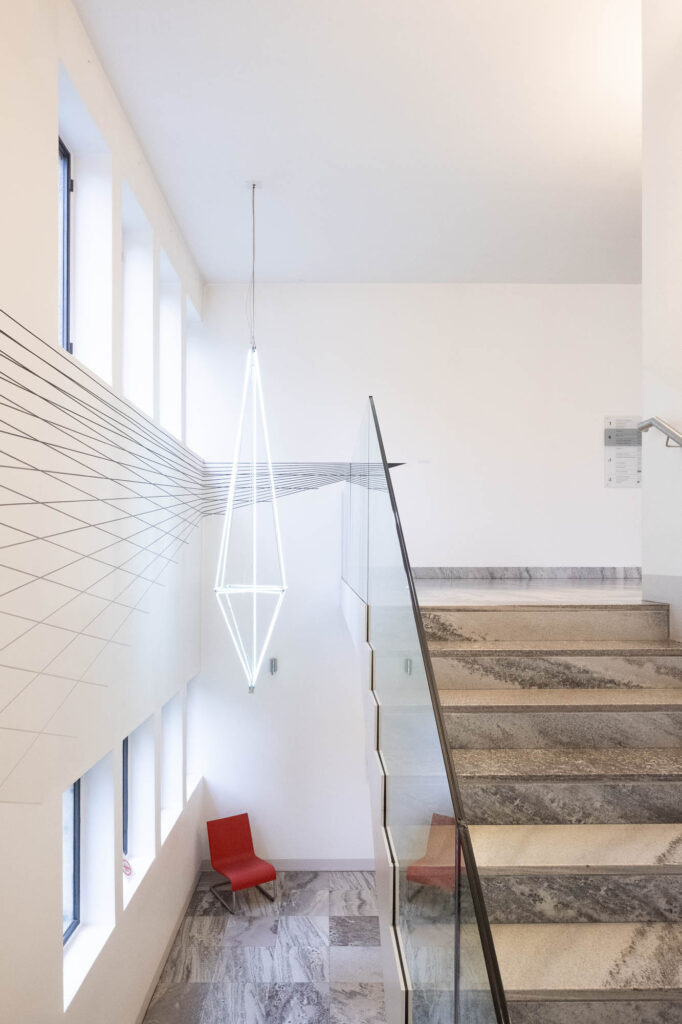
To the left of the grand entrance is a smaller staircase leading down to the lower floor. Originally, this space was occupied by a separate general use library. In 2005, following transformations led by Michele and Francesco Bardelli, the two libraries merged into one. This had the unfortunate consequence of condemning the grand upstairs desk and redirecting the flow of users to the now single welcome desk in the lower floor away from the original natural direction of movement. Due to the building’s heritage status, however, the Bardellis had to limit their interventions to subtle wall markings in the entrance area. Evidence of the reorganization are more evident in the lower floor, where the once small reading room doubled in size thanks to the removal of the general library stacks. Their contents were moved to the lowest floor of the books stack wing, once occupied by the building’s heating equipment and now open to the public and flanked by more working space.
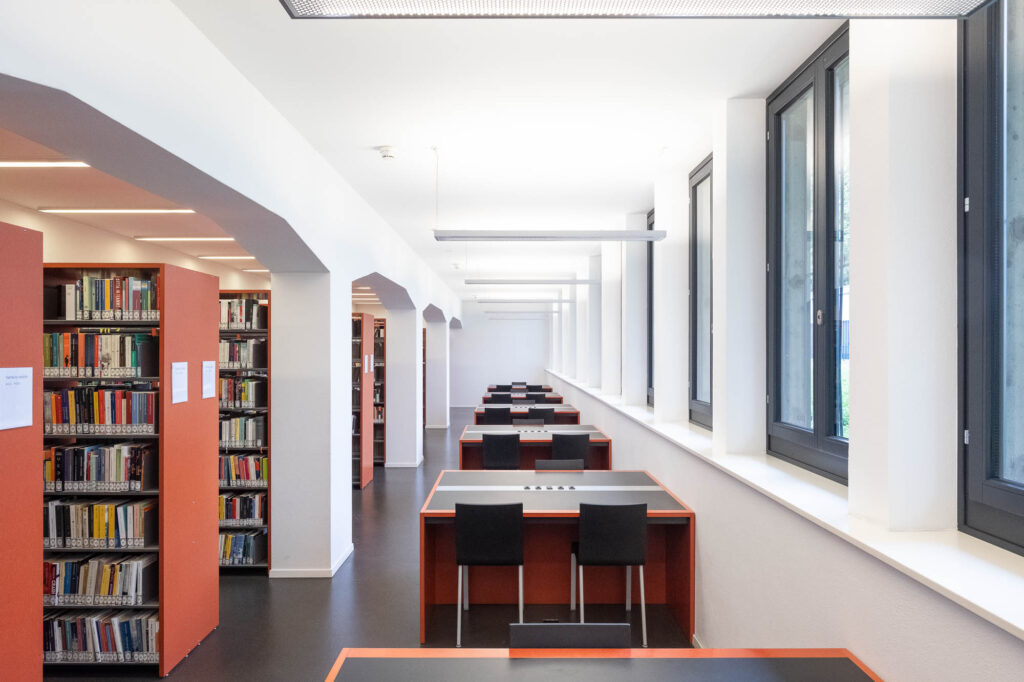
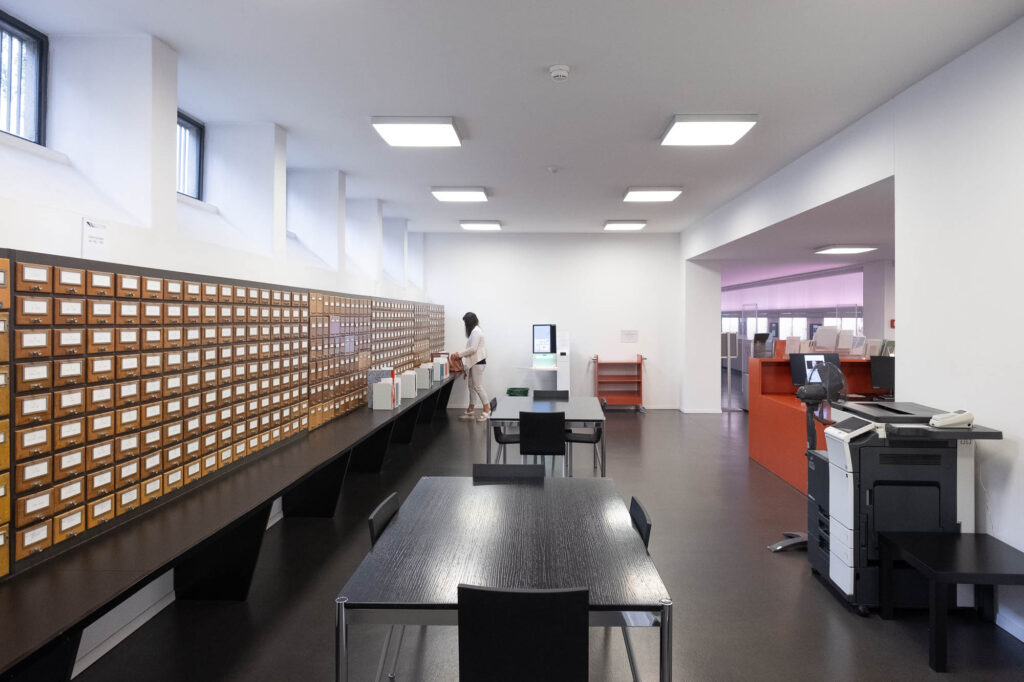
The Bardellis also led a careful and thorough renovation of the areas under heritage protection, including the removal of asbestos soundproofing panels in the main reading room (sala Tami) and correcting structural issues on the roof.
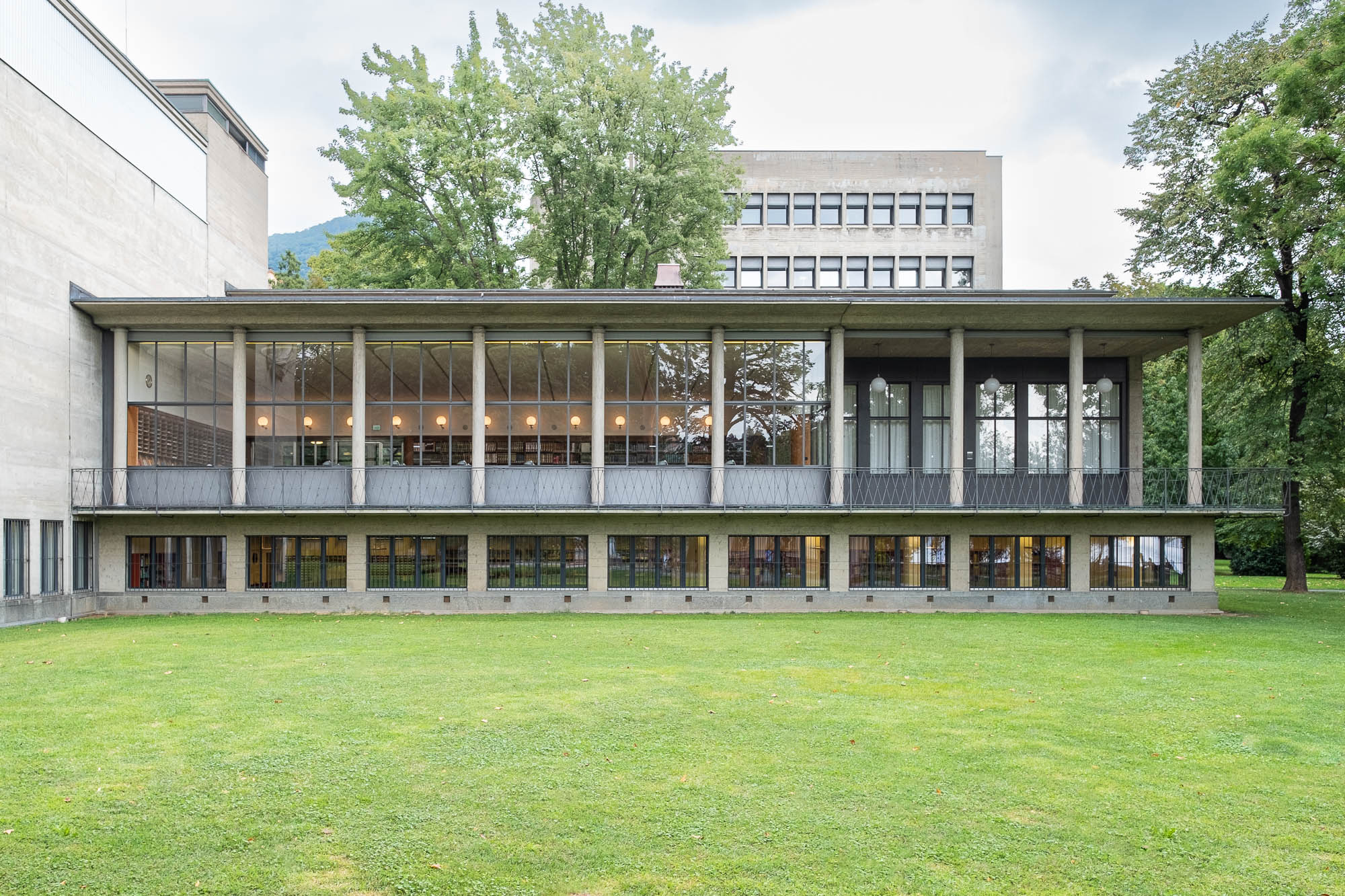
Architecture was not the only aspect in which the Lugano cantonal library embraced modernity. In 1941, Adriana Ramelli became the first woman to lead a scientific library in Switzerland.
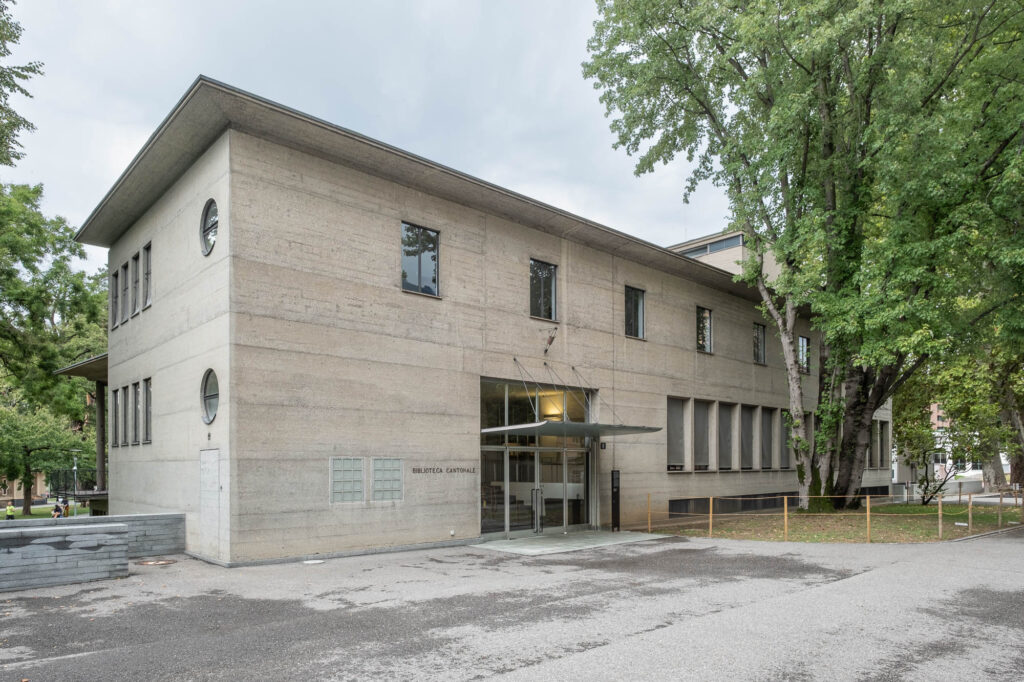
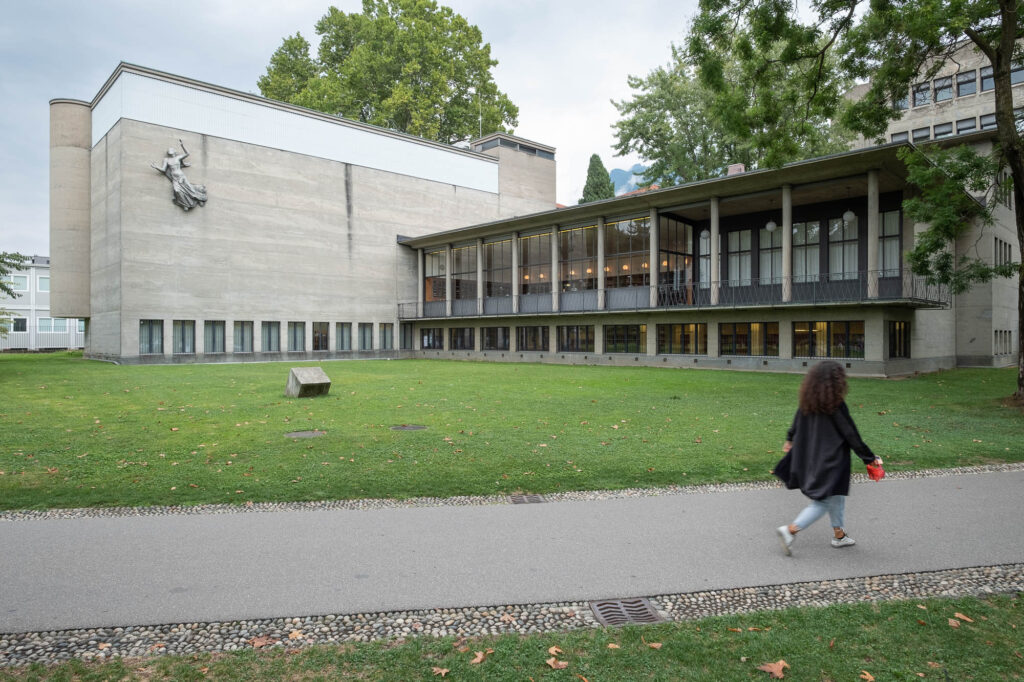
The images shown here date from my visit in September 2022. I’m very grateful to the staff of the Lugano cantonal library for their kind welcome and for anticipating my questions on the library’s architecture by preparing a thoughtful bibliography that was quite useful in preparing this article!
References
Content note
You might also like