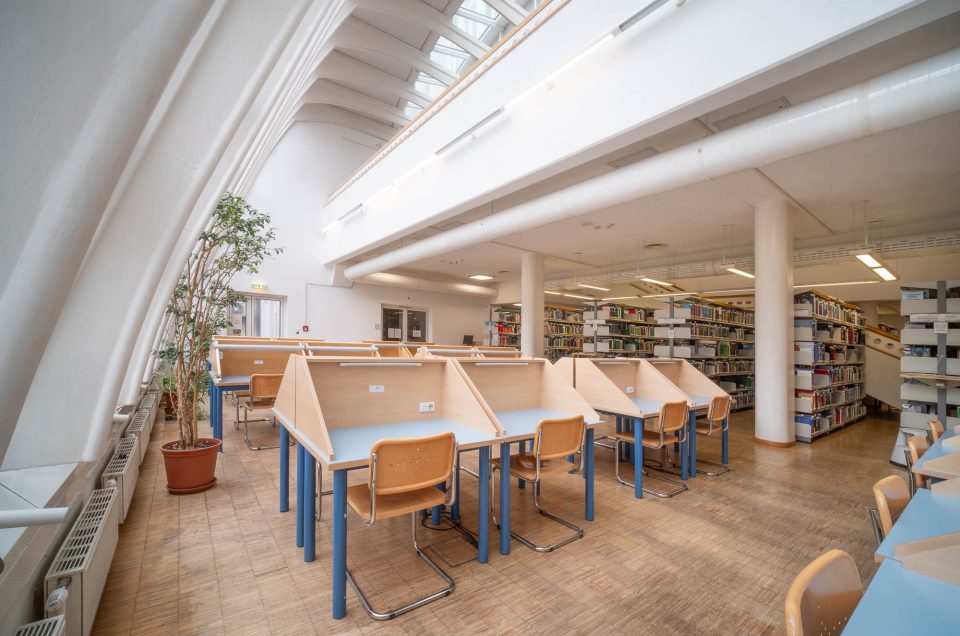
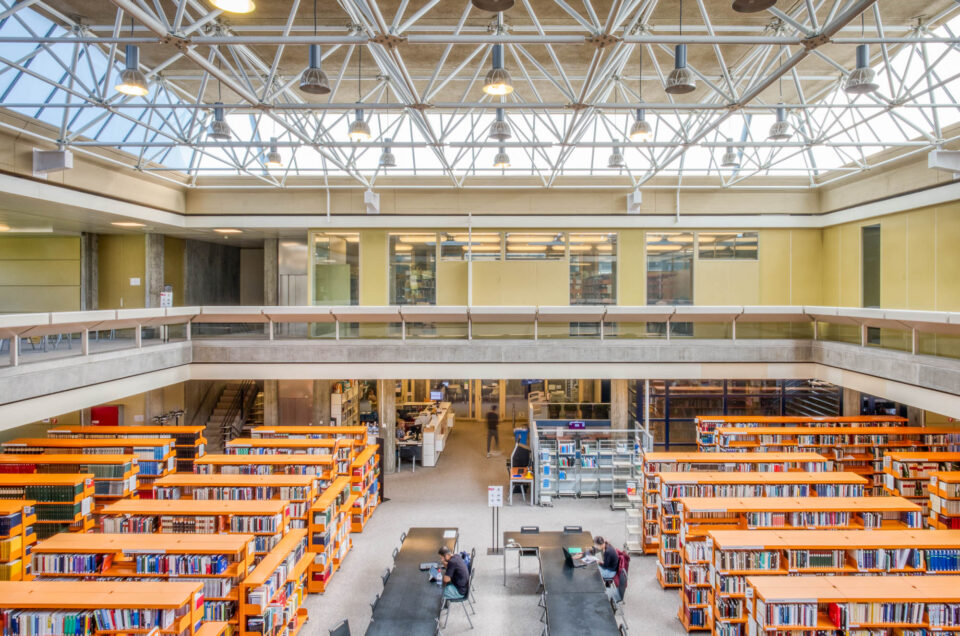
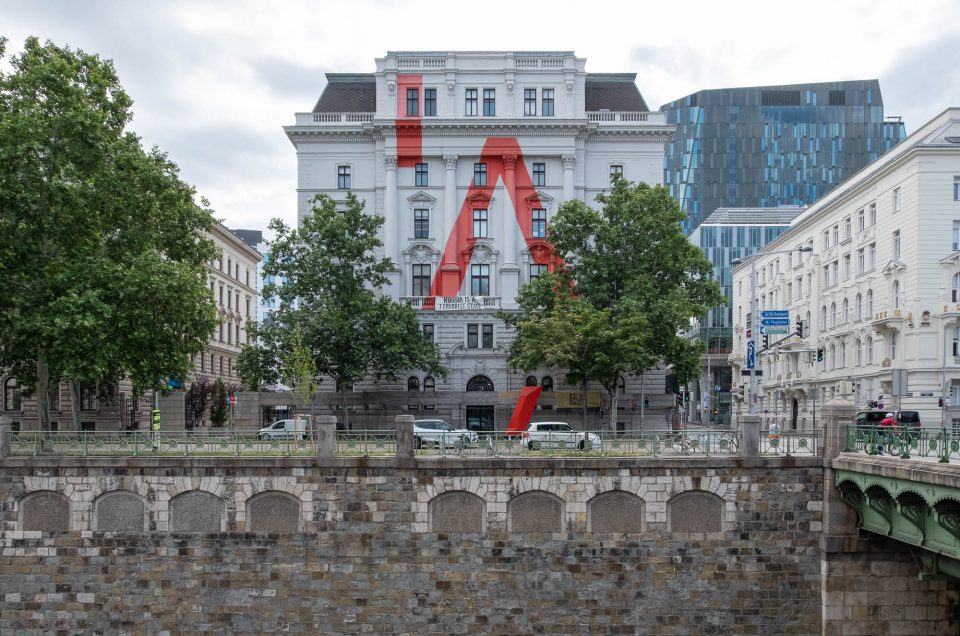
The Innsbruck university library was built between 1911 and 1914 as part of a new campus on the banks of the Inn river. The move was the conclusion of a decades-long struggle to find room to grow for the university, which had outgrown its to previous locations near the cathedral. The new Innrain campus was built on the Prügelbaugelände, a site once used for hauling timber transported by the river and that later served as military exercise grounds.
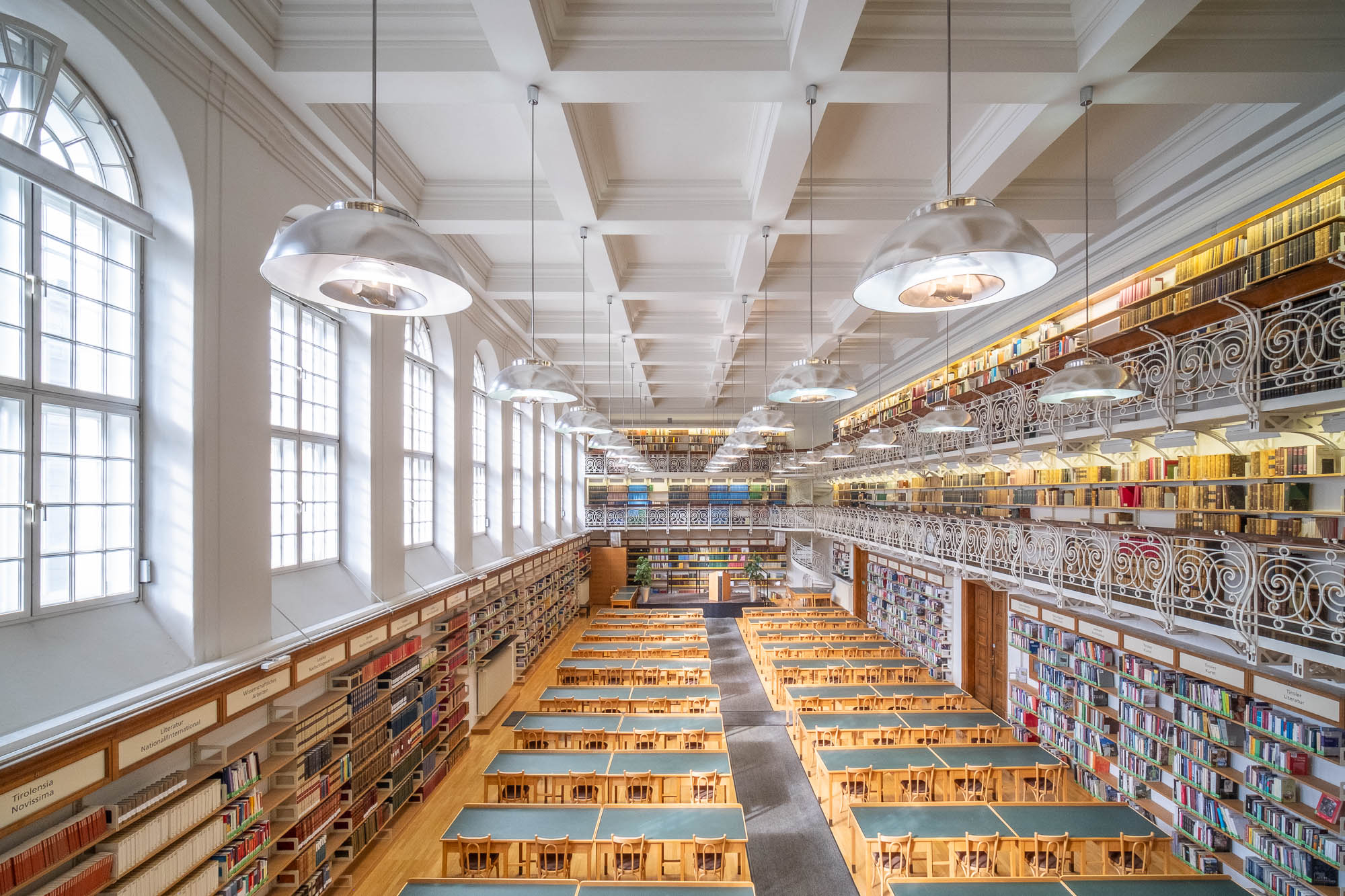
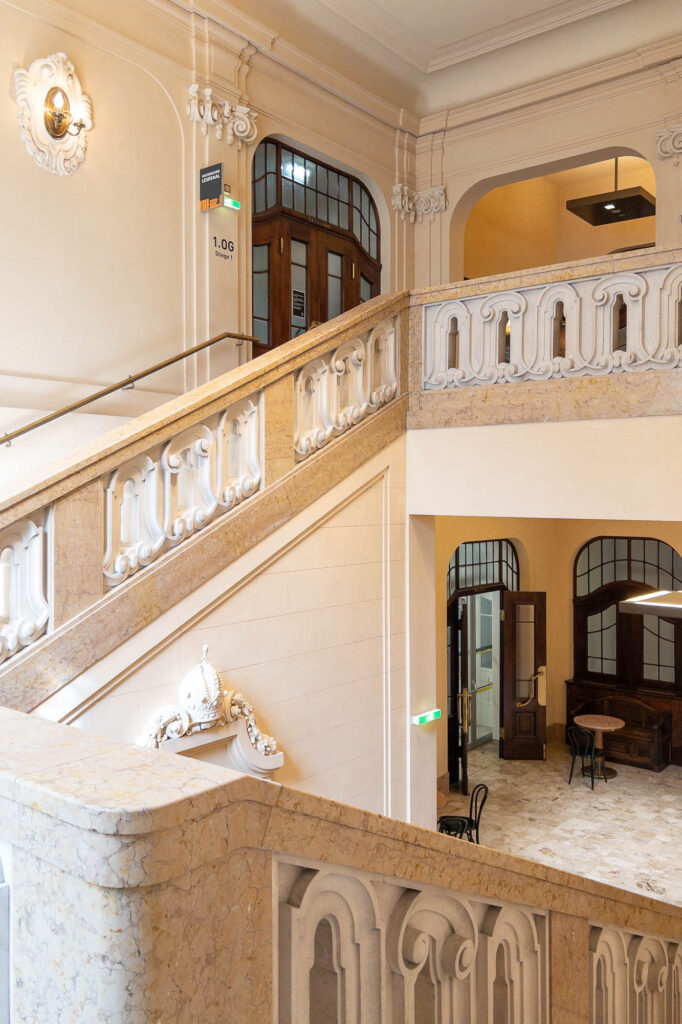
The architect of the new library was Eduard Zotter, from Vienna. Drawing inspiration from the university library in Marburg, he separated the main library, with its grand reading room, service counters, catalogue hall and administrative offices, from the book stacks, which formed a separate volume to the north. Connecting the two was a narrower entrance block with an ornate portal and a grand staircase. The book stack wing was meant to be extended northwards and provide room for the expansion of the collection.
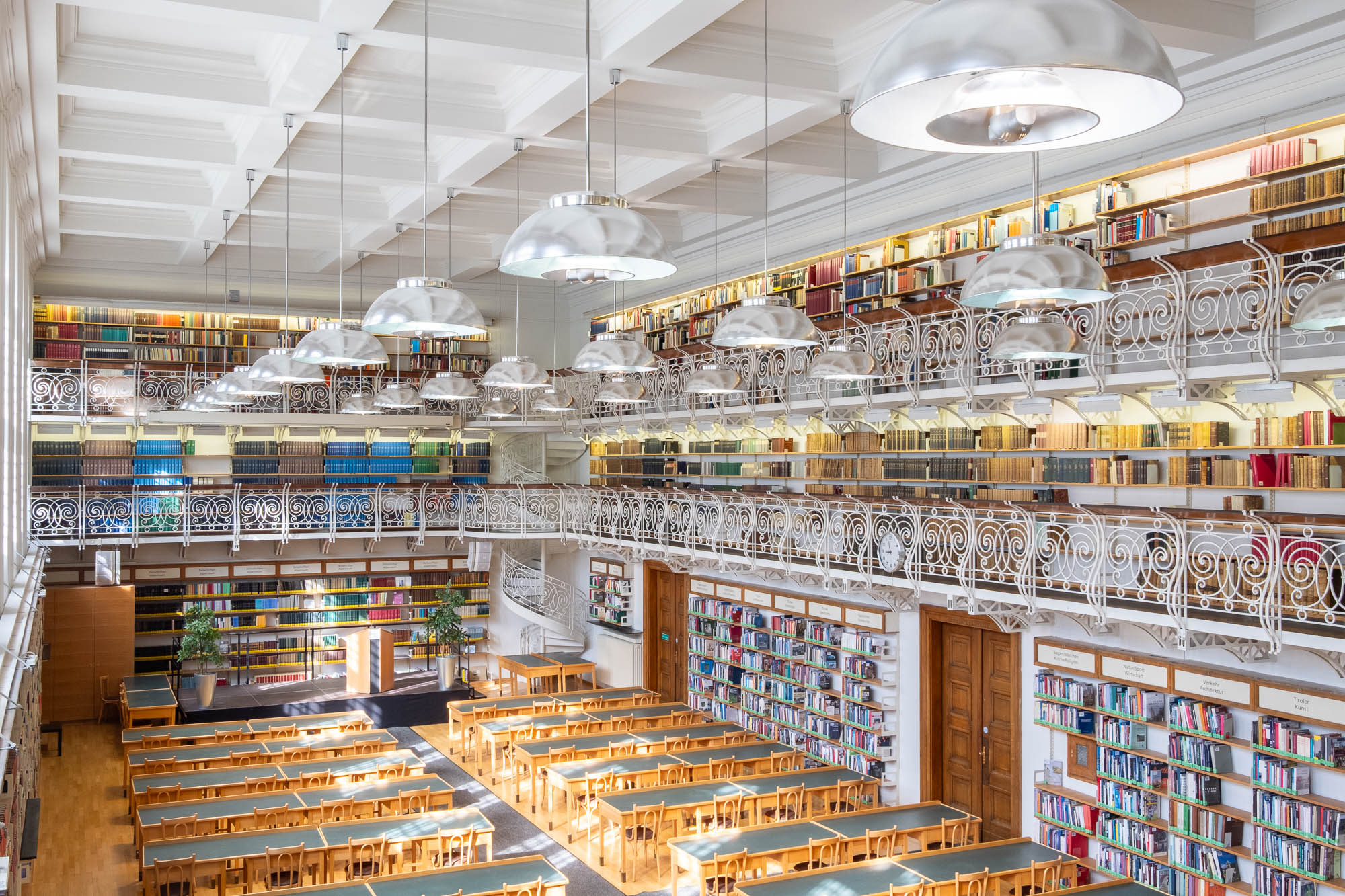
Completed on the eve of the First World War, however, the building was immediately requisitioned as a military hospital. The collections that had already been moved were hastily brought back to the old library. After the war, the building was occupied for a while by the Italian army. Only in 1924 could the library open, after an extensive renovation of the facilities and the replacement of all the furniture, which had been badly damaged during the war.
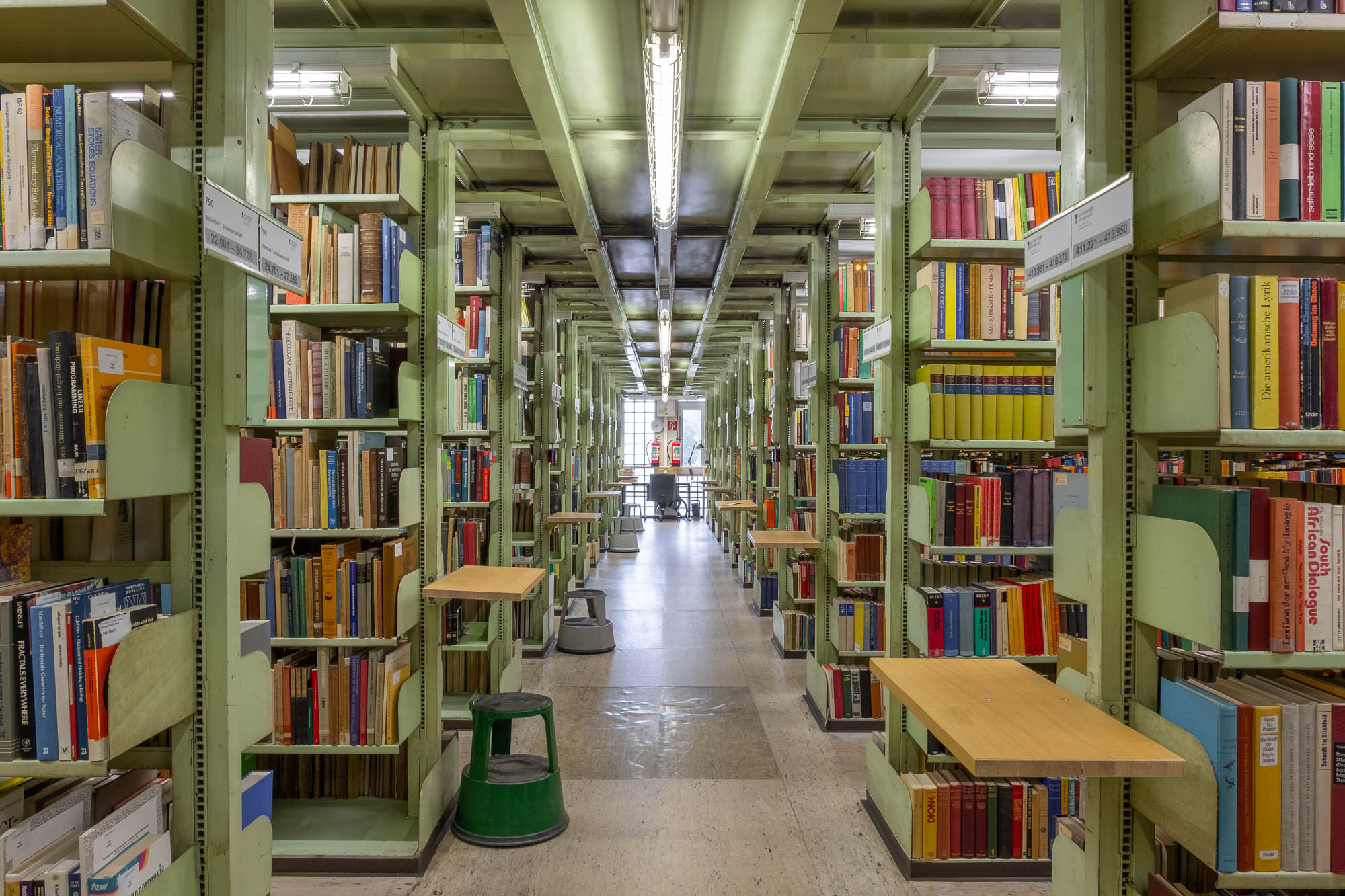
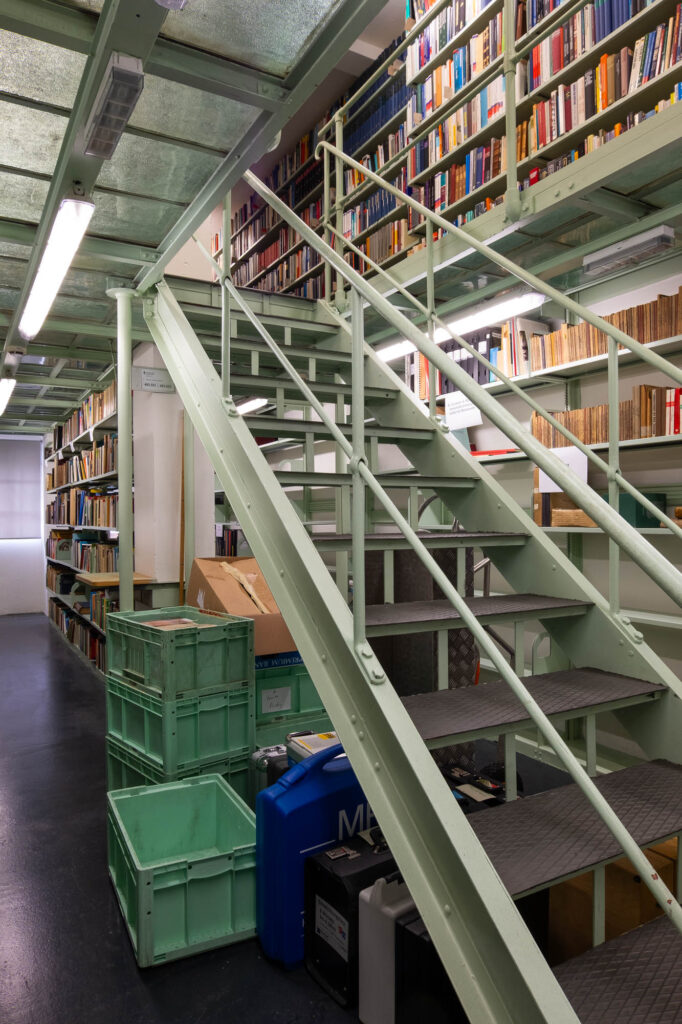
Despite the 10 year delay imposed by the war, the library was among the most modern when it opened. The book stack wing, with its Lipman steel-framed shelving system, was separate from the main library wing, lowering the risk of fire. In the other wing, the main reading room was by design placed to the side of the building, so that staff and patrons could circulate without entering the room and disturbing readers.
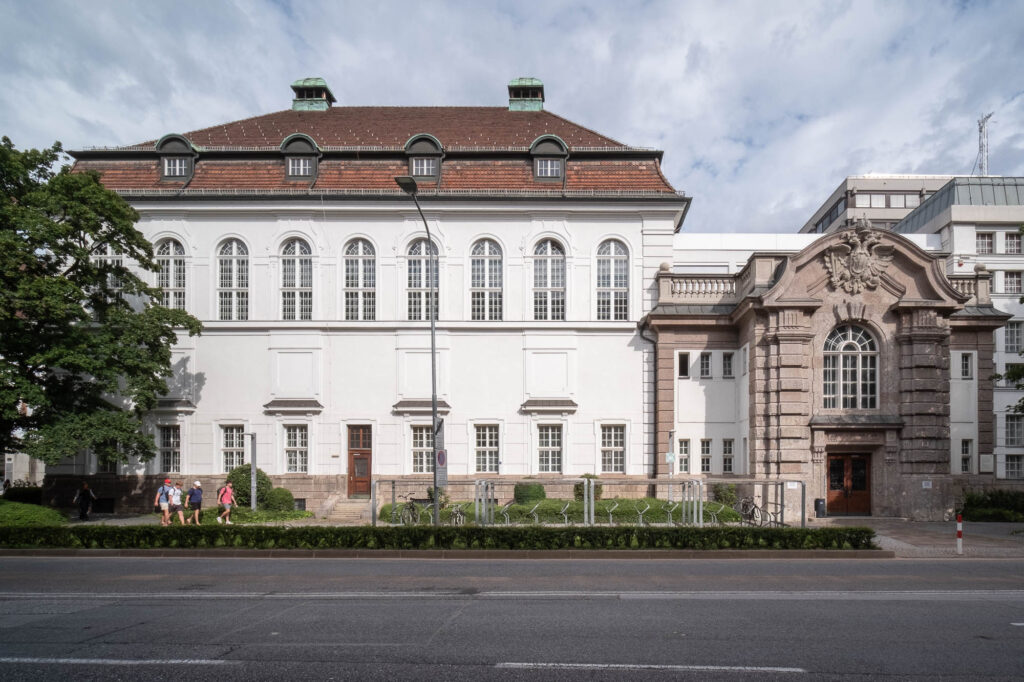
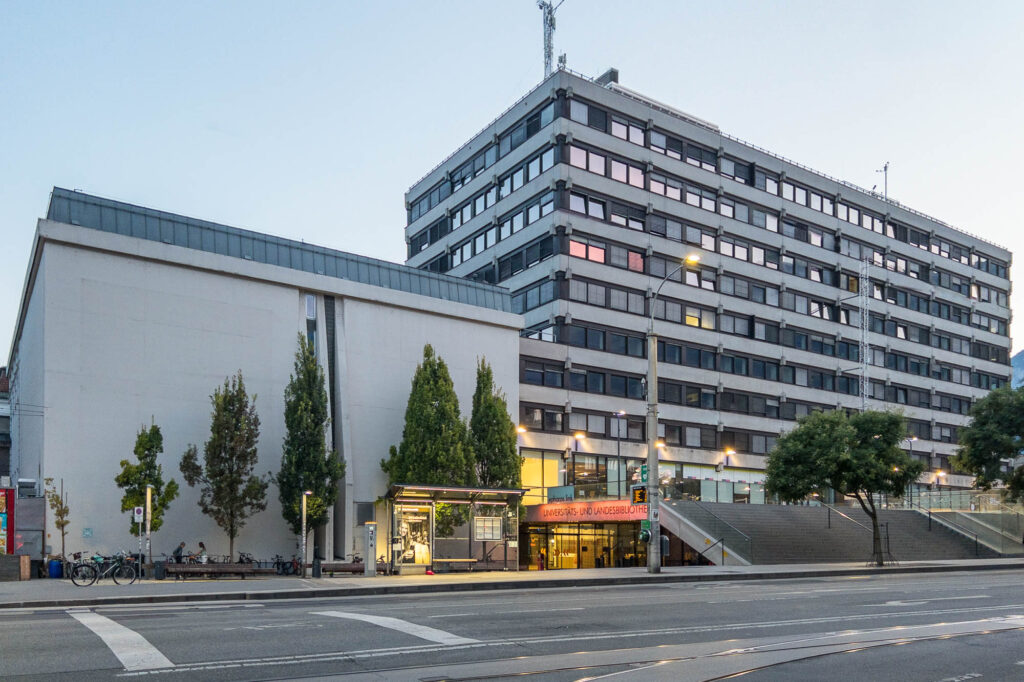
By the 1960s, collection growth prompted the need to expand the book stack wing, as had been envisioned by Zotter. Engineer and architect Gerhard Plank was hired to design the extension, for which he proposed to double the volume of the original wing with a windowless block. The controversy launched by this stark departure from the original Neo-Baroque form eventually caused Plank to step down from the project. The extension was finalized by the federal building commission instead, still in the spirit of Plank’s original vision. The entrance block was also extended at the back and gained an additional level, with less visual street impact.
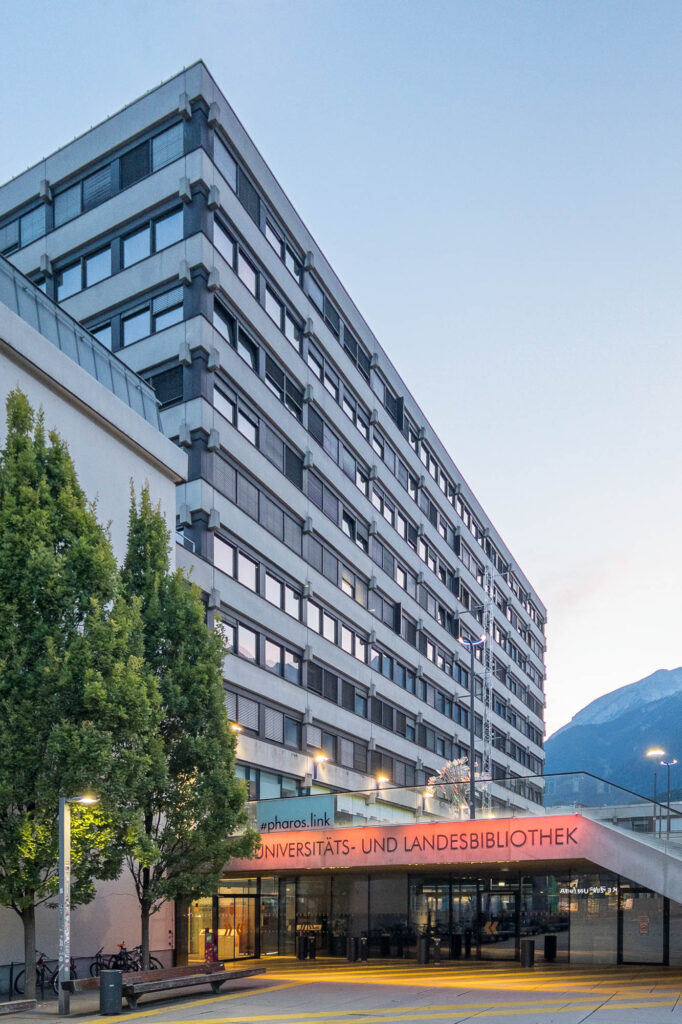
In 1975 and 1981, two towers by Hans Rauth were built for the humanities faculty, filling in the open space between the library and the river, and blocking its expansion capabilities. This became an issue in the early 2000s when a plan to centralize all university libraries was set in motion. The solution found by the consortium ARGE S14-Eck-Reiter-Rossmann was to slide the new library underneath the 1981 Bruno-Sanders-Haus tower and a new raised plaza, from which it connects to the historical building.
At this occasion, the original building was also carefully renovated by architect Karin Kopecky.
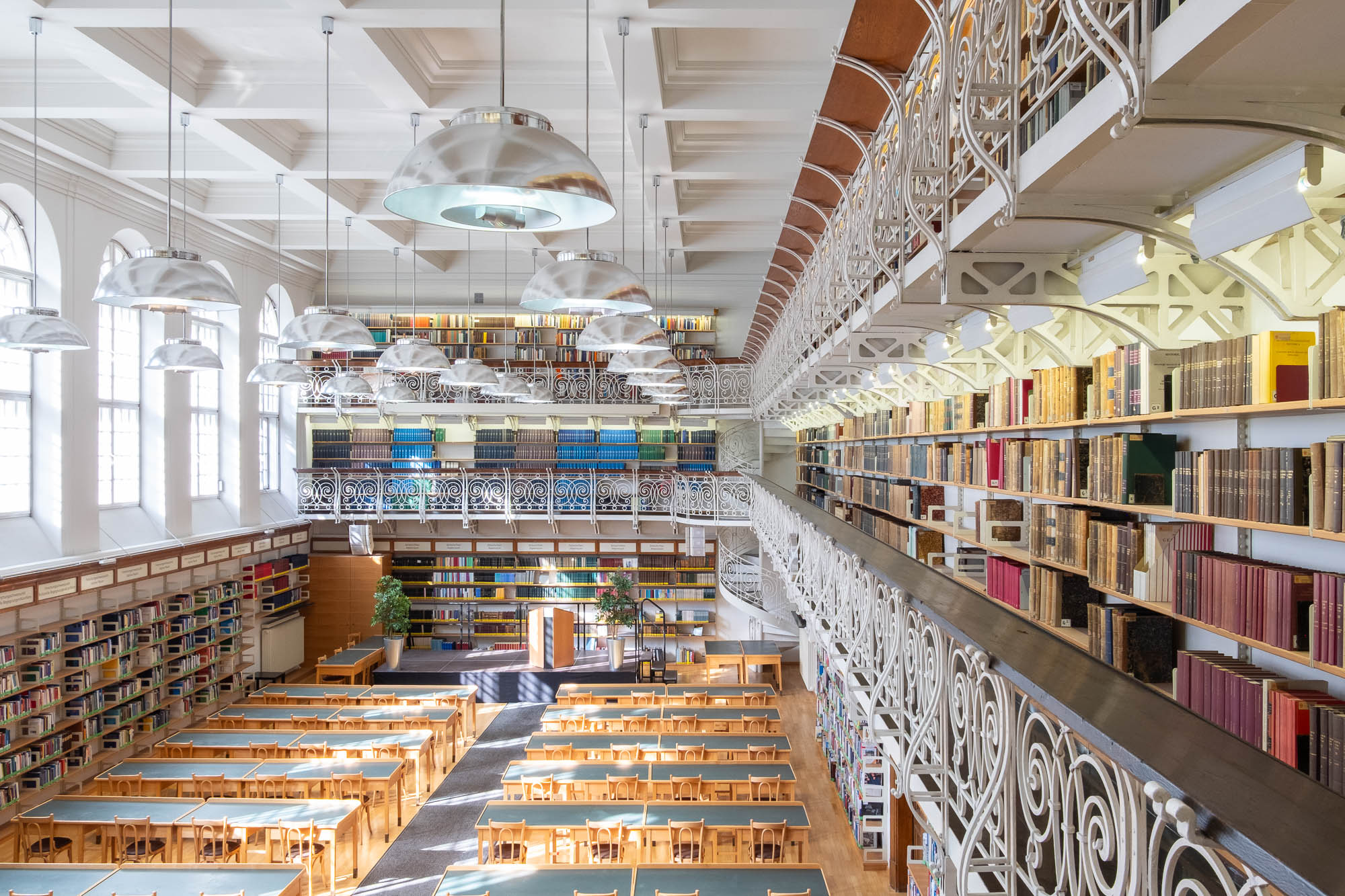
The new library, now serving both as university and state library for Tirol and the third largest in Austria, opened in 2009.
The images show here date from my visit in July 2025. Besten Dank für den grossartigen Empfang!
References
Content note
You might also like