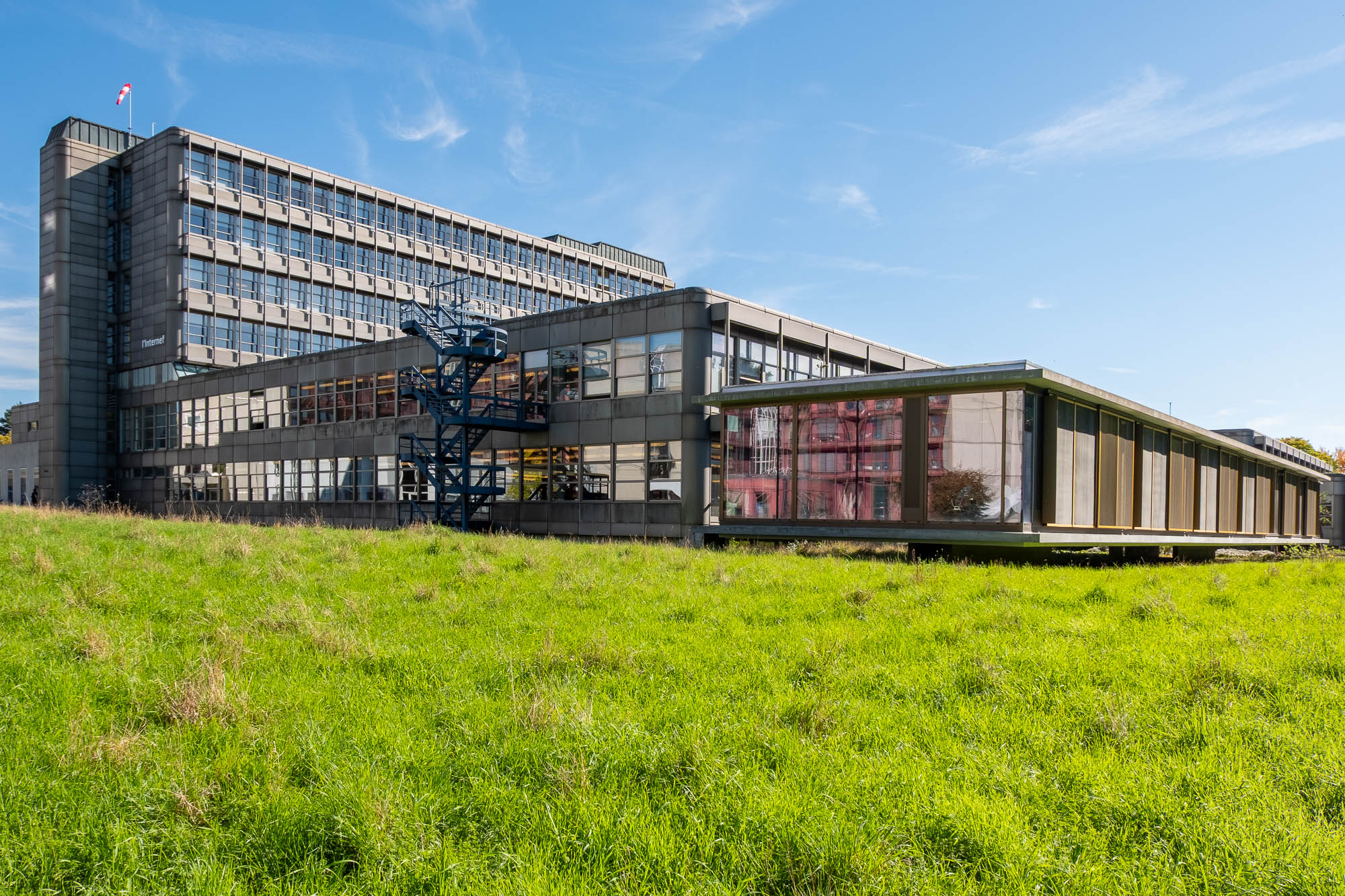
The Humanities 1 building (BFSH 1, later renamed Internef) was the third to be built on the University of Lausanne’s new Dorigny campus between 1973 and 1977. Its architects Frédéric Brugger, with Edouard Catella and Erich Hauenstein were following the campus master plan established in 1967 by Guido Cocchi, which mandated a coherent grid for dimensioning spaces and floor heights and the use of glass and anodized aluminum for all facades. The main body of the building follows these indications to the letter, organized as two rectangular towers of 5 and 6 storeys for faculty offices fronted to the west by two lower two-storey pavilions, one for classrooms and the other for the library, separated by a courtyard leading to the partly covered terraced entrance. On the eastern side are a cluster of 5 hexagonal auditoriums of varying sizes, for which the architects opted to veer away from the material mandate and instead clad them in orange ceramic tiles.
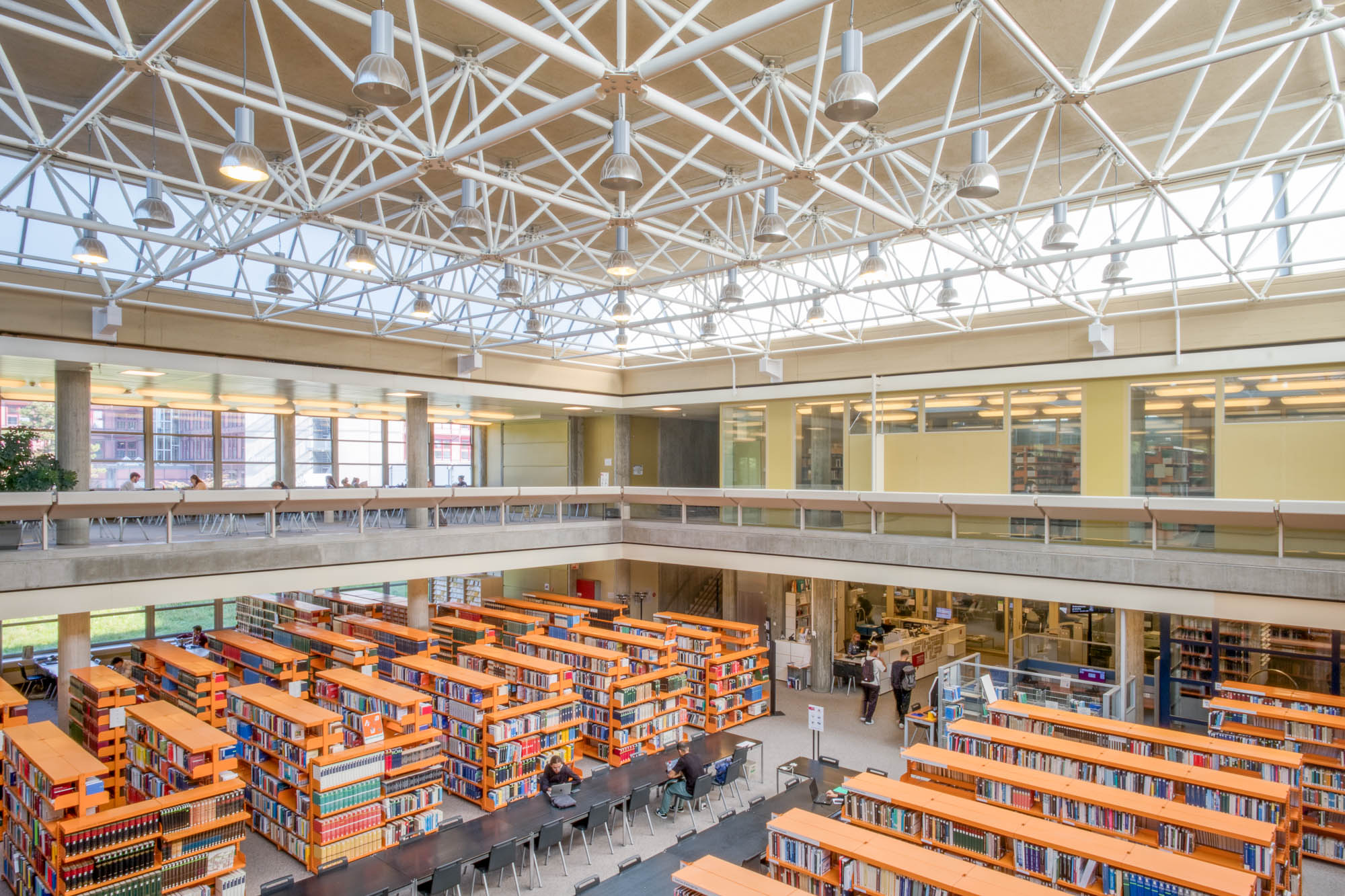
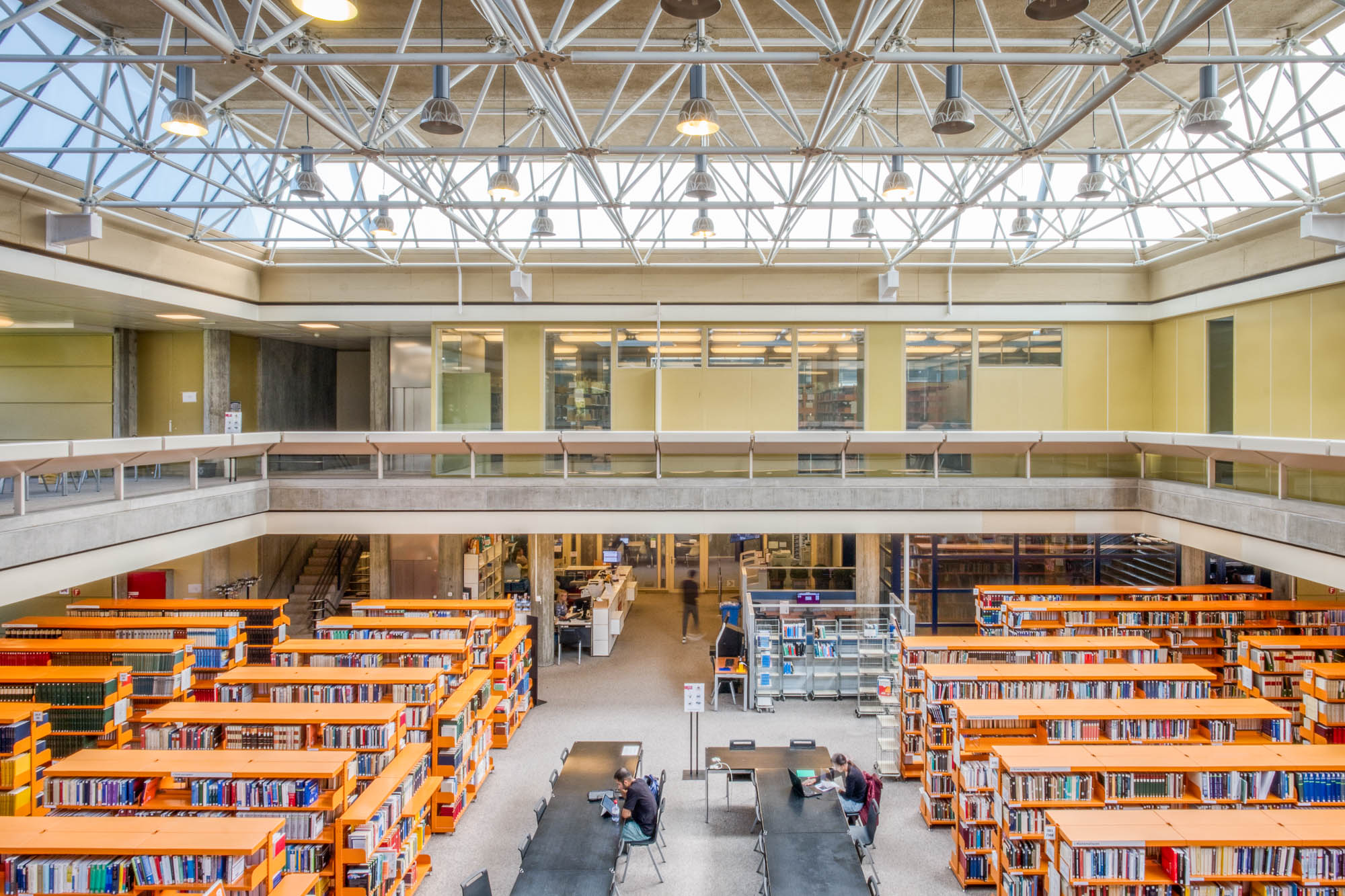
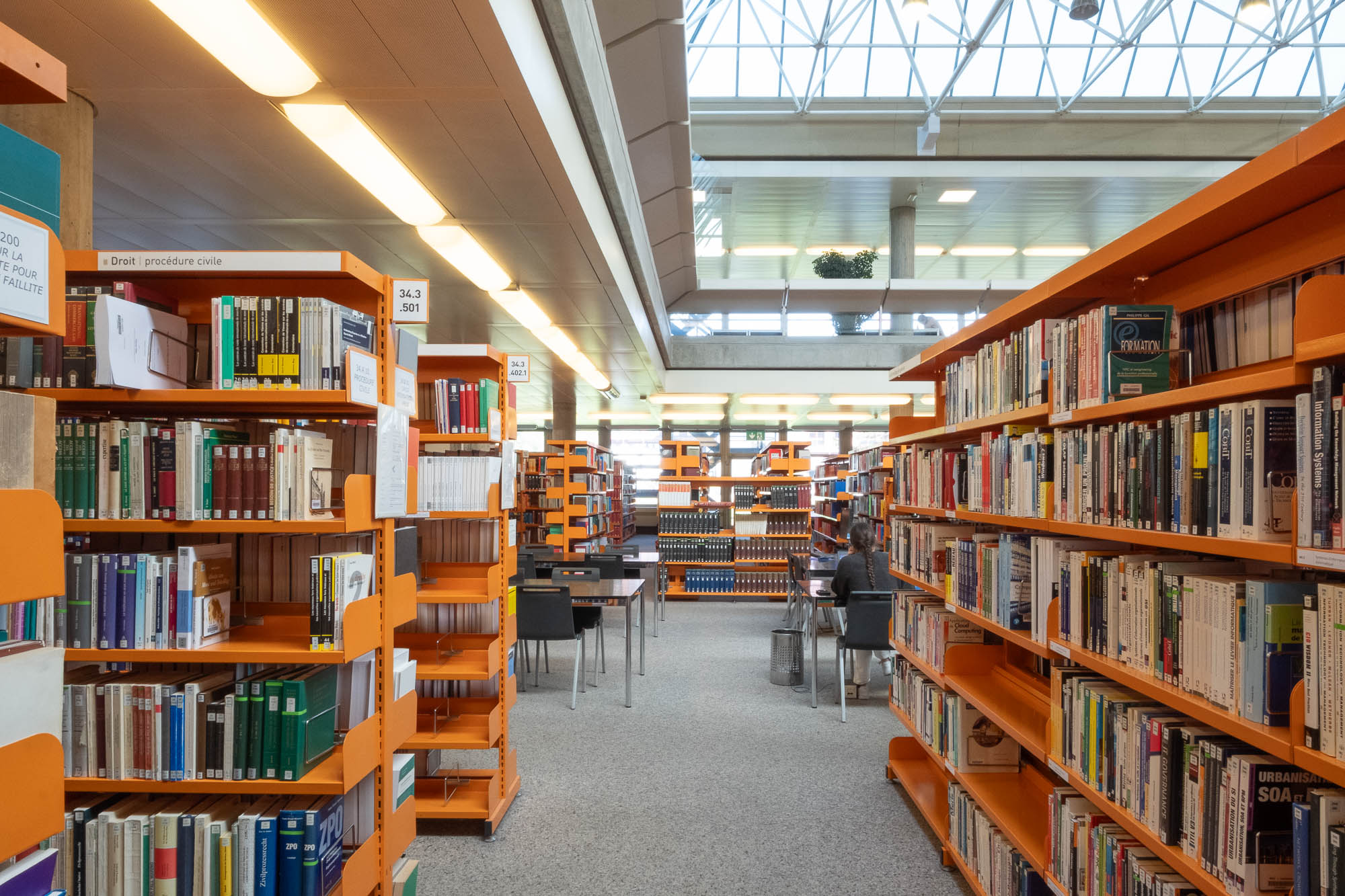
Serving the Law and Economics faculties, the library is a square with a square atrium in its centre, topped by a lantern supported by a lattice of steel beams. The lower floor is a large continuous space, filled with characteristic orange metallic shelves and long work tables. The mezzanine floor is divided between more open space and closed offices.
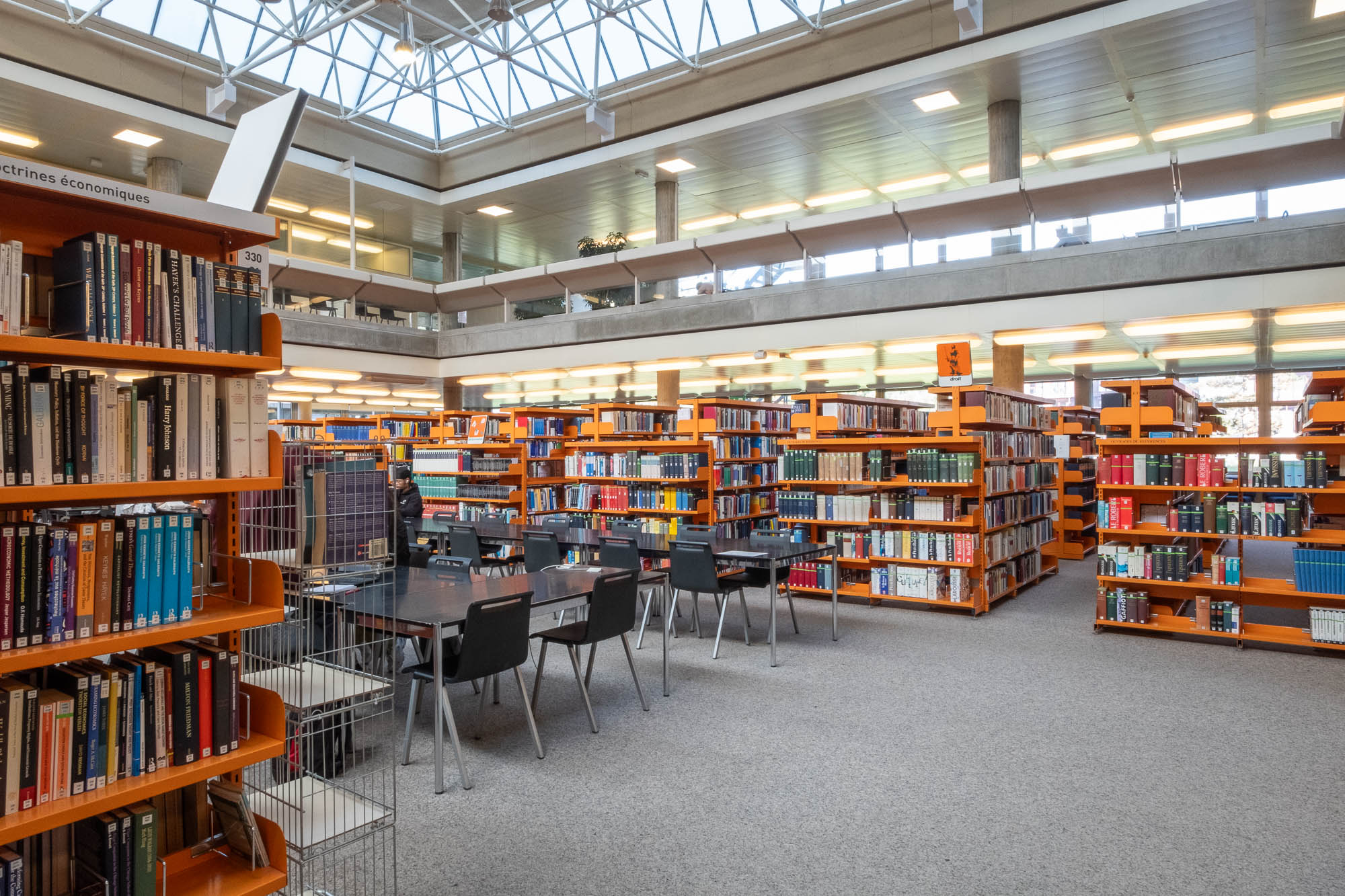
Inside one of the closed sections on the upper floor is a special collection on forensics, the former library of the Vaud Cantonal Police founded in 1909 by Rodolphe Archibald Reiss. Often dubbed the “Swiss Sherlock Holmes”, Reiss pioneered many of the forensic techniques used by crime investigators and often cited the famous fictional detective as a direct source of inspiration. In fact, the very first document he added to the police library was the complete collection of Conan Doyle’s stories.
Bibliothèque Edouard Fleuret
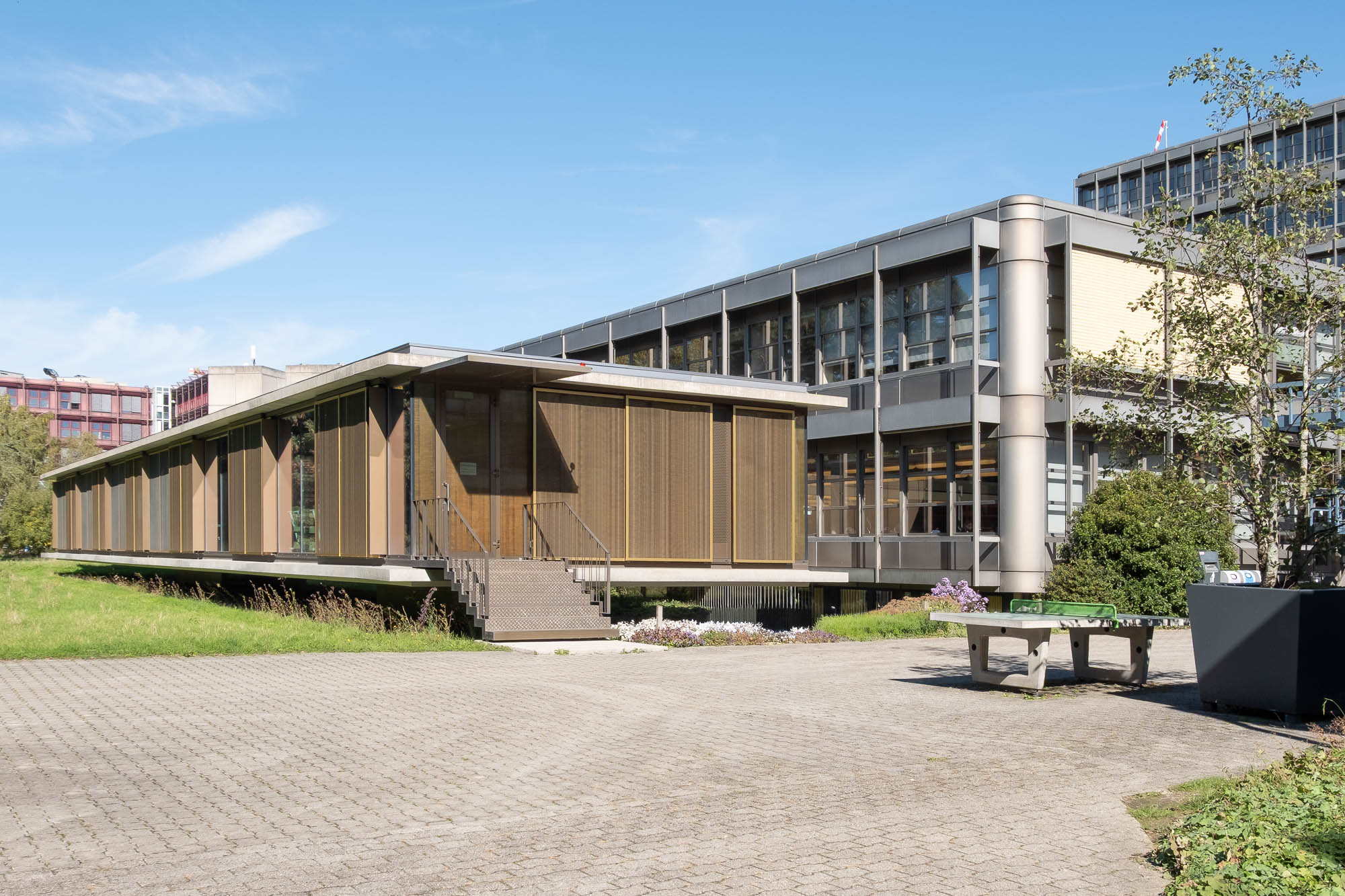
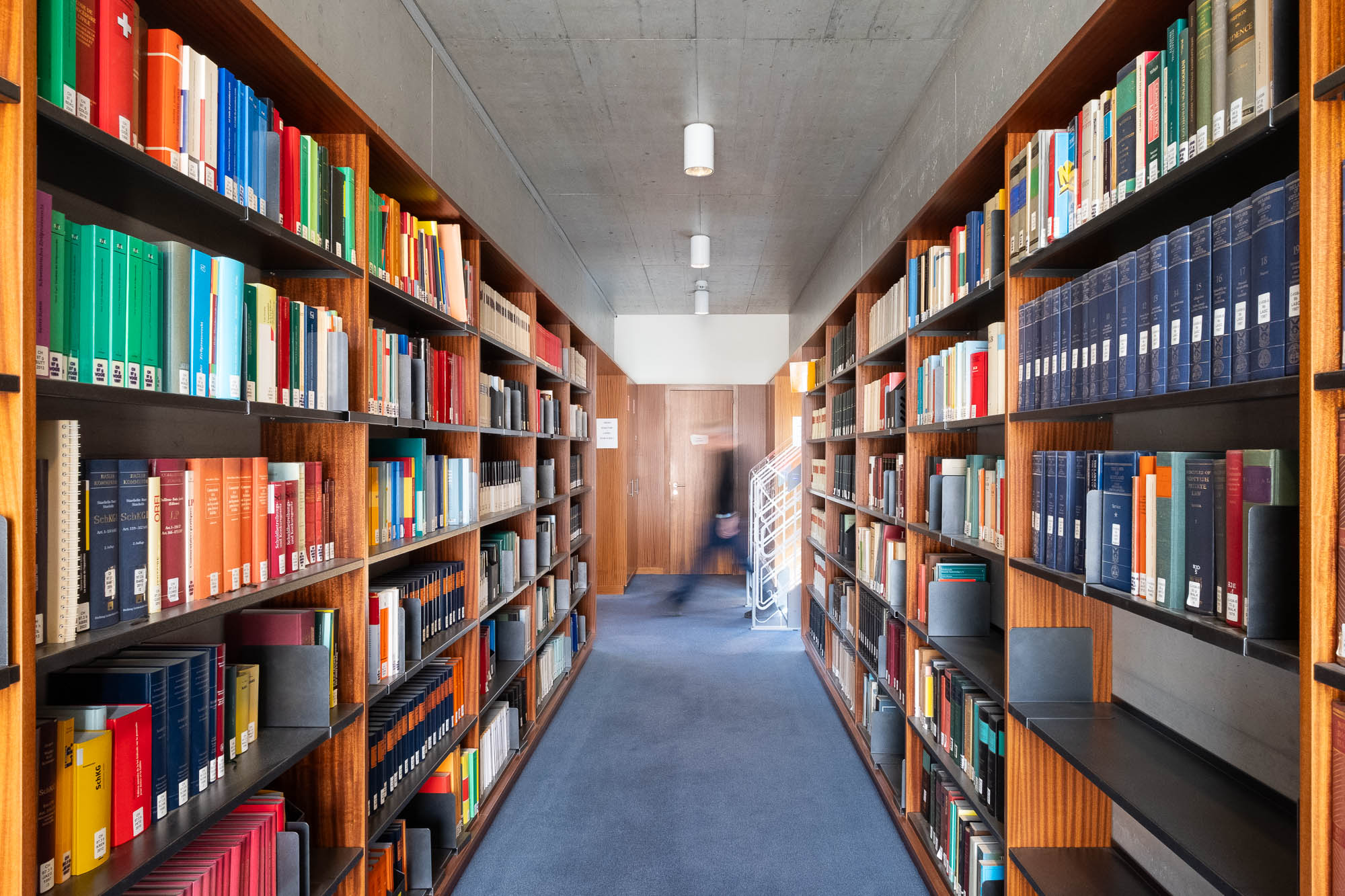
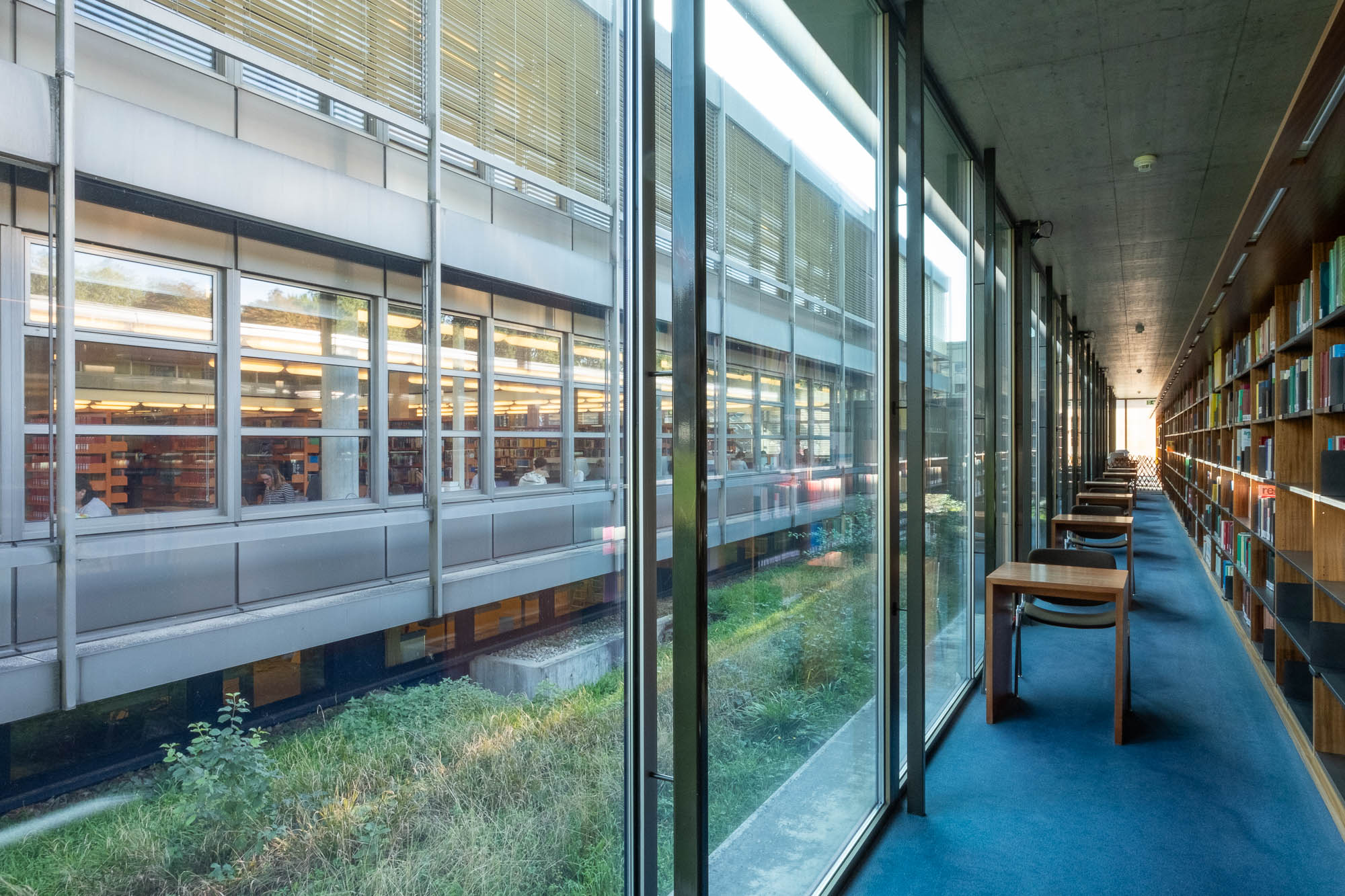
In 2000, Patrick Devanthéry, Inès Lamunière and Gabriel de Freudenreich added a one-storey extension to the library. This elegant pavilion is dedicated to the law collection of the Edouard Fleuret foundation, who financed its construction. Built on stilts and only connected with the main library by a narrow bridge, it appears to be floating a few feet above the ground, establishing it as a separate structure while respecting its neighbour by its proportions and the glass and metal elements of its facade.
The images shown here date from September 2023 and October 2025. My thanks to the staff at BCU Internef and BCU communications for arranging my visit. Merci beaucoup!
References
Content note
You might also like