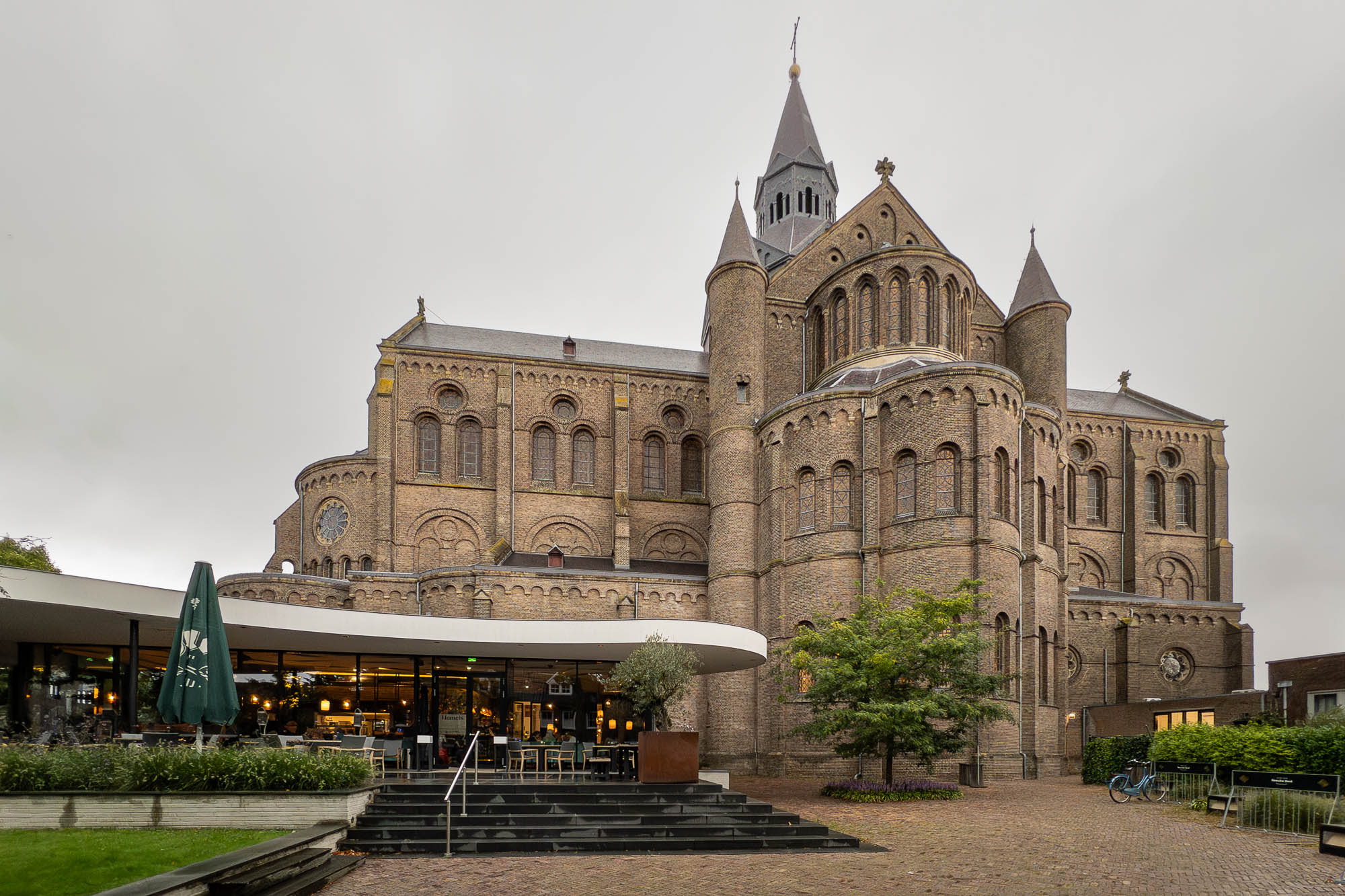
The St. Pieter catholic church in Vught, the Netherlands, was built between 1881 and 1884 to replace a straw-roofed 14th century chapel. Carl Weber, a prolific Dutch architect with German origins, departed from the Neo-Gothic churches he had designed so far to give St. Pieter a combination of Neo-Romanesque and Rheinland Gothic elements.
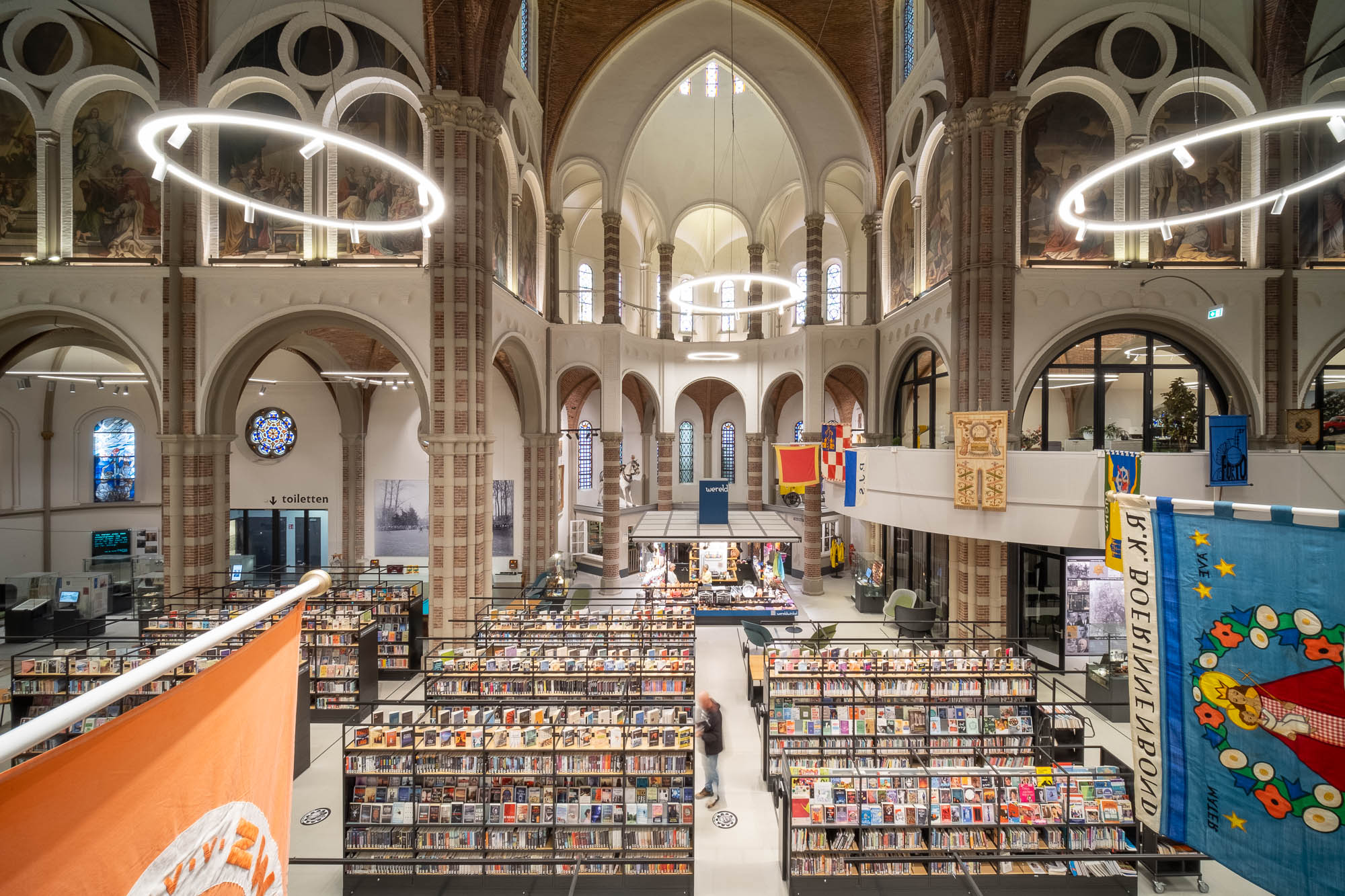
The original plan called for a symmetrical building around an octagonal stone dome, however partway through construction, part of the church collapsed due to faulty mortar and the design was subsequently lightened and simplified. In particular, a wood tower was built to replace the original dome.
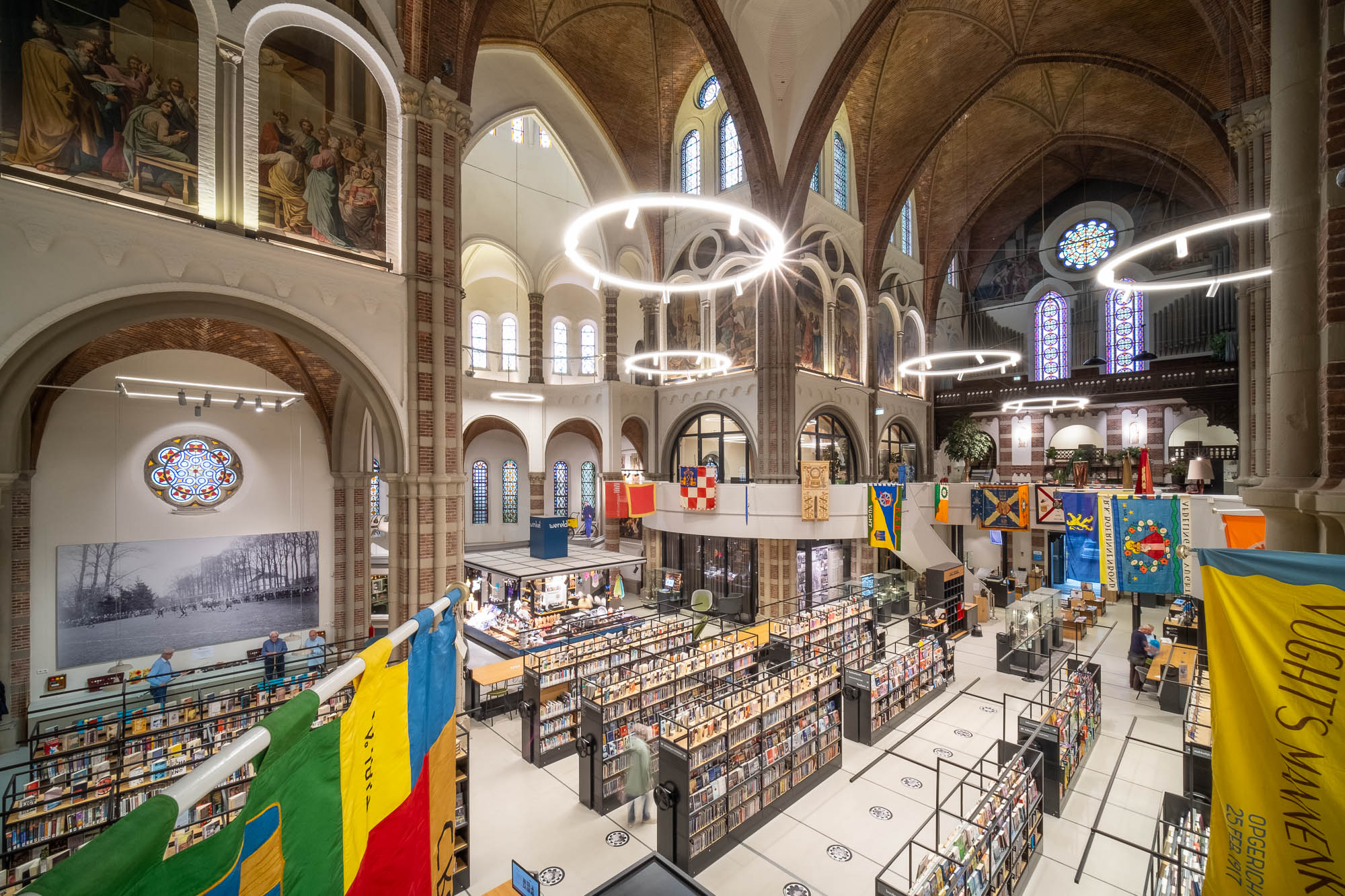
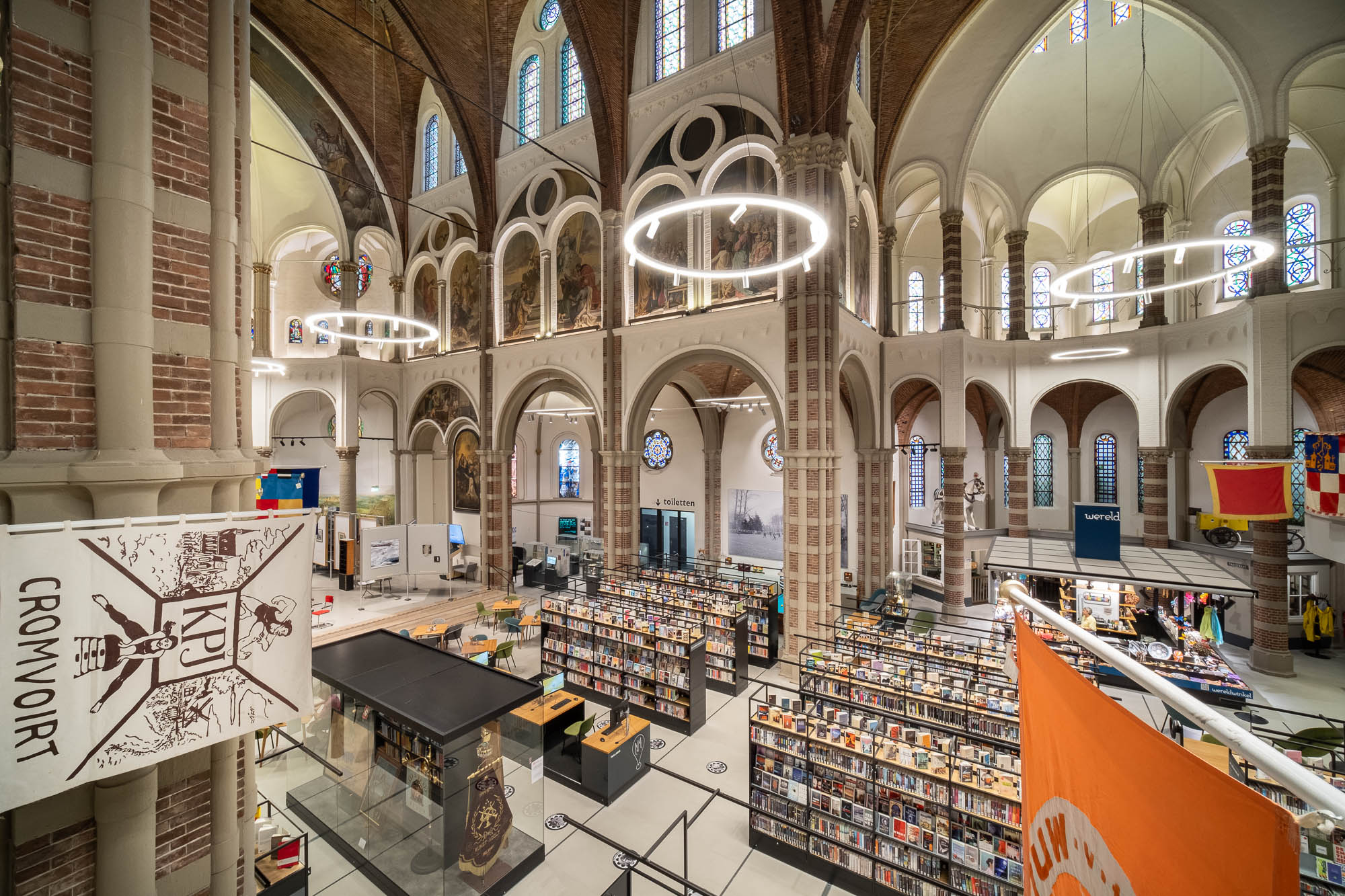
As it now stands, the church takes the shape of a basilica, with a central nave flanked by two narrower aisles. Either ends of the short transept ends in a three-part cloverleaf ambulatory, a design that is mirrored in the apse. A gallery surrounds the nave, with murals by Vught master painter Charles Grips.
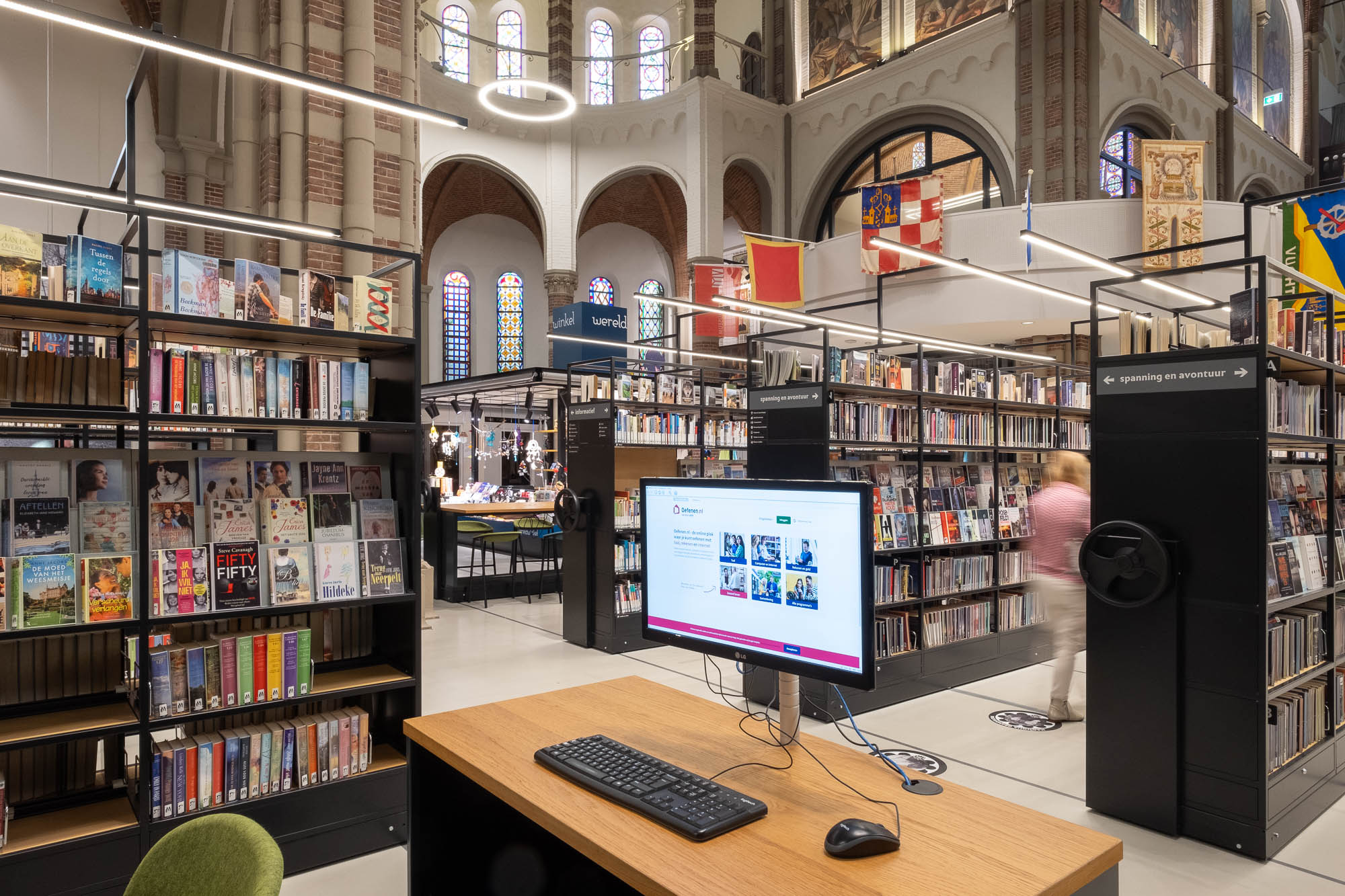
In 2005, the church was closed to the public due to falling debris from the roof. It was saved from demolition by a group of business owners and concerned citizens, who in 2011 established a nonprofit tasked with its preservation and renaissance as a cultural centre. A first renovation was completed in 2012 to stabilize the building, but it’s only in 2018 that it was truly reborn as the meeting place De Petrus, combining the public library, local museum, a social enterprise shop and a café, all the while remaining available as a multipurpose event venue.

Bookshelves and museum showcases are all mounted on rails and can be moved aside within a matter of minutes to open up the floor. This successful conversion led by Molenaar & Bol & VanDillen Architects, now Buro Kade together with interior designer Jean-David Hanrath, brought international attention to the project.
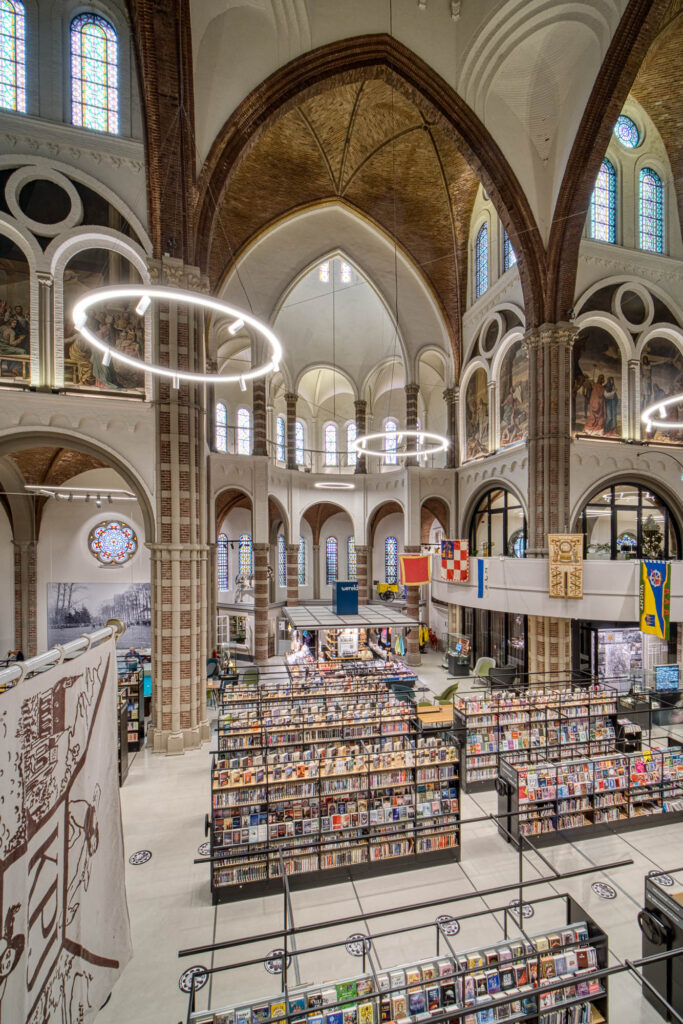
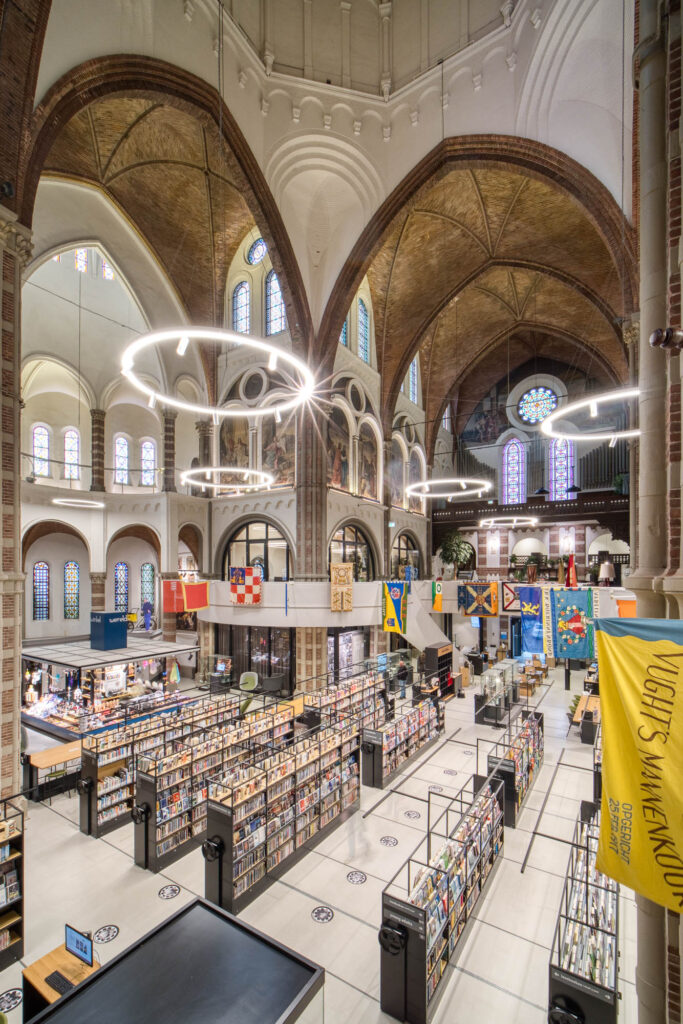
The images show here date from my visit in September 2023.
This post is part of a series on adaptive reuse in libraries. See the list of such projects I am maintaining or view other posts in this series.
Excerpts from this post appeared in the March 2024 edition of Information Professional.
References
Content note
You might also like