After WWII, the increasing number of Cambridge University teaching staff without a college affiliation and the need for more space for specialized faculty libraries led to the development of a new site. In 1953, a master plan by Hugh Casson and Neville Conder was written to provide a home to the faculties of Economics and Politics, Modern and Medieval Languages, English, Moral Science, History, Divinity, Architecture and Fine Arts, Music and Archaeology and Anthropology. The site chosen for this expansion was the former cricket grounds of Corpus Christi College on Sidgwick Avenue.
The Sidgwick site was inaugurated in 1961 with the completion of the first buildings also designed by Casson and Conder, among them the Raised Faculty Building which includes the Modern and Medieval Languages library. However, the full plan could not be developed due to other projects encroaching on the projected site, notably the 1962 Caius College’s Harvey Court designed by Leslie Martin and Colin St John Wilson, which is incidentally an excellent lodging option for architecture enthusiasts visiting Cambridge outside of term…

This situation led to a reorganization of the Sidgwick campus. Hoping for the availability of land on the site’s western side, the history faculty building was meant as its new focal point. The design of the new faculty building, which was to include room for a significant library, was attributed by architectural competition to Sir James Stirling and his then associate James Gowan, who ended the partnership partway through the project. Construction of the building began in 1964 and ended with its inauguration in 1968.
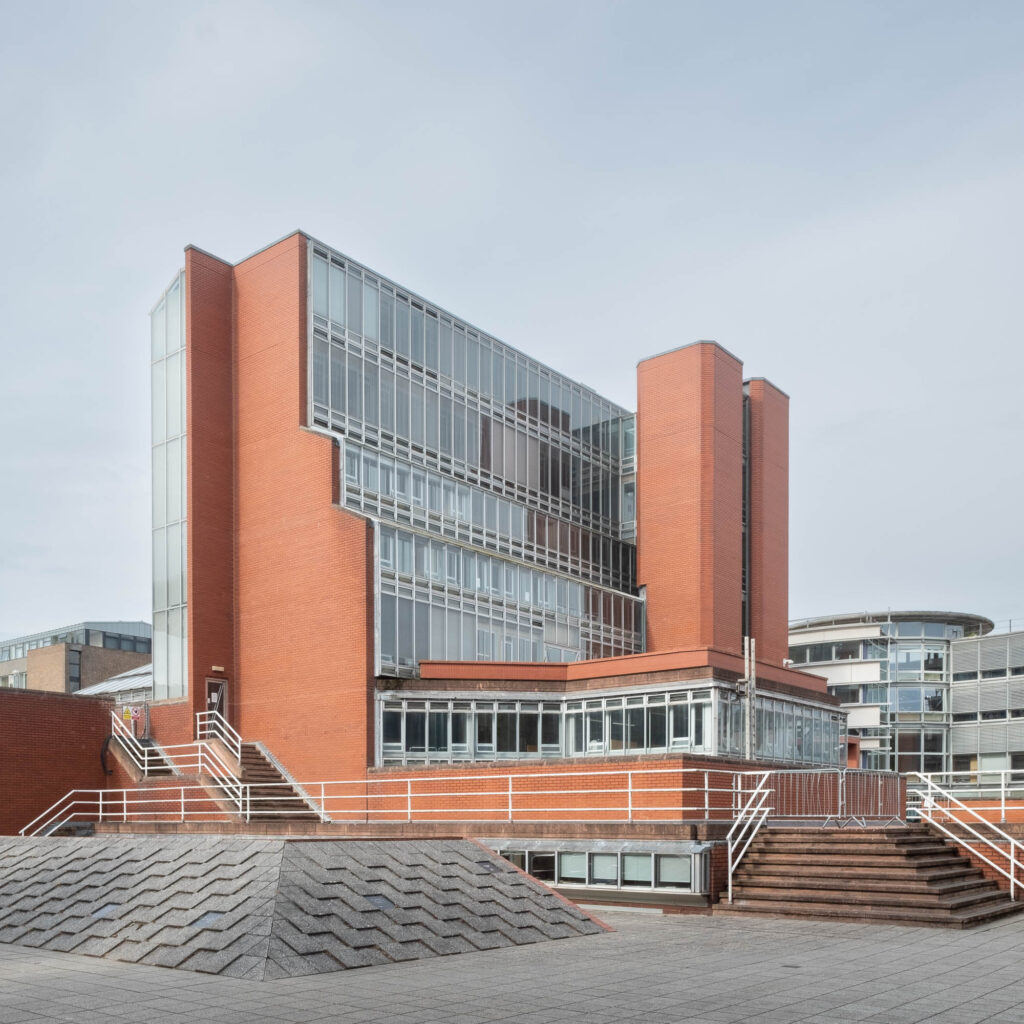
The functional expressionist style of the building retains a visual lineage with Stirling and Gowan’s earlier Engineering Laboratories at Leicester University, completed in 1963. With the later Florey Building at Queen’s College in Oxford, which also shares similar visual elements, the Cambridge Faculty of History forms Stirling’s “red trilogy” of buildings.
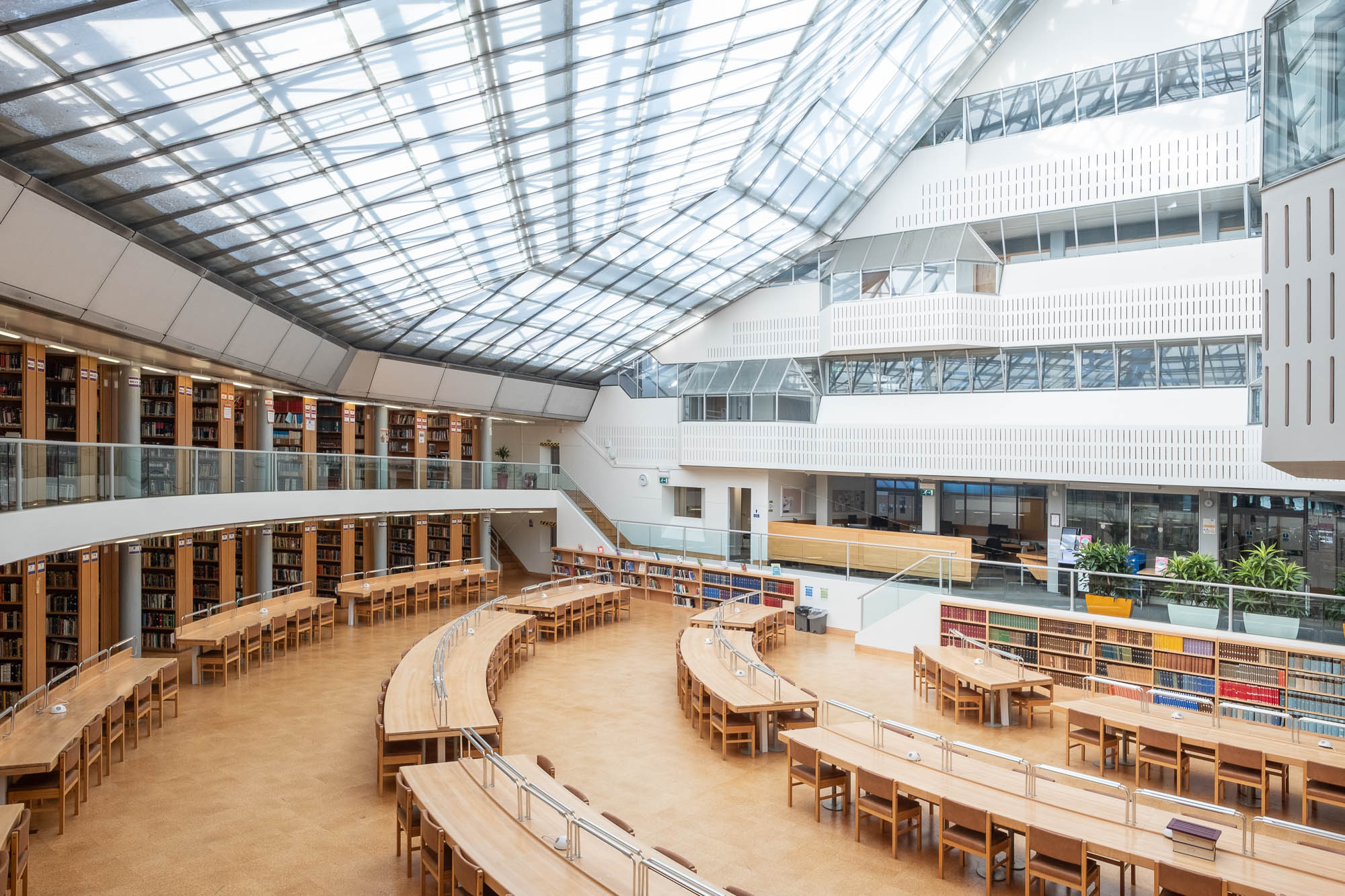
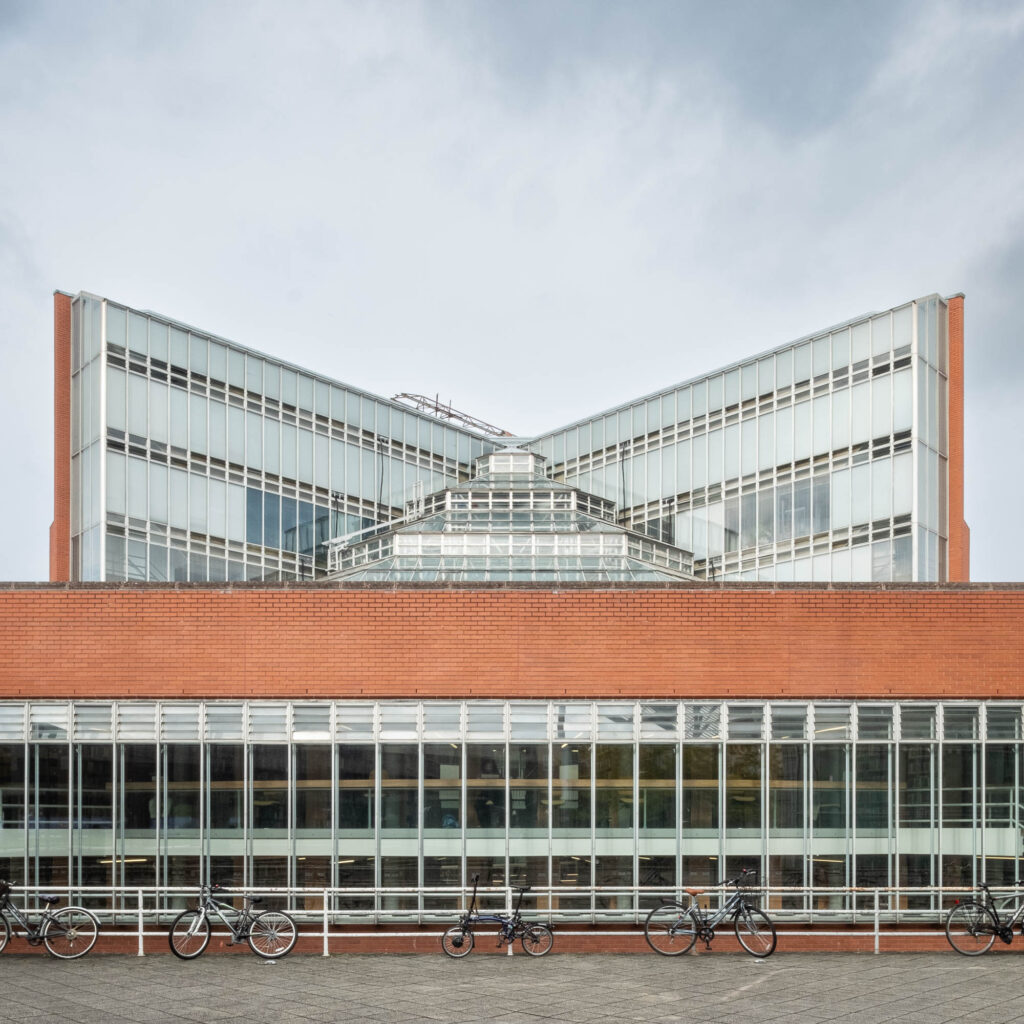
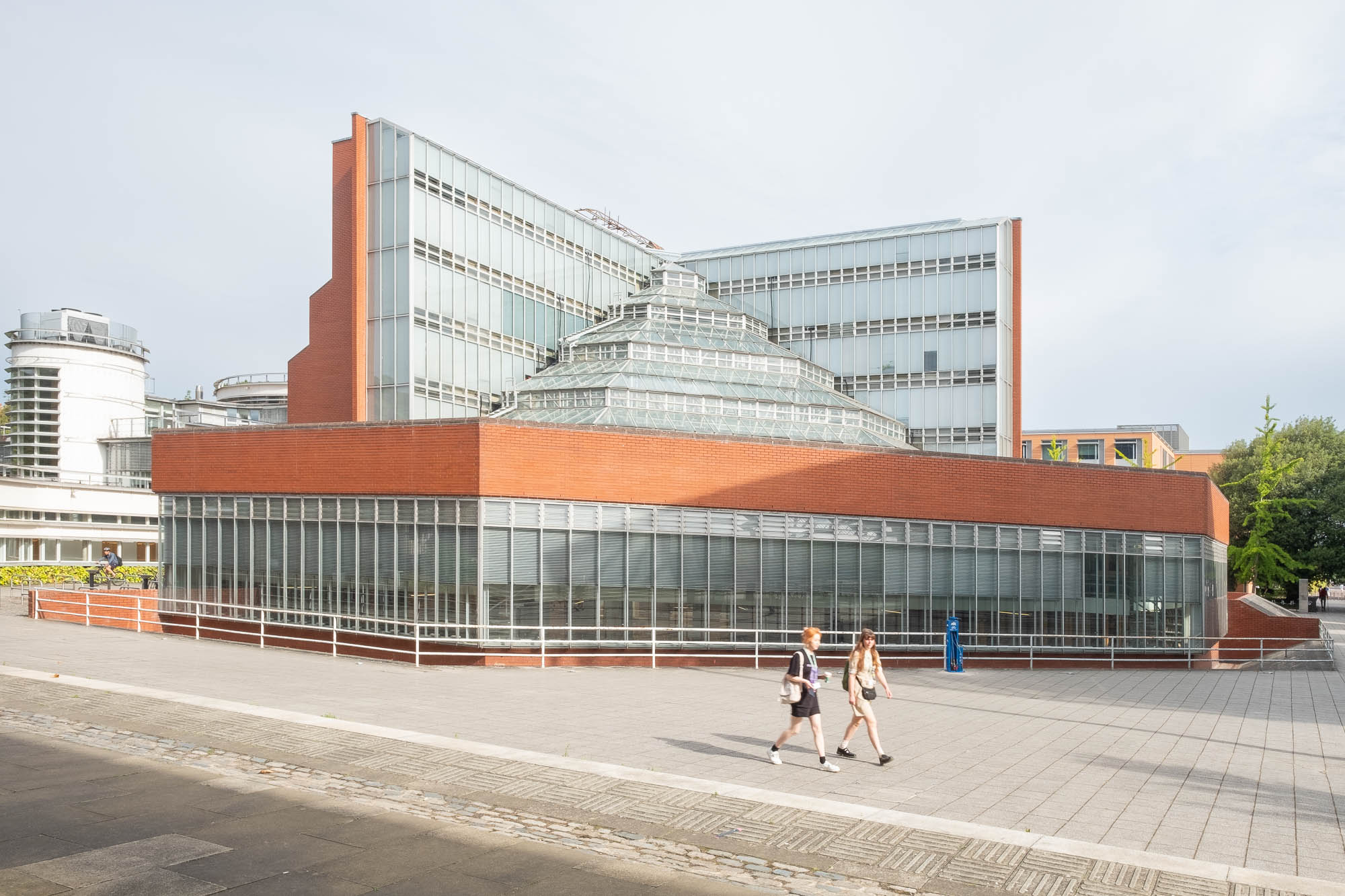
With entrances on all four sides fitting to its intention as the campus epicentre, the structure is organized around two perpendicular seven-story slabs of reinforced concrete clad in red brick for faculty offices and classrooms. The two arms of this L shape enclose a vast library crowned by a stepped glass pyramid. The resulting shape is that of an open book with pages fanning out.
With its impressive glass canopy, the library is undoubtedly the main feature of the building. Its reading room is meant to sit 300 and occupies half of the total footprint. Deliberately designed as a panopticon, the space is organized as a quarter-circle filling the L of the two faculty wings. Book stacks on two levels fan out radially, offering an unencumbered view of the space to the librarian, whose desk is strategically placed at the focal point.

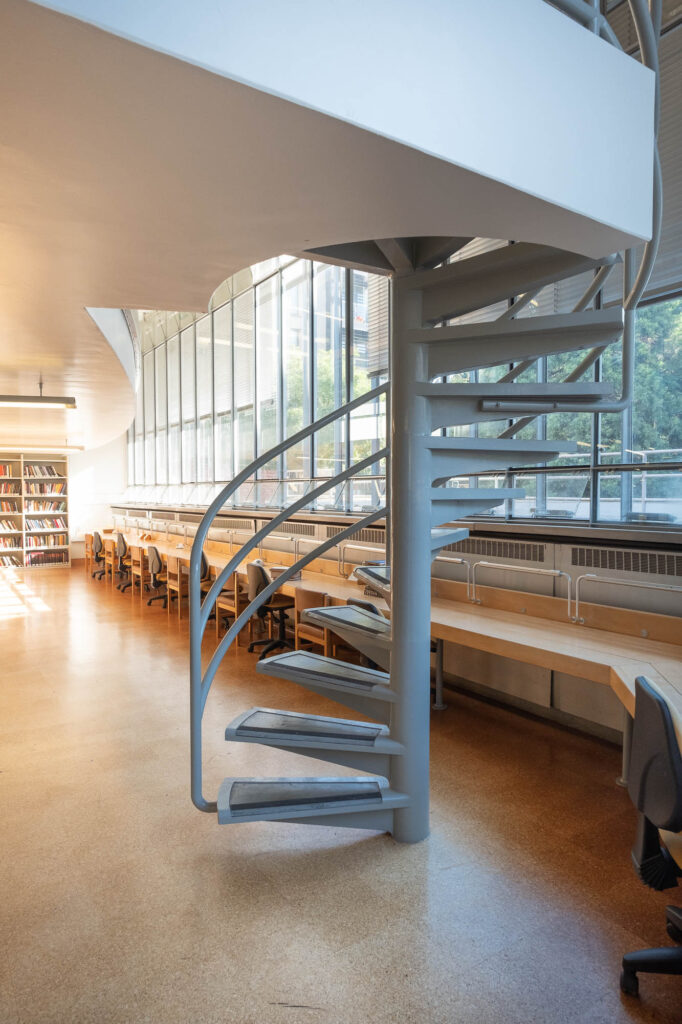
Understandably, the feeling of being constantly watched isn’t particularly popular with students. This is exacerbated by the introverted design of the library, where there are no views to the exterior from the radial reading room tables nor from the bench that lines its perimeter, which is recessed to keep windows above the line of sight of its occupants. This too was intentional, Stirling believing that providing users with a view would be distracting.
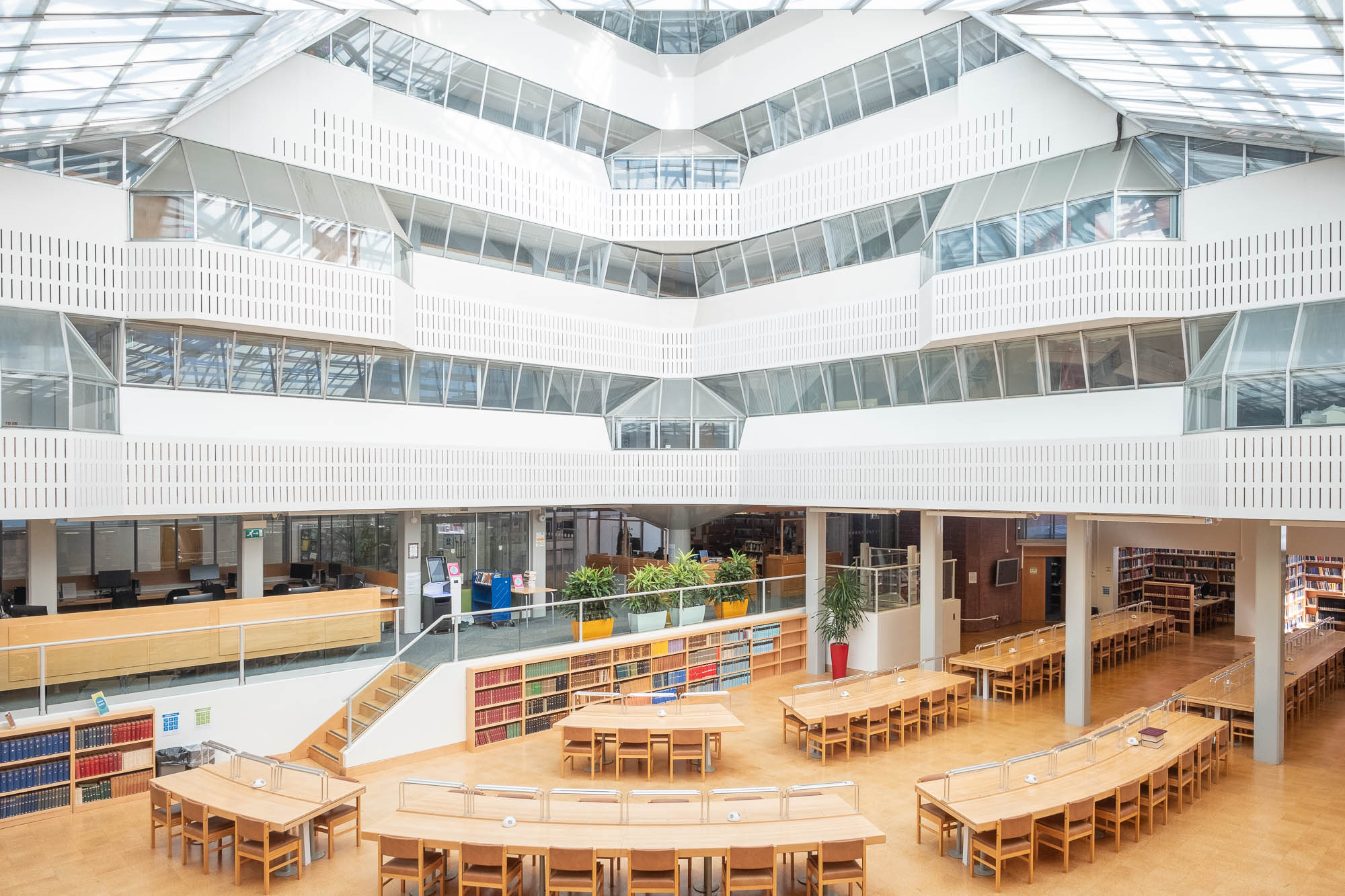
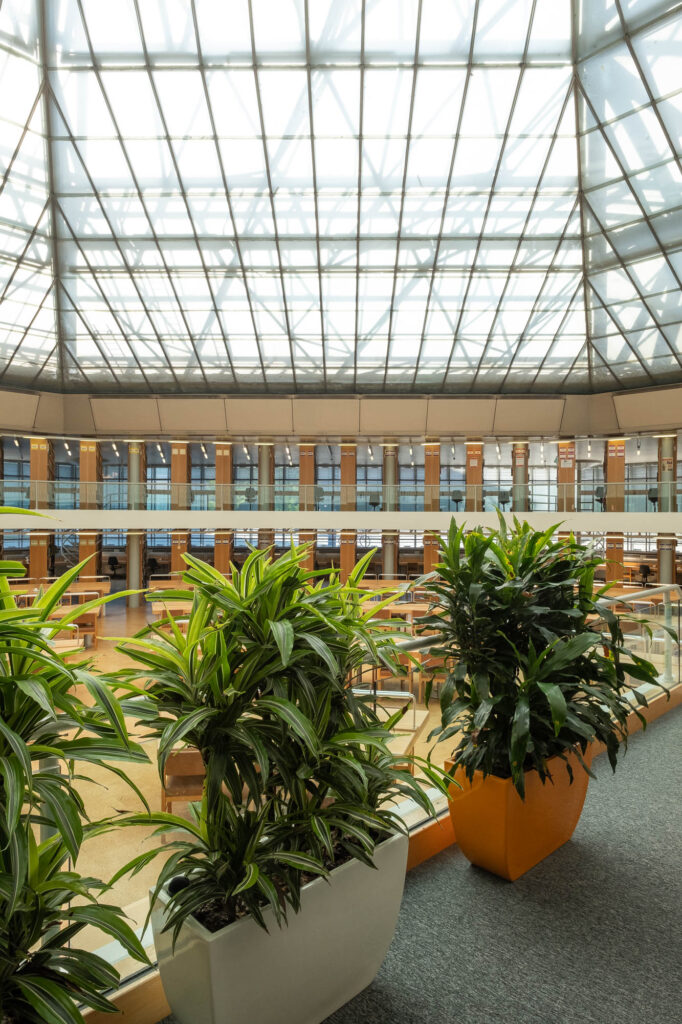
The reading room is crowned by a double-glazed glass canopy, with a system of louvres designed to provide ventilation in summer or trap a layer of insulating air in the winter. Air convection inside the space is further enhanced by ventilation at the apex of the canopy. Lighting at night is provided by fluorescent tubes installed between the two layers of glazing and along the steel trusses, making them invisible during the day. Originally, the pyramid was to be oriented south-west, however a land dispute required the design to be rotated 90 degrees counterclockwise. The resulting unplanned south-east orientation led to a difference in the amount of sunlight received by the canopy compared to what was expected. This compounded the already finicky environmental control mechanism and exasperated its users, who by the 1980s were ready to tear the building down. Subsequent attempts were made to correct the issues, but the status of the building as a Grade II listed structure prevented alterations that would have visually impacted the site. A recent refurbishment by R H Partnership architects (rhp) was completed in 2019 in accordance to listing requirements.
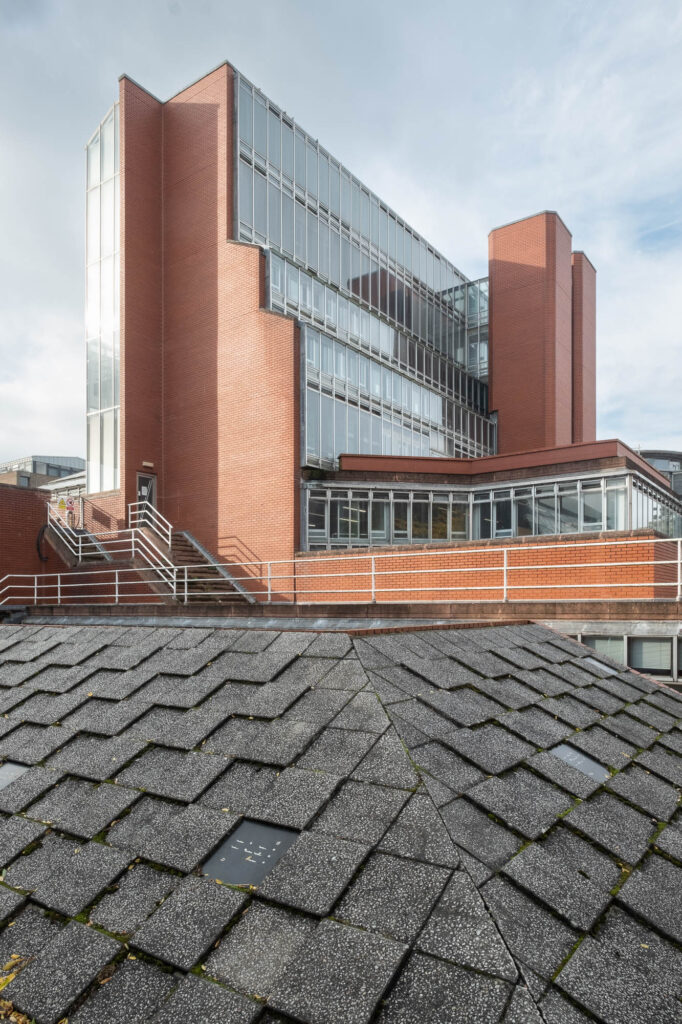
With its use of simple construction materials (concrete, brick and industrial glazing) and its expressive form, this structure is regarded as a important link in the evolution of the original tenets of Modernism towards Brutalism.
Although his designs such as the History Faculty remained controversial, Sir James Stirling had a important influence on British architectures in the following decades. The yearly Royal Institutes of British Architects (RIBA) Stirling Prize honours his legacy by recognizing “the architects of the building that has made the greatest contribution to the evolution of architecture in the past year”.
The architecture of the library is not the only source of controversy. Since 1897, the history library of the University of Cambridge bears the name of John Robert Seeley, a 19th century history professor who was an advocate of colonialism and the British Empire. A campaign was launched in 2021 to remove his name from the library.
The images shown here date from my visits to Cambridge in October 2021 and July 2022.
Excerpts from this post appeared in the January-February 2024 edition of Information Professional.
References
Content note
You might also like