One of the first orders of business of the French Third Republic was replenishing the state coffers after the disastrous Franco-Prussian war of 1870. Inspired by the lucrative tobacco tax, a similar levy was imposed on the sale of a safety matches. To further increase revenue, the manufacture and sale of matches was declared a state monopoly in 1872. Over the following decades, the production of matches was gradually centralized into a network of large state-run factories under the control of the Société d’Exploitation Industrielle des Tabacs et des Allumettes. The new facilities were not only more efficient, they were orders of magnitude safer than the cottage industry they were replacing, which due to the dangerous chemicals employed had the annoying tendency to set fire to the cities they were in. One such factory was established in Aix-en-Provence in 1895. It produced two kinds of matches: “grandes allumettes” targeted for household usage and “petites allumettes” aimed for smokers.

The Aix manufacture was built between 1892 and 1894 “in the style of Victor Baltard” by engineers Alphonse Debize et Tiburce Clugnet. Their employer, Service central des Constructions de la Direction générale des Manufactures de l’État, had indeed deemed architects a “costly superfluity” and preferred using in-house engineers. In 1906, the plant was extended by another engineer, L. Chasseigne, with the halls that today house the library.
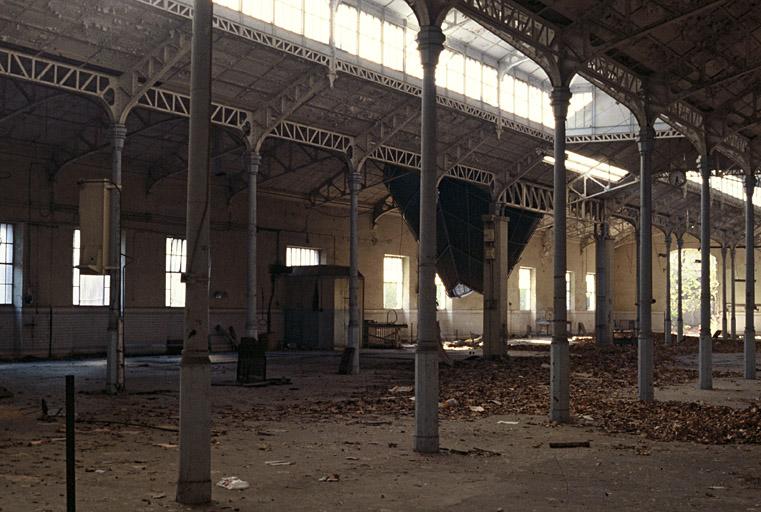
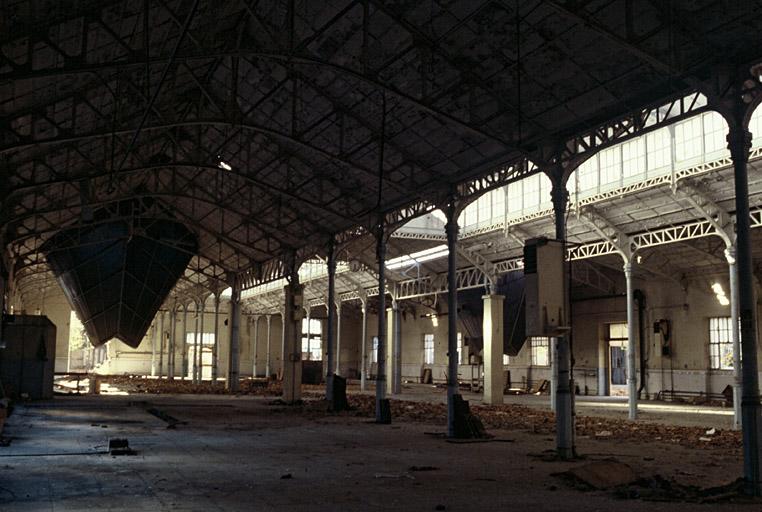
In its heyday, the factory employed up to 500 people, toiling in a series of brick halls covered by a clerestoried roof supported by cast iron columns.

In the 1960s, the popularity of lighters and modern gas stoves with built-in lighting marked the beginning of the end for matches made in France. The Aix plant closed in 1972. Demolition plans were successfully halted by a grassroots effort to preserve the town’s industrial heritage, enlisting the help of former Culture Minister Jack Lang in naming the site worth preserving. The following images taken in 1981 show the state of the plan halls a decade after being decommissioned. The roof iron structure and most of the windows appear to have remained mostly intact during that time.
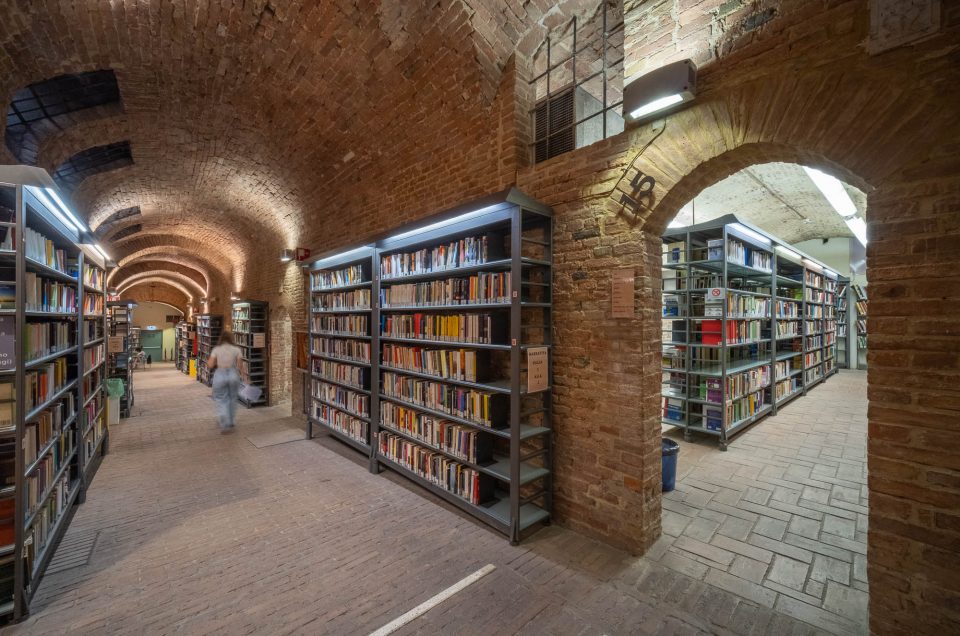
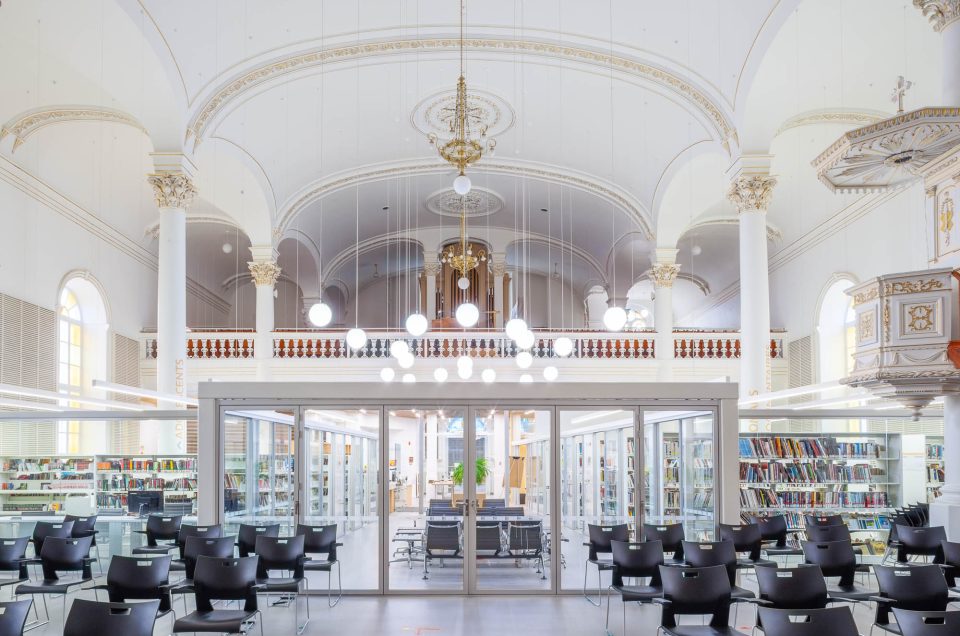
The city listened and in 1983 unveiled a plan to transform the factory into a new central library, which needed larger facilities after more than a century in cramped quarters in the Aix city hall. The “grandes allumettes” hall was converted by architect Philippe Deslandes for the library, which opened in 1989. Deslandes kept the original factory halls as distinct pavilions for library services: children’s library, adult library, music library, etc. A large concrete bunker was added to one of the halls to protect the rare book collection. Apart from a series of elevated walkways and office space at the periphery, the halls were all kept to their original height, exposing the majestic cast iron roof structure in bright and airy rooms.
In 1993, the site was further expanded into “la Cité du Livre” when the “petites allumettes” hall was converted into a cultural centre.

The public library in Aix is named after Jean-Baptiste Marie de Piquet, Marquis de Méjanes, who bequeathed his rich library to the states of Provence upon his death in 1786, under the condition that the 60,000 volumes be made freely available to the public. According to de Méjanes’ wish, the library opened in 1810 from rooms inside the Aix city hall. The collection was expanded at the Revolution thanks to books confiscated from religious institutions and private libraries. The library stayed at city hall until its relocation to the Allumettes hall in 1989. Branch libraries have been added over time, of which several are also adaptive reuse projects: Halle-aux-Grains opened in 1971 in the former city grain store, Deux-Ormes opened in 1993 in a converted bastide farm compound and Li Campaneto in a former schoolhouse in 2014.
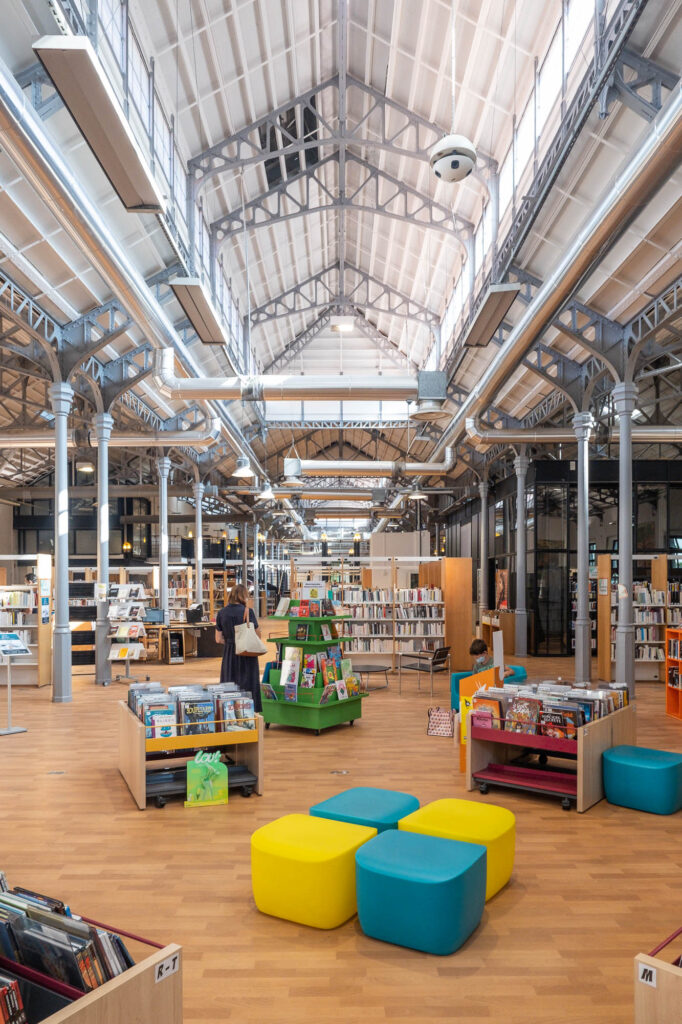
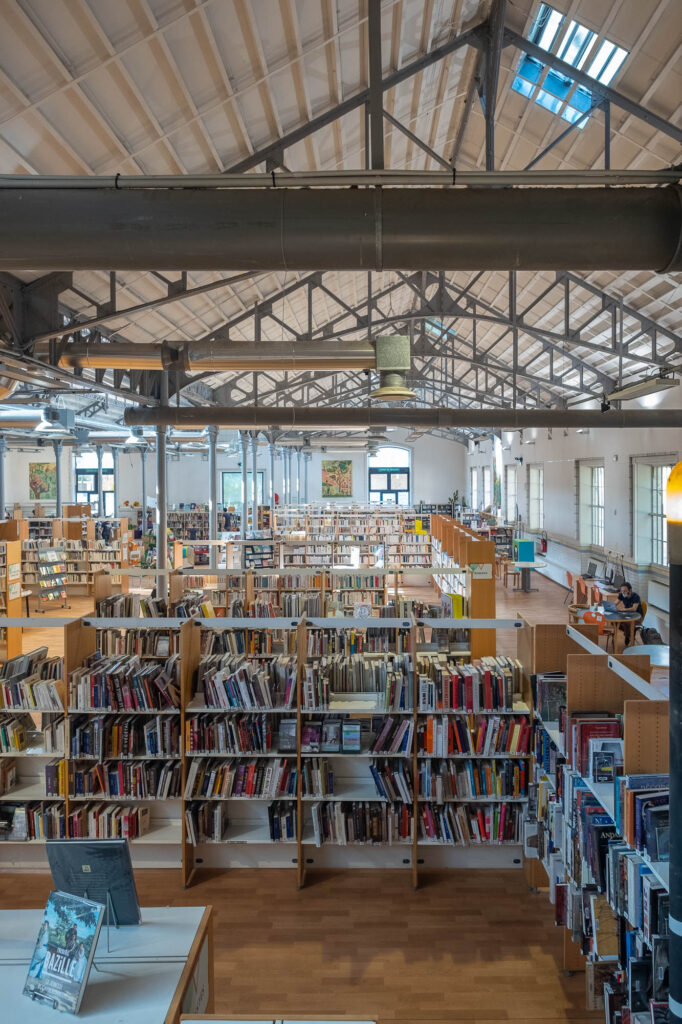
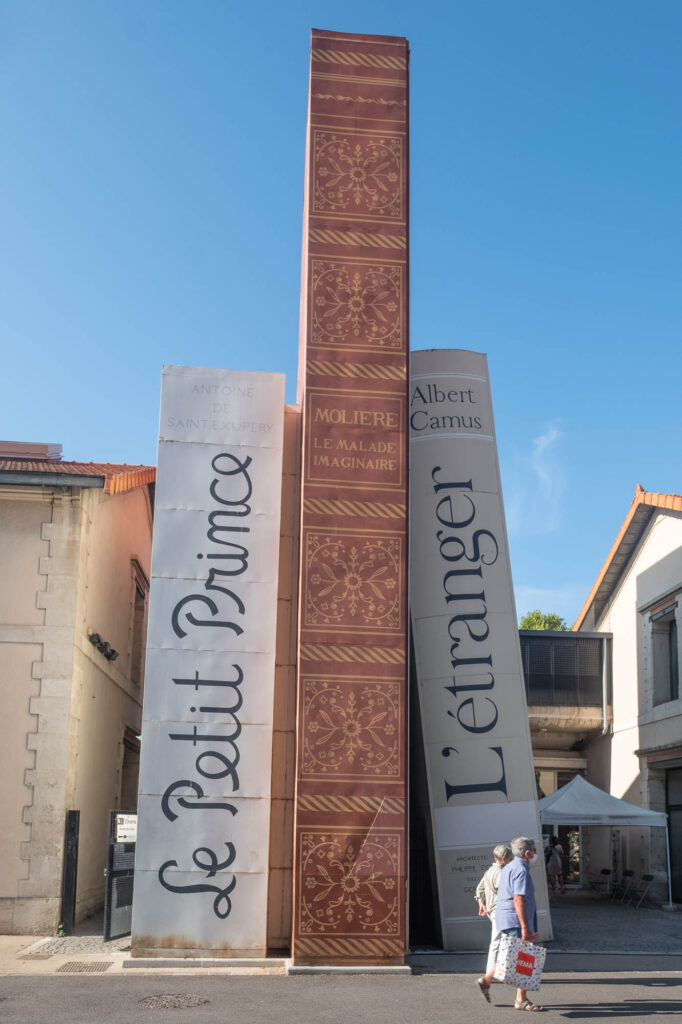
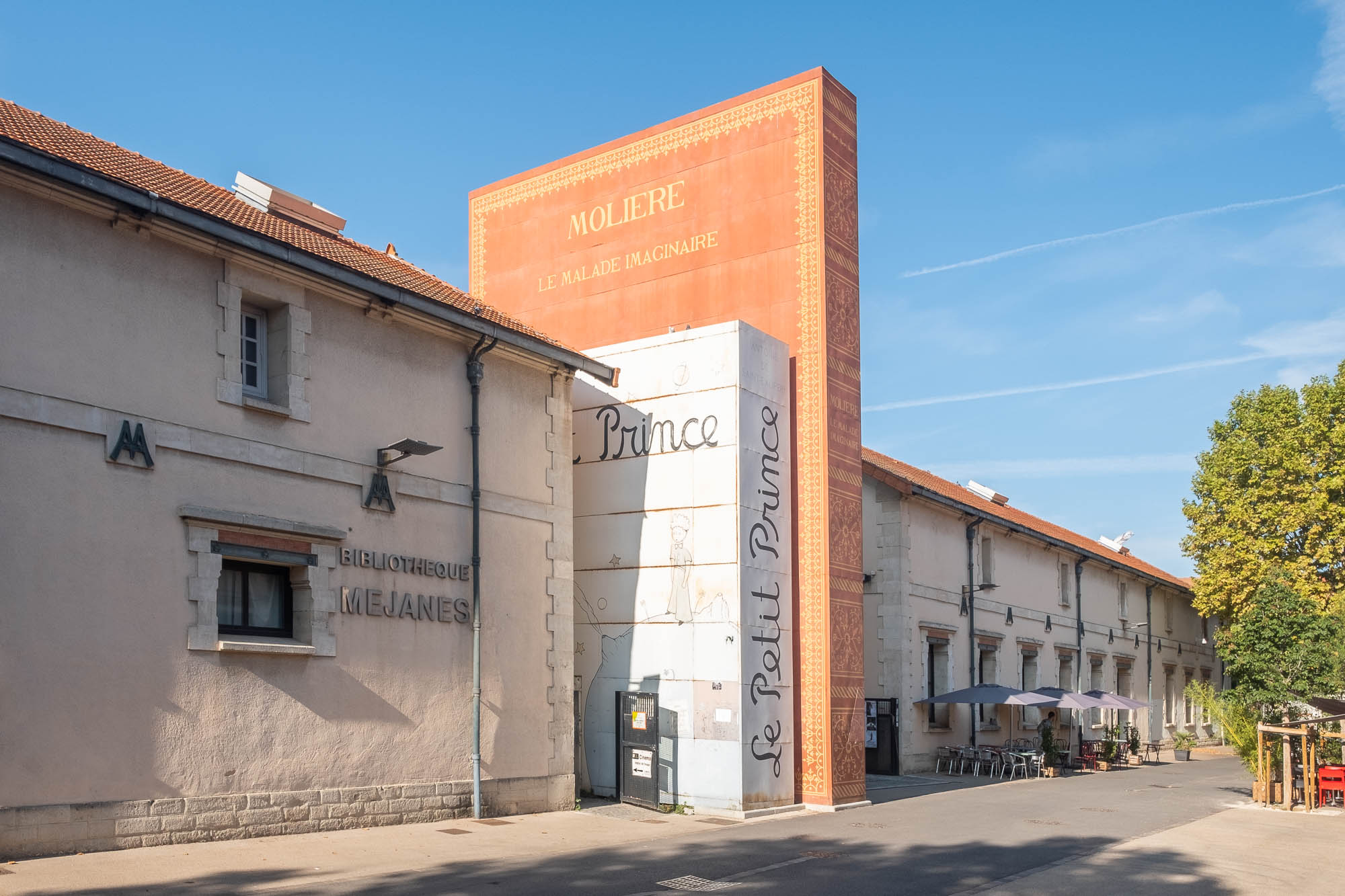
An early example of adaptive reuse of an industrial space into a library, Deslandes’ project entered its third decade showing its age and in need of a refurbishment. In February 2020, the city of Aix-en-Provence announced that local firm Panorama Architecture will be in charge of a new transformation. The renewed library is promising a better connection of interior spaces, removing barriers between collections and moving the entrance from a side alley to the main thoroughfare, facing the city. Work is scheduled to be completed in 2025.
Except for period photographs, the images illustrating this post were taken during my visit in September 2021. I am grateful to the Méjanes library team for their kind welcome and for taking the time to tour their library with me!
This post is part of a series on adaptive reuse in libraries. See the list of such projects I am maintaining or view other posts in this series.
References
- Smith, P. (2020). Les reconversions des manufactures françaises des tabacs. Ethnologies, 42(1–2), pp. 267–295.
- Smith, P. (2015). L’ancienne manufacture d’allumettes d’Aubervilliers. In Situ. Revue des patrimoines, 26.
- Éboli, G. (2000). La cité du livre d’Aix-en-Provence. Bulletin des bibliothèques de France (BBF), 2000(5), pp. 72–77.
- La Cité du Livre à Aix en Provence—Sudorama, mémoires du Sud de 1940 à nos jours. (1989). FR3 Marseille.
- Boissière, M. (2018). Petite histoire des allumettes. Le Blog de Gallica.
- Bibliothèque Méjanes. (2021). In Wikipédia.
- Société d’exploitation industrielle des tabacs et des allumettes. (2022). In Wikipédia.
- Quartier Sextius-Mirabeau: Manufacture des Allumettes. (n.d.). Association Animation de l’Arche. Retrieved January 3, 2023
- Philippe, Martine Deslandes. (n.d.). ARCHIGUIDE. Retrieved December 31, 2022
- Réhabilitation de la bibliothèque Méjanes-Allumettes: Aix écrit une nouvelle page de son histoire. (2020?). Ville d’Aix en Provence.
- Smith, P. (2023). Allumettes d’Aix [Personal communication].
Content note
You might also like