Probably the most well-known anecdotes in Vincent van Gogh’s life is his altercation with Paul Gauguin in 1888 during which his left ear was cut off. The hospital where he was treated for his injury was the Hôtel-Dieu in Arles, where he was staying at the time. Van Gogh subsequently spent several weeks at the hospital between 1888 and 1889 where he was treated for mental health troubles and during which he painted the hospital and its garden.

Source: Sammlung Oskar Reinhart, Winterthur via Wikimedia (public domain)

Source: Sammlung Oskar Reinhart, Winterthur via Wikimedia (public domain)
The Hôtel-Dieu hospital was built in 1573 on a former market ground. In the 17th century, two wings were added to the south and the east by local architect Jacques Peytret, forming an enclosed square garden.

Constructed in stages over the 16th and 17th centuries then expanded multiple times, the Hôtel-Dieu remained in operation until it was replaced by a modern hospital in 1974. In 1986, after the last medical services left the building, work started to transform the structure into a cultural centre. The project was led by architects Denis Froidevaux and Jean-Louis Tétrel and started with an archaeological survey and the restoration of the garden courtyard to its appearance at the time of Van Gogh’s visits.
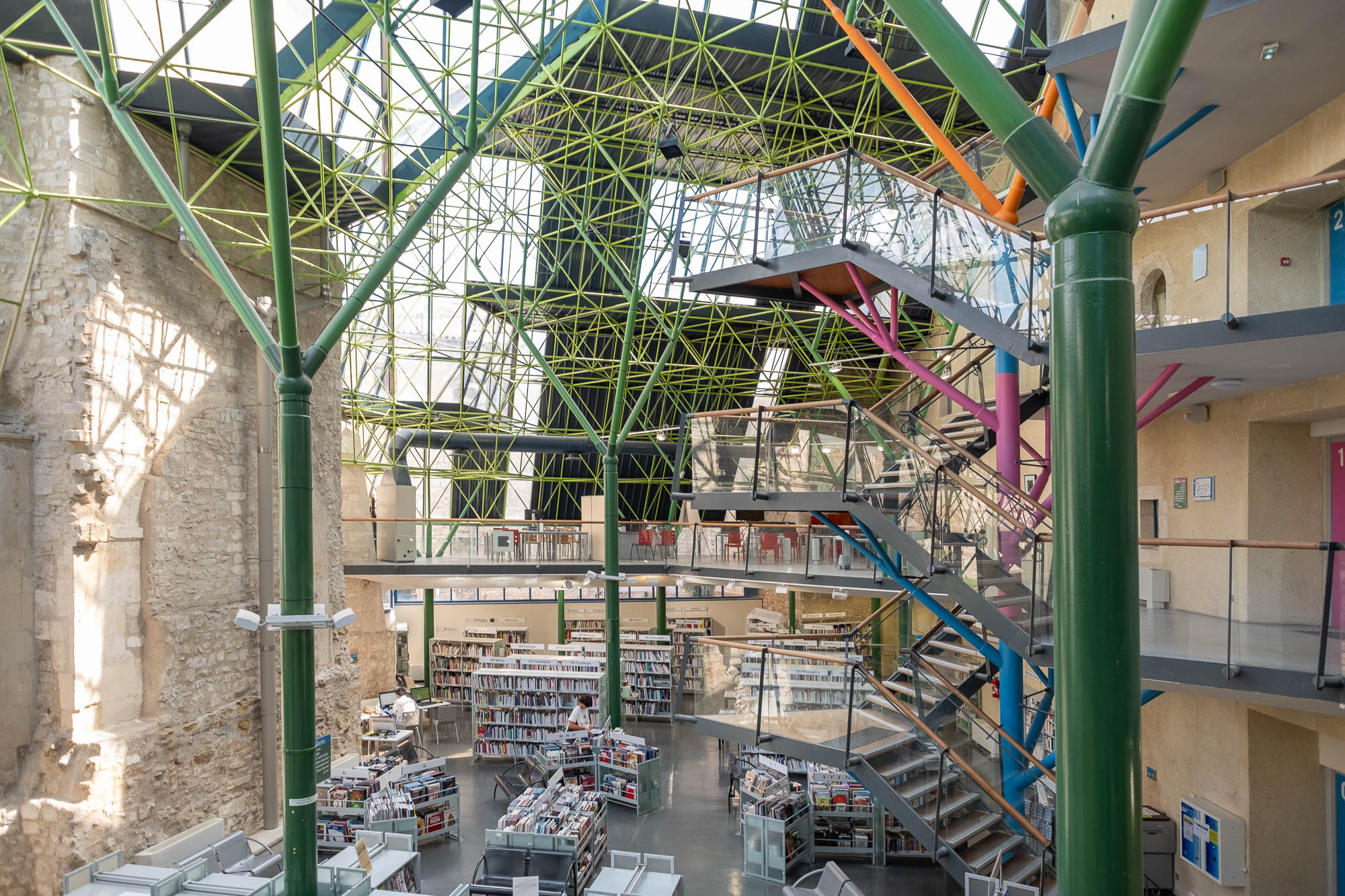
The médiathèque was installed in the north wing of the former hospital, which the architects extended through the open space separating the institution and the chevet of the adjacent church of the Trinity. The vast atrium was formed by covering the area with a partially glazed canopy supported by steel trusses that branch out as they rise like tree trunks. Its boundaries are the original facades of the hospital and pavilions. The cultural centre, named in honour of Vincent Van Gogh, and its library were inaugurated in 1989.
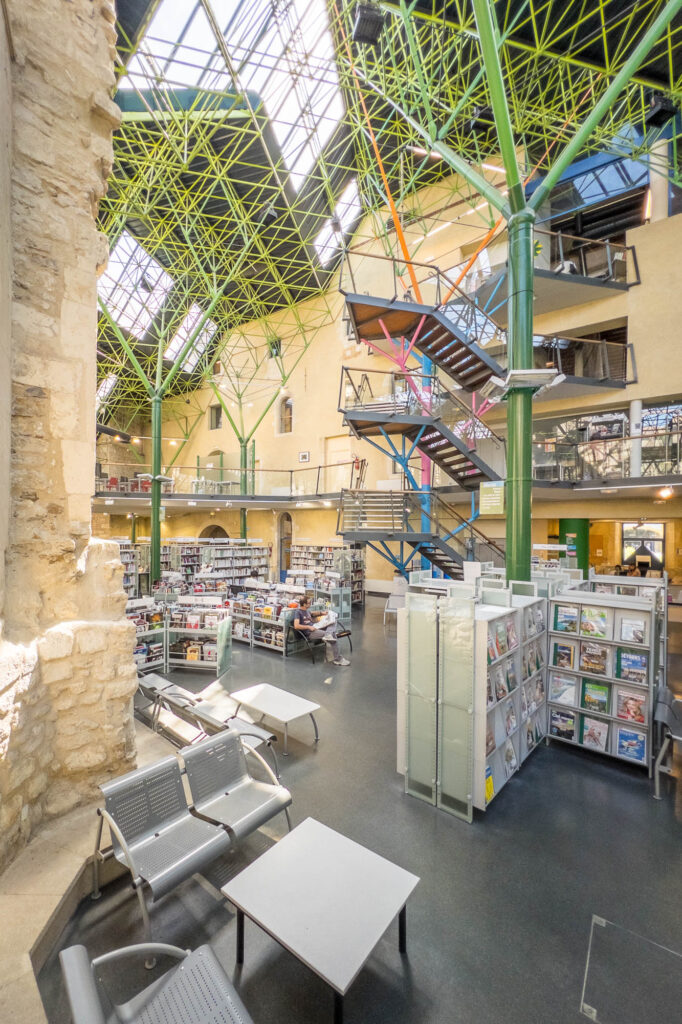
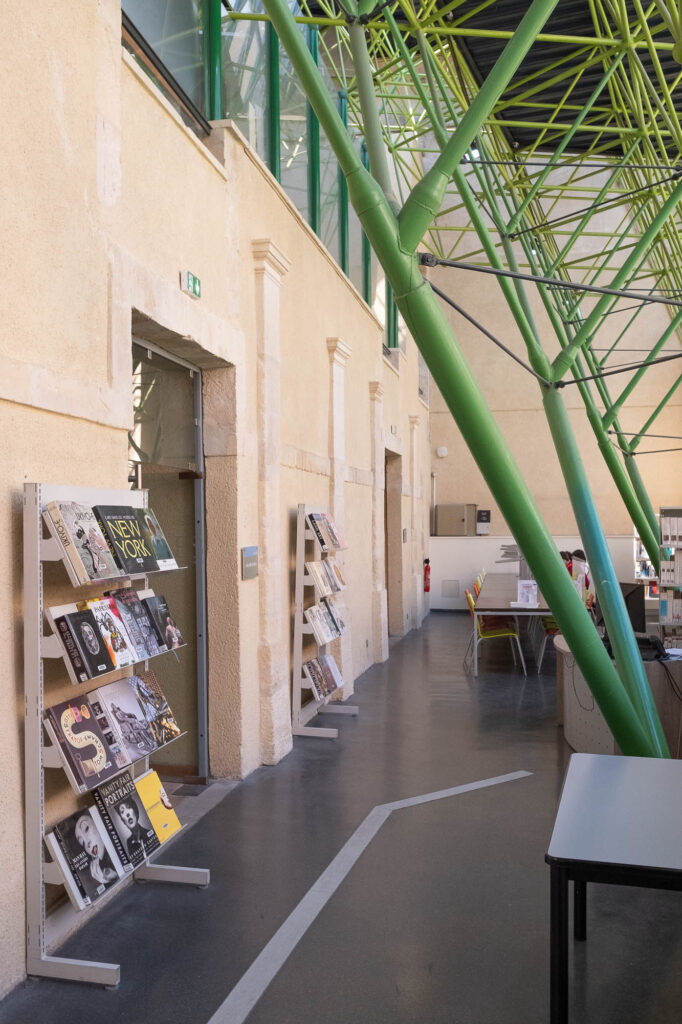

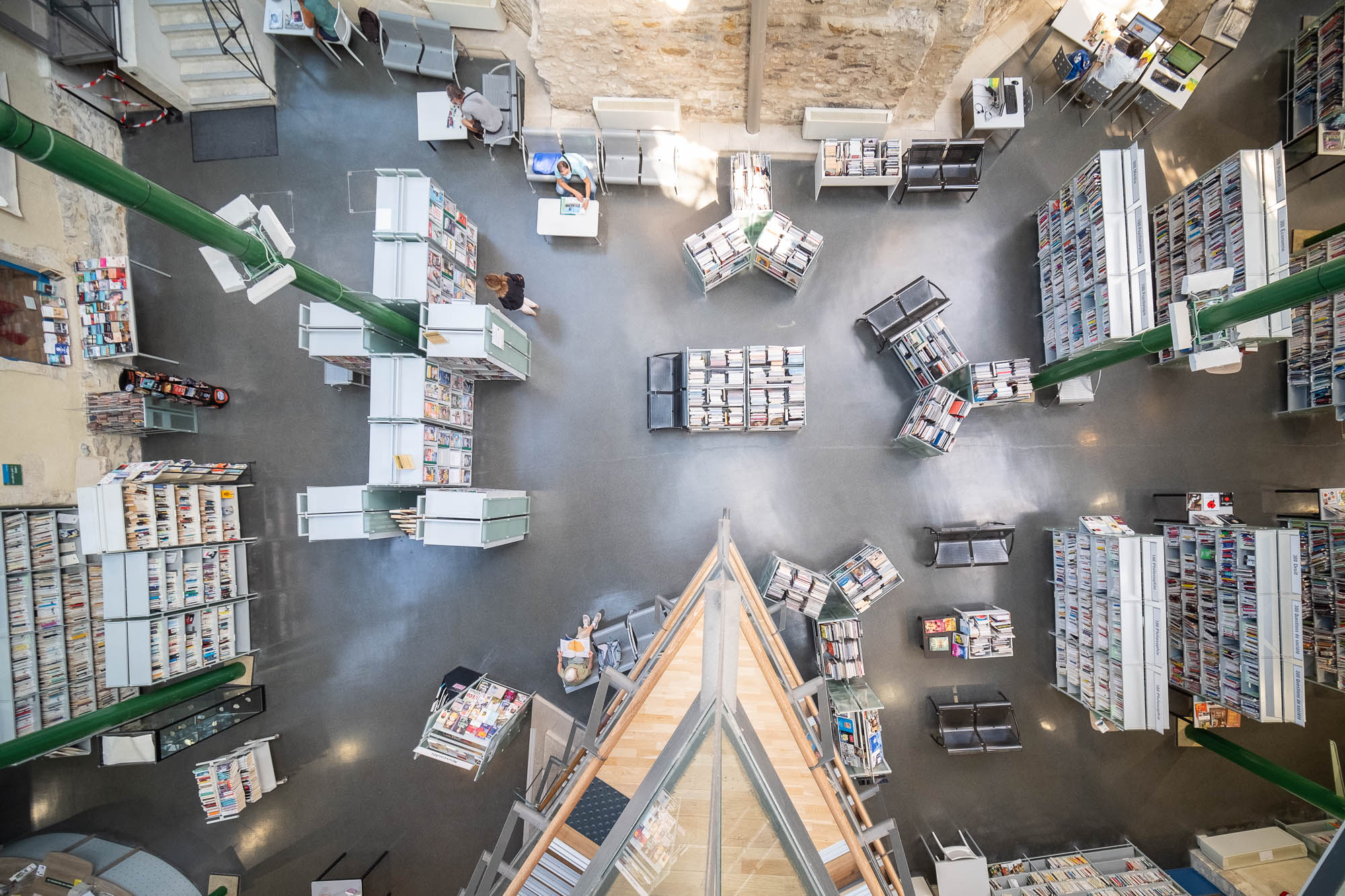
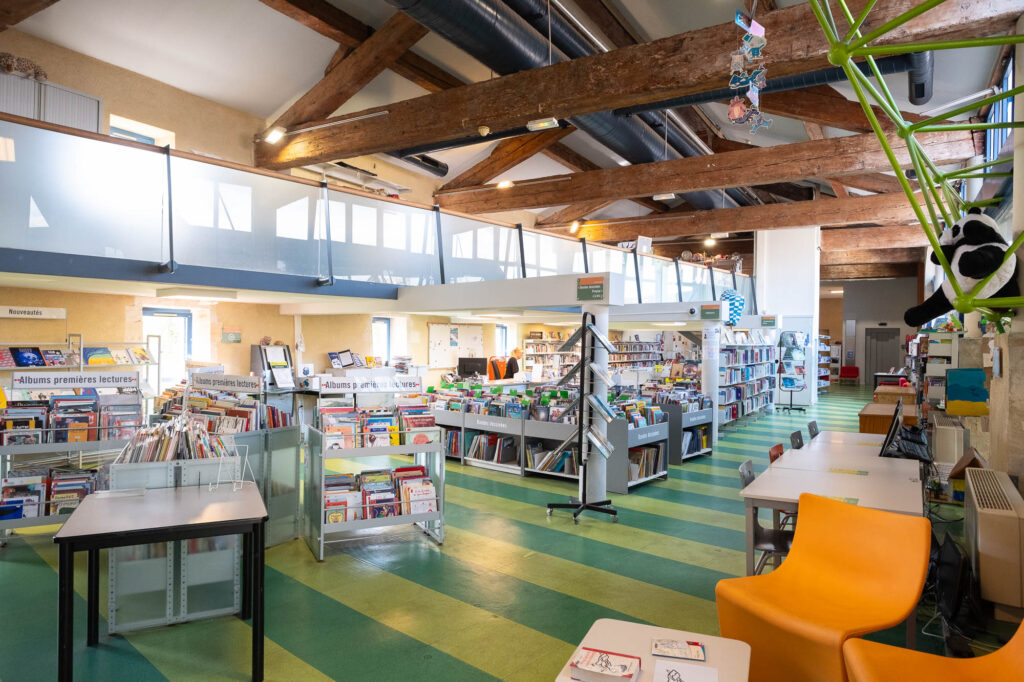
In 2011, the library’s spatial organization was updated following a 10-month renovation. A colour code on the access stairs and doors delineate the different service areas: blue for the adult sections on the ground and 3rd floor, purple for the “images and sound” section on the 2nd floor and orange for the youth section under the timber rafters of the former hospital wing.
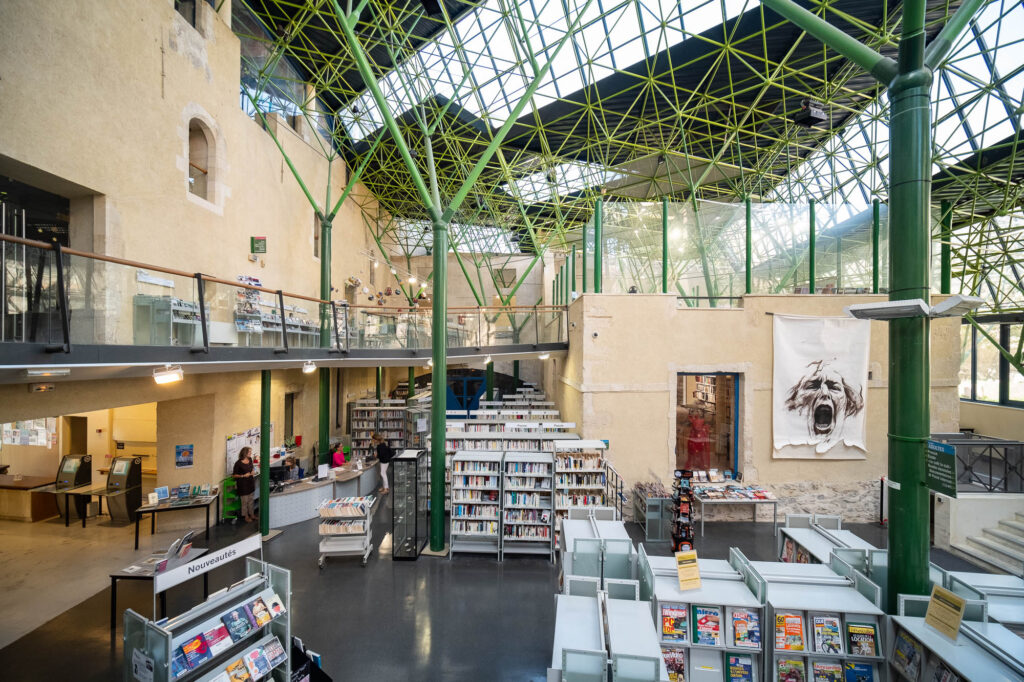
Today, the former hospital forms Espace Van Gogh in honour of its most famous patient. The médiathèque shares the grounds with several cultural institutions, among which are the city archives, a translation school and exhibition rooms for the yearly international Arles photography festival.
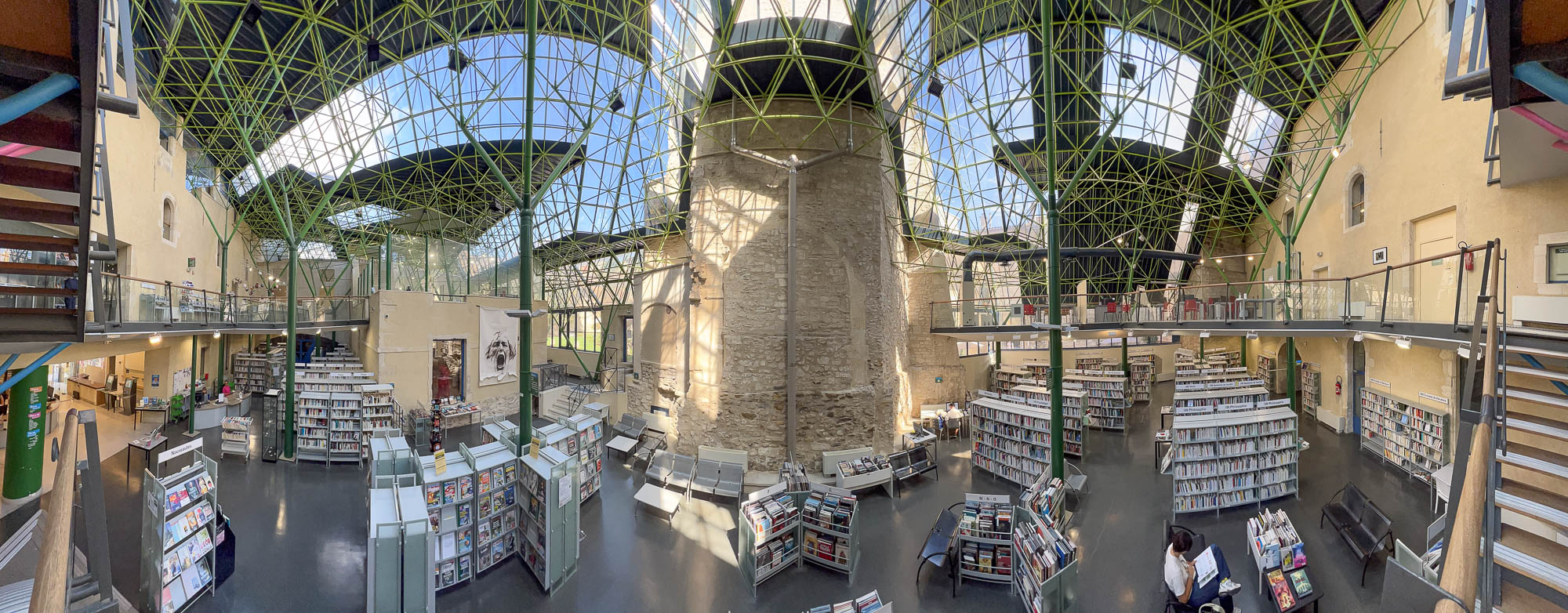
The images shown here date from my visit in September 2022. I’m grateful to the library team for their welcome and their help researching the building’s history.
This post is part of a series on adaptive reuse in libraries. See the list of such projects I am maintaining or view other posts in this series.
References
Content note
You might also like